

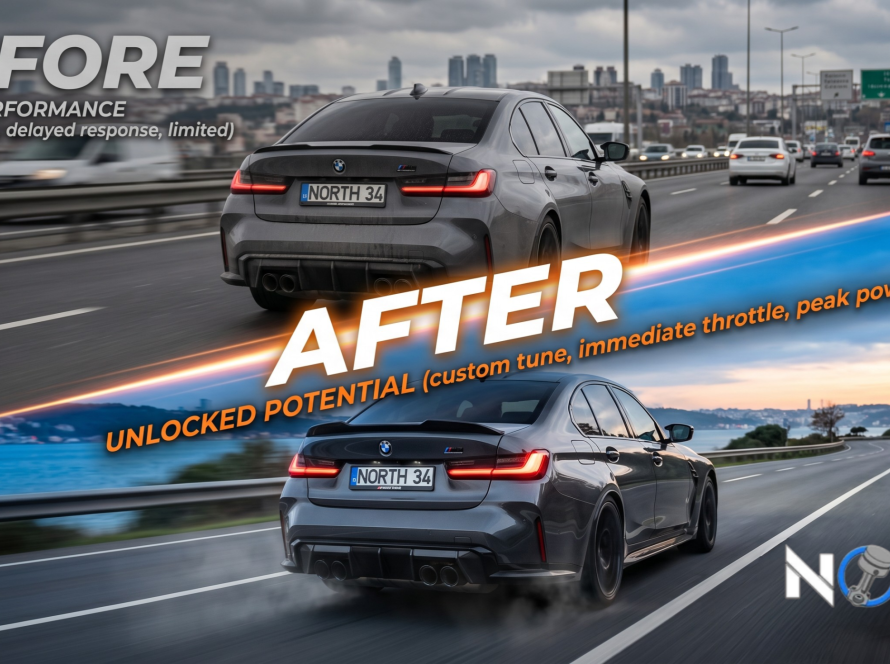
In the realm of engine remapping, Stage 1 tuning provides a remarkable power boost while utilizing a vehicle’s stock mechanical components. However, for enthusiasts seeking substantial gains and a more aggressive performance profile, Stage 2 Tuning is the next logical progression.
Is advancing to Stage 2 simply a matter of connecting a laptop and flashing new software? Absolutely not. True Stage 2 performance relies heavily on supporting mechanical hardware upgrades.
In this comprehensive guide from North Tuned, we break down the essential hardware components required before applying Stage 2 software, exploring how each part functions to maximize performance while protecting engine longevity.
1. What is Stage 2 Tuning and Why Does It Require Hardware?
Stage 1 calibrations operate strictly within the airflow and thermal tolerances of factory components (such as the OEM exhaust, intercooler, and air intake). Stage 2 calibrations, however, demand higher turbo boost levels, increased airflow, and enhanced fuel delivery.
Generating this additional power introduces two primary physical constraints:
- Exhaust Backpressure: High boost levels require rapid evacuation of exhaust gases from the engine.
- Heat Soak: Compressing air rapidly increases intake temperatures, reducing efficiency and elevating the risk of engine knock (detonation).
Stage 2 supporting hardware addresses these physical limitations, creating a safe and reliable operating environment for high-output software.
2. The Core Foundation: High-Flow Exhaust & Downpipe
The single most critical hardware component of a Stage 2 upgrade is the Downpipe.
What is a Downpipe and Why Is It Necessary?
The downpipe connects the exhaust outlet of the turbocharger directly to the mid-section of the exhaust system. Factory downpipes contain highly restrictive catalytic converters (often 600 CPSI) designed primarily for emissions and noise reduction, which severely restricts exhaust flow.
Downpipe Options for Stage 2
- Catless Downpipe: Replaces the catalytic converter entirely, delivering maximum exhaust flow and eliminating backpressure.
- High-Flow (Sport) Cat Downpipe: Features a low-density metallic catalytic converter (typically 200 CPSI), balancing improved exhaust flow with moderate emissions control.
Benefits to Engine Dynamics
- Significantly reduces Exhaust Gas Temperatures (EGT).
- Enables faster turbo spool-up, sharply reducing turbo lag.
- Decreases thermal stress on the turbocharger, extending its operational lifespan.
3. Thermal Management: Upgraded Front Mount Intercooler (FMIC)
As intake air is compressed by the turbo, its temperature rises significantly. Hot air is less dense, containing fewer oxygen molecules per volume, which reduces combustion efficiency.
Why Factory Intercoolers Fall Short
Stock intercoolers are designed for factory boost levels under standard driving conditions. Under the elevated boost of Stage 2 tuning, the stock intercooler quickly succumbs to heat soak. Once intake air temperatures (IATs) rise too high, the ECU automatically pulls timing to prevent engine knock, resulting in immediate power loss.
Advantages of an Upgraded Intercooler
- Reduces Intake Air Temperatures (IAT) by 20°C to 40°C.
- Maintains consistent power output during repeated hard acceleration runs.
- Provides denser, oxygen-rich air for more efficient and powerful combustion.
4. Induction Upgrades: Performance Cold Air Intake (CAI)
Just as removing exhaust restrictions is essential, ensuring an unrestricted supply of cool, dense air to the turbocharger is equally vital for Stage 2.
Limitations of Stock Airboxes
Factory air intake systems prioritize cabin noise reduction and production cost over maximum flow, utilizing restrictive paper filters and narrow ducting. These restrictions hinder the turbocharger from drawing the increased air volume required by Stage 2 software.
Performance Intake Options
- Open-Filter Air Intakes: Draws high volumes of air directly from the engine bay while exaggerating turbo spool and diverter valve sounds.
- Enclosed (Carbon/Boxed) Intake Systems: Isolated from engine bay heat, drawing cool air exclusively from the front grille for optimal performance gains.
5. Drivetrain & Transmission Calibration (TCU Tuning)
While increasing engine output is the primary focus, the drivetrain must be equipped to handle the substantial torque increase delivered by Stage 2.
Manual Transmissions: Upgraded Clutch Kits
The sharp torque increase from a Stage 2 tune can cause a factory clutch to slip under load. Upgrading to a heavy-duty or performance clutch kit is essential to reliably transmit power to the wheels.
Automatic / Dual-Clutch (DSG/ZF) Transmissions
For automatic vehicles, matching Stage 2 ECU software with a TCU (Transmission Control Unit) tune is highly recommended:
- Increases clutch line pressure to prevent clutch slippage.
- Decreases shift times for faster acceleration.
- Raises factory transmission torque limiters.
6. Ignition System Upgrades: Spark Plugs & Ignition Coils
Combusting a denser air-fuel mixture under higher cylinder pressure demands a stronger, cleaner ignition spark.
Cooler Heat Range Spark Plugs
Stage 2 setups benefit from spark plugs that run one step colder than the factory recommendation. Colder plugs dissipate heat away from the combustion chamber more effectively, preventing pre-ignition and knock.
High-Output Ignition Coils
To eliminate misfires under peak boost at high RPMs, upgrading to high-output ignition coils (such as RS-style or aftermarket performance coils) ensures reliable spark delivery.
7. Fuel System Considerations (Advanced Stage 2 Setup)
On certain engine platforms (such as direct-injected TSI, TFSI, or B58 engines), maximizing Stage 2 output may require fueling hardware enhancements.
- High-Pressure Fuel Pump (HPFP): Prevents fuel pressure drops at high RPM under demanding boost targets.
- Ethanol Blends (E30/E85): Blending ethanol increases fuel octane, allowing for safer execution of higher boost and aggressive ignition timing.
8. What Happens Without Supporting Hardware? (Risks & Pitfalls)
Flashing Stage 2 software onto a vehicle with stock hardware creates severe mechanical risks:
- Thermal Overload: High backpressure from restrictive factory catalytic converters spikes EGTs, risking turbo housing cracking or turbine damage.
- Heat Soak & Power Loss: High intake temperatures force the ECU into safety modes, pulling ignition timing and reducing power output.
- Engine Failure: Pre-ignition and persistent knock caused by inadequate cooling or incorrect spark plugs can lead to ring land failure or rod damage.
Conclusion: Engineering Performance with North Tuned
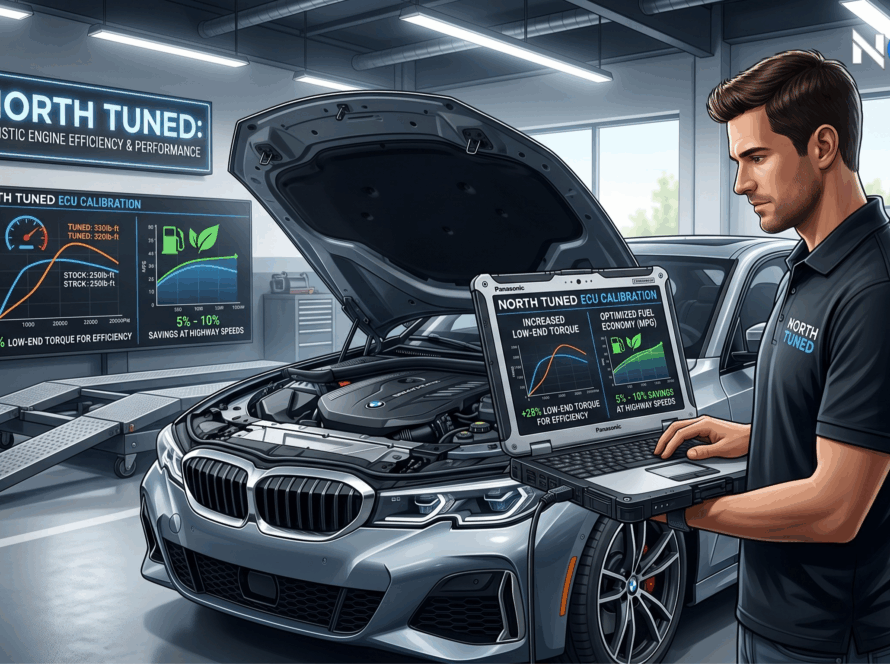
Stage 2 tuning transforms your vehicle’s character when supported by the correct mechanical upgrades and precise software calibration. Matching high-quality hardware with custom ECU tuning ensures maximum power output without compromising reliability.
At North Tuned, we specialize in delivering tailored Stage 2 calibration solutions built around your vehicle’s mechanical configuration. Contact us today to evaluate your vehicle’s readiness for Stage 2 performance.

 English
  Turkish
  German
  Spanish
  Hindi
Hindi  Arabic
  Italian
  Greek
Greek  Vietnamese
  Chinese
  Malay
Malay