
Tag: car performance

ECU Remapping vs. Plug-and-Play Chips: Which One is Right for You?

ECU Remapping vs. Plug-and-Play Chips: Which One is Right for You?

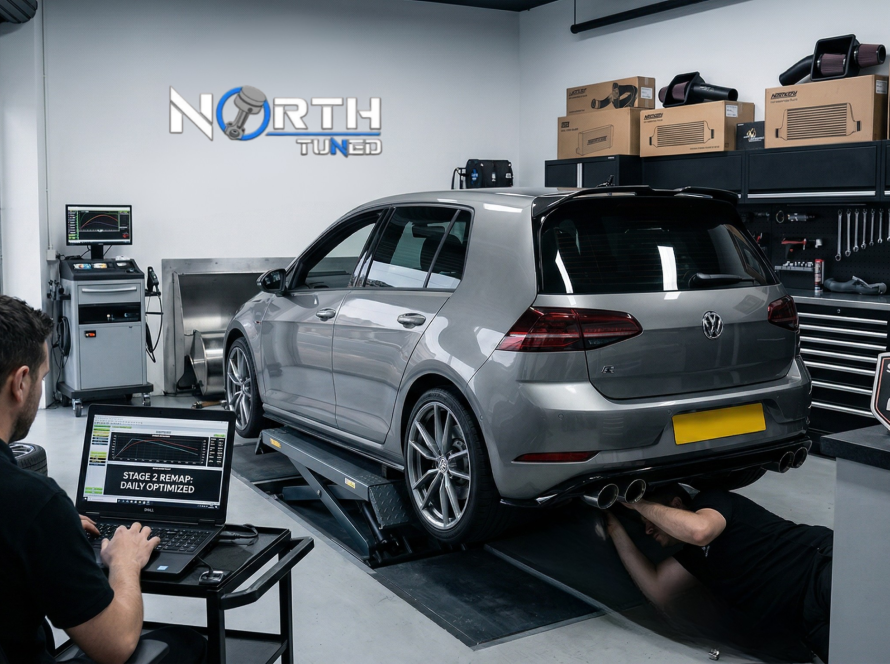
For performance enthusiasts, there are two primary ways to unlock a vehicle’s hidden potential: ECU Remapping and Plug-and-Play (PnP) Tuning Modules. At North Tuned, we’ve analyzed both methods to help you make the best decision for your ride.

1. What is ECU Remapping?

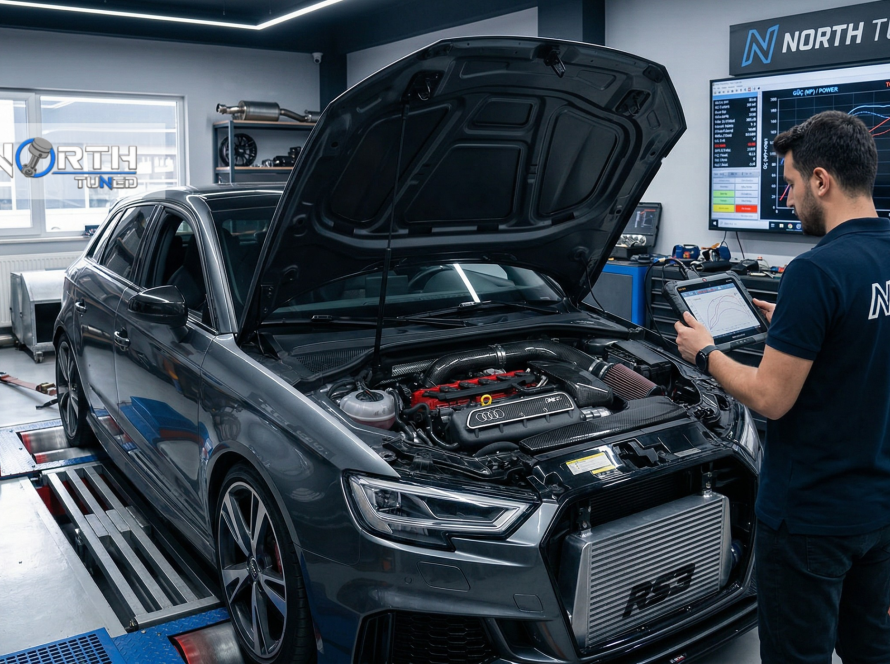
ECU Remapping involves rewriting the original software within your vehicle’s Electronic Control Unit. By removing factory-set restrictions, parameters such as fuel mapping, ignition timing, and boost pressure are fully optimized.

Pros:

Total Control: Every parameter of the engine can be adjusted.

Linear Power Delivery: Power is spread across the entire RPM range for a smoother feel.

Custom Tailored: If you have hardware upgrades (like an intake or exhaust), the map can be customized specifically for those parts.

Speed Limiter Removal: Most remaps allow for the removal of factory speed governors.

Cons:
Reversibility: Requires a professional to flash the car back to stock.

Warranty Concerns: Deep diagnostic scans at dealerships can often detect software changes.

2. What are Plug-and-Play Chips?
PnP modules are external boxes that sit between the engine sensors and the ECU. They function by intercepting and modifying sensor signals to “trick” the ECU into producing more power.

Pros:
Easy Installation: Usually a “DIY” job that takes about 15-20 minutes.

Instant Removal: You can unplug the device before a service visit or when selling the car, leaving no physical trace.

Transferability: Can often be moved to another vehicle with the same engine type.

Cons:
Limited Scope: It can only manipulate a few signals (mostly boost and fuel pressure) rather than managing the entire engine logic.

Less Refined: May not feel as smooth as a remap and can sometimes cause “jerky” power delivery in lower gears.

Feature,ECU Remapping,Plug-and-Play Chip
Power Gains,Maximum & Optimized,Moderate / Standardized
Driveability,Smooth & Natural,Aggressive but can be inconsistent
Installation,Professional Required,DIY Possible
Traceability,Software-visible,Physically removable

North Tuned Verdict
If you are looking for the most efficient, healthy, and bespoke performance increase, ECU Remapping is the superior choice. However, if your car is under a strict warranty or you want a temporary boost that you can remove at any time, a high-quality Plug-and-Play Module is a solid alternative.

read more
Ethanol Fuel and Performance: The Secret Weapon for High Horsepower

Ethanol Fuel and Performance: The Secret Weapon for High Horsepower

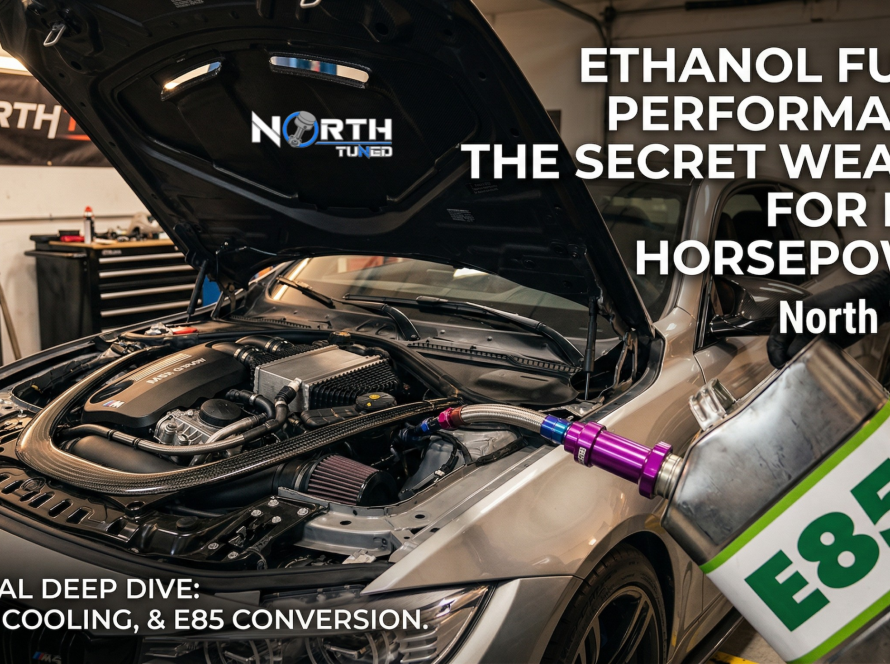
In the world of automotive tuning, fuel is just as critical as the hardware itself. When you push the limits of standard pump gas, you eventually hit a wall called “knock” or “detonation.” This is where Ethanol (Ethyl Alcohol) becomes a game-changer. At North Tuned, we frequently utilize ethanol blends to unlock the true potential of turbocharged and high-compression engines.

Here is an in-depth technical look at why ethanol is the preferred choice for high-performance applications and what you need to know about the transition.

What is Ethanol Fuel?
Ethanol is a renewable fuel source produced by fermenting sugars from agricultural feedstocks like corn, sugar cane, and wheat. While it can be used in its pure form, it is most commonly mixed with gasoline in varying ratios:

E10: 10% Ethanol / 90% Gasoline (Commonly found at standard gas stations).

E85: 85% Ethanol / 15% Gasoline (The “Gold Standard” for performance tuning).

Why Ethanol Wins: The Technical Advantages
The reason ethanol is so highly regarded in the motorsport and tuning industry boils down to two main factors: Octane Rating and Latent Heat of Vaporization.

1. Massive Octane Boost
Standard premium gasoline usually sits between 91 and 93 AKI (95-98 RON). Pure ethanol, however, boasts an octane rating of approximately 116 AKI / 129 RON. Even at an E85 blend, the effective octane rating is usually 105+.

The Benefit: High octane means the fuel is incredibly resistant to pre-ignition. This allows tuners to advance ignition timing and increase boost pressure significantly without the risk of engine damage.

2. Superior Cooling Effect
Ethanol has a much higher latent heat of vaporization than gasoline. This means that as ethanol is injected and evaporates, it absorbs a significant amount of heat from the intake air and the combustion chamber.

Turbo Longevity: By lowering Exhaust Gas Temperatures (EGT), ethanol protects the turbocharger turbine and internal engine components from thermal stress. It essentially acts as a chemical intercooler.

The “Ethanol Ready” Conversion: What Changes?
Ethanol contains about 34% less energy by volume than gasoline. This means that to maintain the correct Air/Fuel Ratio (AFR), the engine must spray more fuel. For E85, you typically need 30% to 35% more fuel flow compared to gasoline.

To make a vehicle compatible, North Tuned focuses on these essential upgrades:

High-Flow Fuel Pumps & Injectors: Since the volume requirement increases, upgraded pumps and larger injectors are mandatory to prevent the engine from running lean.

Flex Fuel Sensors: We install sensors that detect the exact ethanol content in the tank. This allows the ECU to automatically adjust the tune in real-time, whether you are running 10% or 85% ethanol.

Material Compatibility: While most modern cars (post-2000s) have fuel systems resistant to alcohol, older projects may require replacing rubber lines with PTFE (Teflon) lines to prevent corrosion.

Daily Driving and Environmental Impact
While ethanol is a “cleaner” burning fuel in terms of carbon emissions, it does have some quirks:

Cold Starts: Ethanol does not vaporize well at temperatures below 13°C (55°F). Specialized tuning is required to ensure the car starts smoothly on cold mornings.

Fuel Economy: Because more fuel is required to produce the same energy, you will notice a roughly 25-30% drop in MPG when running E85.

Ethanol is not just a fuel; it’s a performance tool. It allows us to reach power levels that were previously only possible with expensive, leaded racing fuels. If you are looking to maximize the efficiency and output of your turbocharged engine while keeping engine temperatures in check, an ethanol conversion is the most effective path forward.

read more
Common Myths vs. Realities of ECU Chip Tuning: Unlocking the Hidden Potential

Common Myths vs. Realities of ECU Chip Tuning: Unlocking the Hidden Potential

In the automotive world, the most effective way to increase performance is ECU (Engine Control Unit) Chip Tuning. As this technology evolves, it unfortunately brings along various misconceptions. At Nort Tuned, we are debunking these industry myths with engineering facts.

1. Myth: “Why Didn’t the Manufacturer Do It? It Must Be Harmful”
The Reality: Manufacturers (OEMs) design cars for global markets. They must account for extreme temperatures, poor fuel quality in developing countries, and neglected maintenance cycles. Consequently, engines are released with significantly restricted power (often 30-40% below capacity).

Nort Tuned Approach: We don’t remove safety margins; we recalibrate them based on your local fuel quality and driving conditions. A professional remap doesn’t strain the engine; it optimizes combustion efficiency, making the engine run smoother.

2. Myth: “More Power Always Equals Higher Fuel Consumption”
The Reality: While power requires energy, efficiency is the key. After a remap, the torque curve is shifted to lower RPMs.

The Logic: Your car delivers the power it used to give at 2000 RPM now at 1600 RPM.

The Saving: You can upshift earlier and use less throttle to maintain speed. On highway cruises, it is common to see a 10% to 18% improvement in fuel economy.

3. Myth: “Tuned Cars Will Fail Emission Tests or Inspections”
The Reality: This is a total misconception. ECU optimization doesn’t alter the physical hardware. When done correctly, emission levels stay within factory limits. Your vehicle will pass standard inspections and exhaust emission tests without any issues.

4. Myth: “Tuning Boxes are the Same as Remapping”
The Reality: “Plug-and-play” tuning boxes merely “trick” the sensors into sending false data to the ECU. This is a crude method that can lead to uncontrolled fuel delivery.
Nort Tuned Difference: We perform Custom Mapping. We analyze the vehicle’s mileage, turbo health, and injector status to create a tailored software solution. We never use “copy-paste” files that could endanger your engine.

5. Myth: “Chip Tuning is Only for Turbocharged Cars”
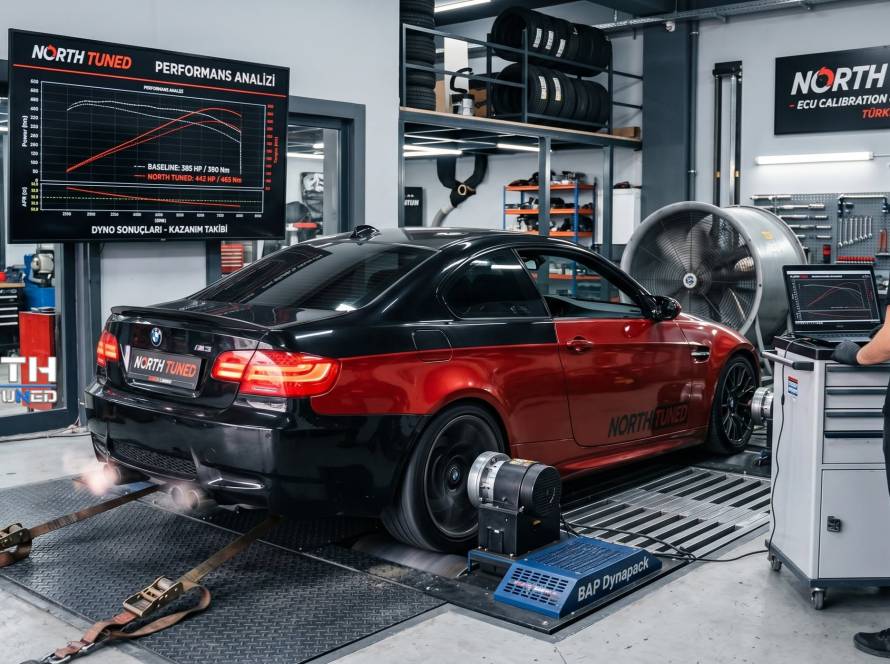
The Reality: While turbo engines see the most dramatic gains (20-35%), atmospheric (N/A) engines also benefit significantly. Remapping improves throttle response, removes “flat spots” in the power band, and provides a much more spirited driving experience.

read more
What is Horsepower (HP)? A Brief History of Power

What is Horsepower (HP)? A Brief History of Power

The term Horsepower (HP) is undoubtedly one of the most frequently used terms by car enthusiasts. Although it is the first criterion we look at when measuring a vehicle’s performance, it is not exactly equal to “the power of a single horse,” contrary to popular belief. So, how did this unit, which we at North Tuned place at the center of performance, come about?

James Watt and Marketing Genius
The term was first coined in 1782 by James Watt, a successful Scottish engineer and inventor who improved steam engines. To explain the capability of his engines to the public, Watt chose horses—the most common “engine” of that era—as a point of comparison.

How Was 1 Horsepower Calculated?
Watt observed horses working in coal mines. He calculated that, on average, a horse could pull 45 kg of coal 1.1 meters in one second. This mathematically equated to approximately 50 kg-m/s of work. However, to make his engines seem even more reliable and impressive, Watt increased this figure by 50%, rounding it up to 75 kg-m/s, and defined this as 1 Horsepower (HP).

In short, the modern definition is:

1 Horsepower (HP) is the amount of power required to lift a 75 kg load 1 meter vertically in 1 second.

Today, at North Tuned, we take James Watt’s fundamental legacy and optimize it with modern software and engineering solutions, efficiently awakening the “sleeping” horses within your vehicle.

read more
What is a Spark Plug? Why is it Critical for Performance?

What is a Spark Plug? Why is it Critical for Performance?

North Tuned
North Tuned

If you want to feel the true power of your engine, the ignition must be flawless. This is where the spark plug comes into play. But what exactly does this small yet mighty component do?

How Does a Spark Plug Work?
The primary role of a spark plug is to ignite the air-fuel mixture in the combustion chamber within milliseconds. It takes a massive voltage of 20,000 – 30,000 volts from the ignition coil and forces it across a gap, creating an electric arc (spark). This spark triggers the explosion that powers your vehicle.

Which Vehicles Use Spark Plugs?
Spark plugs are essential for gasoline, LPG, and hybrid engines. However, keep in mind: Diesel engines do not have ignition spark plugs. Diesel engines operate by compressing air to extreme pressures to cause spontaneous combustion.

Hot vs. Cold Spark Plugs: What’s the Difference?
Choosing the right plug based on your engine’s character is vital:

Cold Spark Plug: Has a shorter insulator nose and dissipates heat quickly. It is preferred for high-performance and tuned engines.

Hot Spark Plug: Has a longer insulator nose and retains more heat. It’s ideal for daily drivers and lower RPM engines.

North Tuned Insight: Does Changing Spark Plugs Affect Fuel Efficiency?
Absolutely! A worn-out spark plug or an incorrect gap causes inefficient combustion. This leads to higher fuel consumption and robs your engine of its performance. The right spark plug ensures:

Lower fuel consumption,

Sharper throttle response,

Smoother idling.

Pro Tip: The spark plug gap widens over time due to wear. In modern electronic ignition systems, this gap is typically between 0.8mm – 1.1mm. Don’t skip your periodic checks to maintain peak performance!

read more