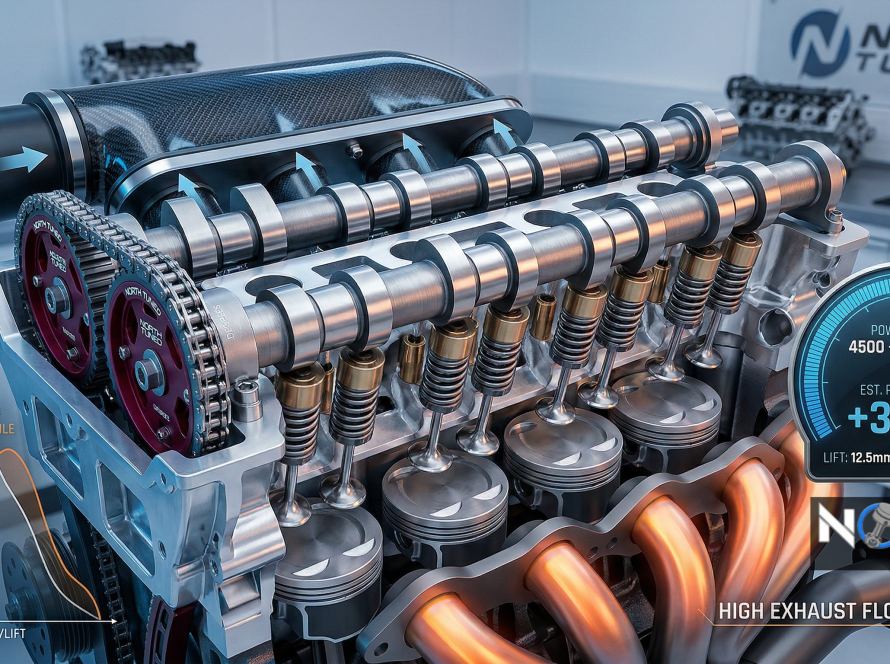

When it comes to unlocking a vehicle’s true potential, ECU Tuning is often the first step. However, at North Tuned, we believe that software is like a conductor; for it to produce the best symphony, the instruments beneath it must be up to the task.
Here are the top performance modifications that complement your tune and help your engine “breathe” better.
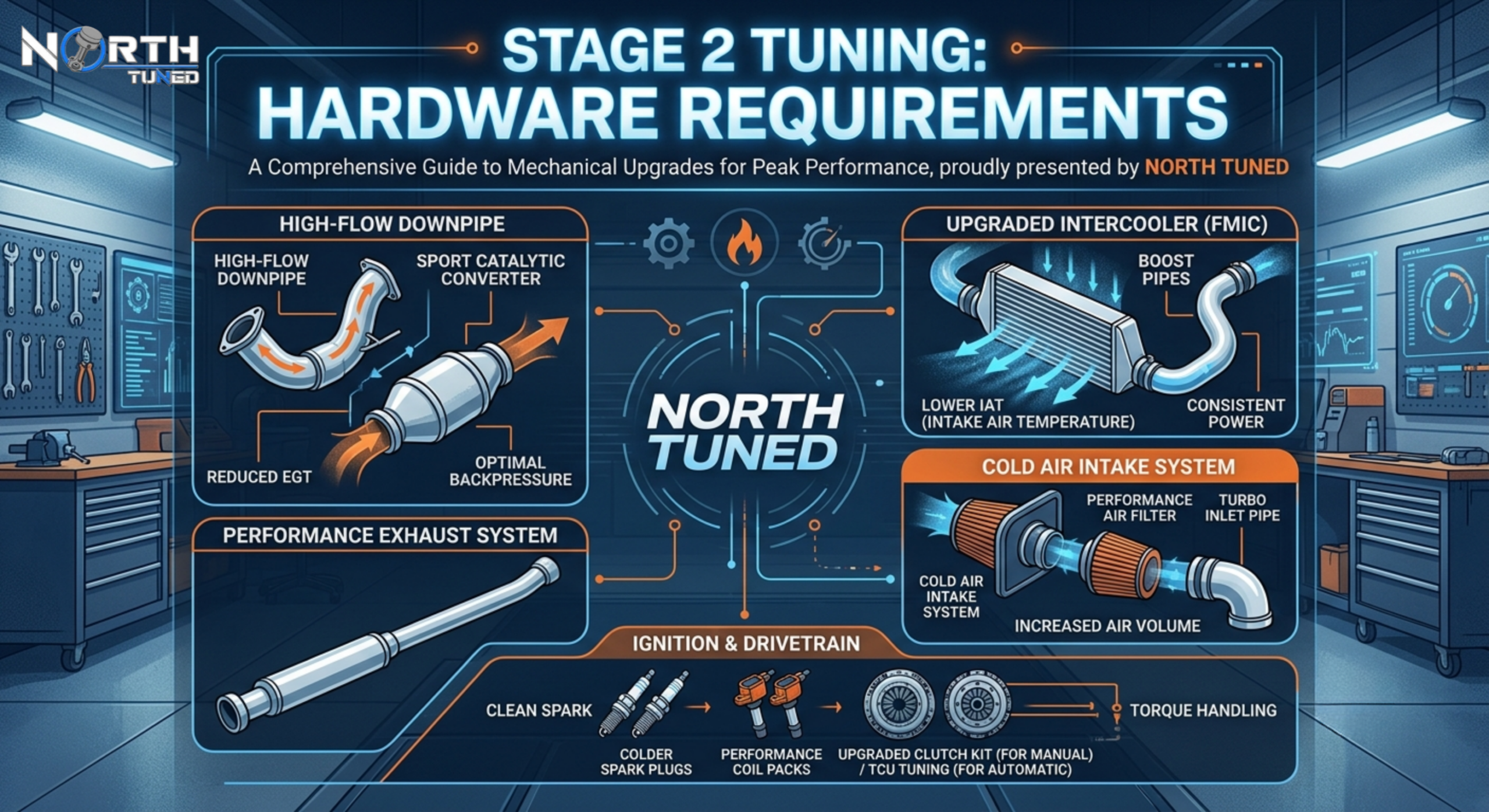
1. High-Flow Air Filters & Cold Air Intakes
A tuned engine demands more fuel, which in turn requires more oxygen. Stock paper filters often create a bottleneck.
Benefit: Increases airflow volume and sharpens throttle response.
2. Downpipe and Exhaust Upgrades
In turbocharged engines, getting exhaust gases out quickly is crucial. Standard catalytic converters can create backpressure and trap heat during high-performance driving.
Benefit: Lowers Exhaust Gas Temperatures (EGT) and allows the turbo to spool up faster.
3. Upgraded Intercooler
More boost equals more heat. When intake air gets too hot, it loses density, leading to “heat soak” and power loss.
Benefit: Keeps intake temperatures low, ensuring consistent power delivery even under hard driving.
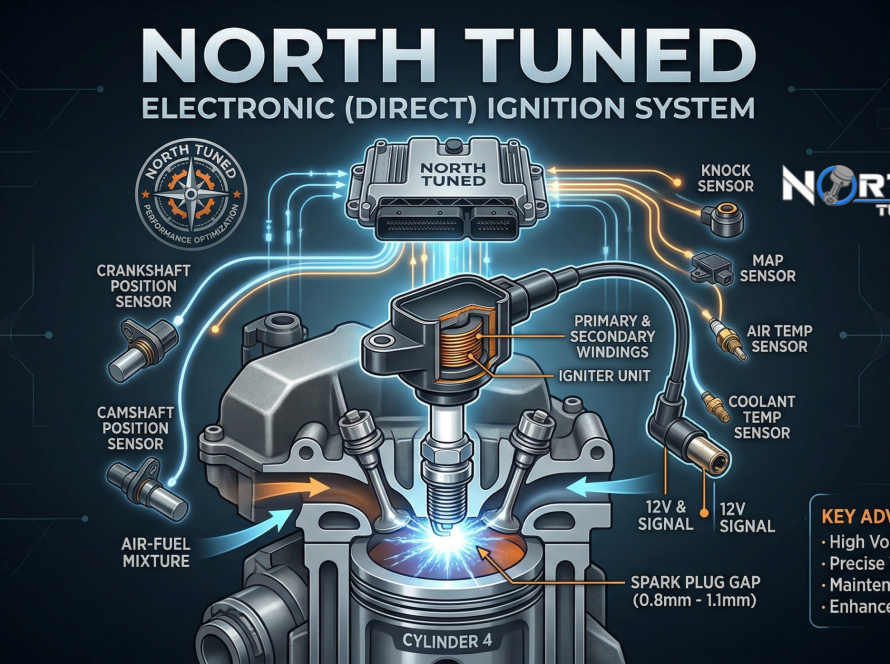
4. Ignition System (Spark Plugs & Coils)
Under increased boost and cylinder pressure, stock spark plugs might struggle to ignite the mixture, leading to misfires.
Benefit: A stronger spark ensures complete combustion and a smoother power band.
North Tuned Insight: To get the most out of these hardware changes, your ECU map should be calibrated to recognize the improved airflow and cooling. Efficiency and longevity go hand in hand.
For many enthusiasts, a car is more than just a tool for commuting; it’s a passion project. When the factory power feels insufficient, Stage 2 tuning is often the next logical step. But is it practical for a vehicle you drive every single day?
What is Stage 2?
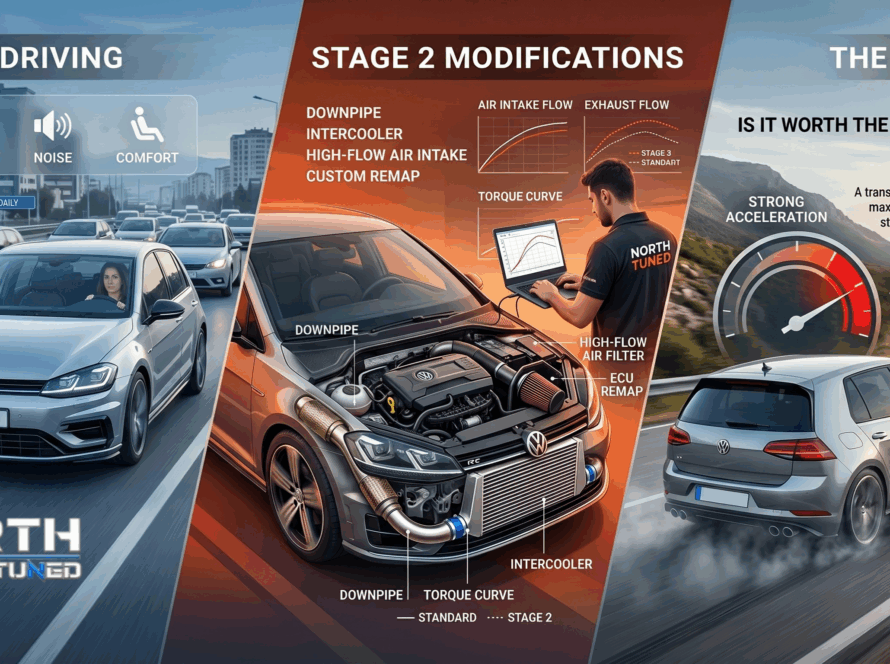
Unlike Stage 1, which is primarily a software-only upgrade, Stage 2 requires hardware modifications to help the engine “breathe” better. Typical upgrades include:
Downpipe: For faster exhaust gas evacuation.
Upgraded Intercooler: To ensure cooler, denser air intake.
High-Flow Air Intake: To reduce intake restriction.
Custom Remap: ECU calibration optimized for these specific hardware changes.
Pros and Cons for the Daily Drive
A Stage 2 vehicle offers a much broader torque curve and more aggressive acceleration compared to Stage 1. However, there are trade-offs to consider:
Performance: Significant gains in overtaking power and highway merging.
Fuel Economy: While efficiency can improve during cruising, spirited driving will see a noticeable jump in fuel consumption.
NVH (Noise, Vibration, Harshness): An aftermarket downpipe will increase exhaust volume. This might be thrilling for some but tiring for others in heavy traffic.
Reliability: Since you are pushing the engine further, high-quality maintenance becomes non-negotiable.
The Verdict: Is it worth it?
If you view driving as an experience rather than a chore and are willing to invest in the supporting hardware, Stage 2 is absolutely worth it. It transforms the character of the car without sacrificing total usability. At North Tuned, we believe the key is balance—achieving maximum performance while staying within the safe mechanical limits of your engine.