
Tag: exhaust modification

Step-by-Step Guide to Cleaning or Removing Your Car’s DPF

Step-by-Step Guide to Cleaning or Removing Your Car’s DPF

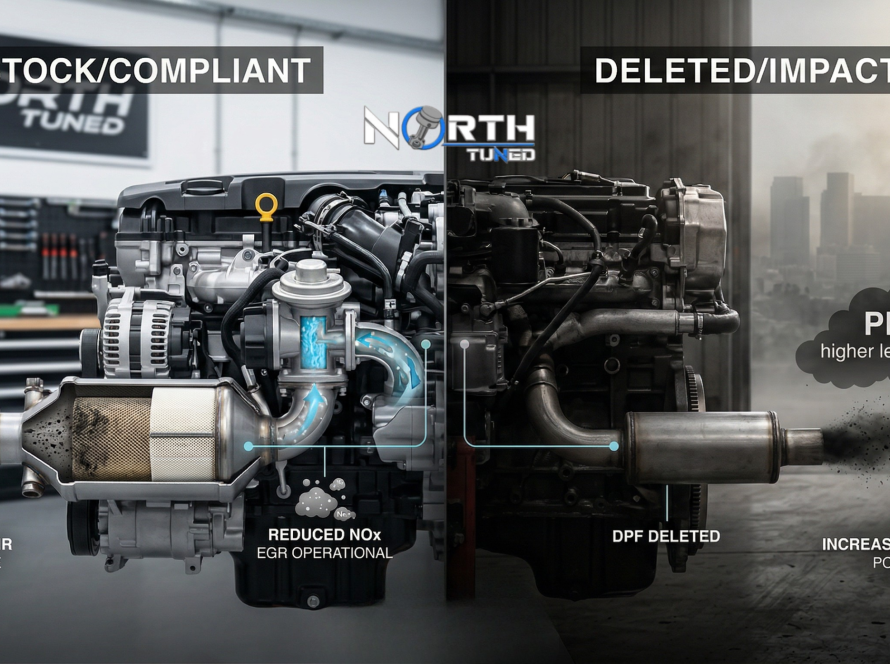
The Diesel Particulate Filter (DPF) traps harmful soot particles from diesel exhaust, but over time, it can become clogged with soot and ash. This leads to a drop in performance, increased fuel consumption, and an illuminated check engine light.

In this comprehensive guide, we cover the step-by-step processes of DPF cleaning and DPF removal, brought to you by the expertise of North Tuned.

Section 1: DPF Cleaning (Regeneration and Chemical Methods)
DPF cleaning restores the filter’s efficiency without the need for complete removal, or by utilizing specialized off-vehicle washing techniques.

Step 1: Diagnosis and Inspection
Read Diagnostic Trouble Codes (DTCs): Connect a diagnostic scanner to the vehicle’s OBD port to check for DPF-related errors (e.g., P2002).

Check Load Status: Analyze the DPF soot load percentage and differential pressure sensor data using live parameters.

Step 2: Driving-Assisted Regeneration (Active Regeneration)
Highway Driving: Drive the vehicle at a constant, slightly elevated RPM (approx. 2500–3000 RPM) for 20–30 minutes after the engine reaches operating temperature to burn off the soot.

Forced Regeneration: Using diagnostic equipment, trigger a stationary active regeneration cycle via the Engine Control Unit (ECU).

Step 3: Chemical Cleaning (Physical Intervention)
Removal: Carefully remove the filter from the exhaust system.

Chemical Treatment: Apply professional soot-dissolving chemicals into the core of the filter and let it soak.

High-Pressure Flushing: Wash out the loosened ash and soot using a pressurized back-flushing system.

Drying and Reassembly: Dry the filter, replace gaskets, and reattach it to the vehicle.

Section 2: DPF Removal (Physical Deletion and Software Remapping)
When the filter is damaged, beyond repair, or when preparing a vehicle for specific performance upgrades, DPF deletion is often applied.

Step 1: Physical Removal and Conversion
Detachment: Remove the DPF unit from the exhaust.

Core Evacuation or Downpipe: Hollow out the existing filter housing or replace the DPF section with a straight-through performance pipe (downpipe).

Step 2: North Tuned Software Solutions
After physical removal, professional ECU remapping is necessary to prevent error codes and limp modes:

DPF Delete File: Permanently disable the DPF regeneration cycles and related diagnostic trouble codes (DTCs) in the ECU mapping.

Sensor Calibration: Calibrate the exhaust gas temperature and differential pressure sensors to accommodate the modified system.

Important Note: At North Tuned, we emphasize compliance with local emissions regulations and environmental standards. DPF deletion processes are generally intended for track use or regions where legal regulations permit off-road modifications.

read more
What is a Performance Exhaust and How to Enhance Your Vehicle with North Tuned?

What is a Performance Exhaust and How to Enhance Your Vehicle with North Tuned?

The primary purpose of an exhaust is to safely expel combustion gases from the vehicle. Although often overlooked by many drivers, this system plays a critical role in unlocking a vehicle’s overall performance.

Factory-fitted mufflers used in standard passenger vehicles create a backpressure (resistance) during the evacuation of exhaust gases. This directly affects the vehicle’s performance and the engine’s breathing capacity. The main goal of an exhaust modification is to ensure that waste gases are discharged more quickly and smoothly.

Standard mufflers are designed to absorb engine noise. However, this process restricts the flow of exhaust gases, leading to power loss. Performance exhaust systems engineered with North Tuned expertise are specifically manufactured to minimize this restriction. These systems do not suppress the exhaust note entirely; when you press the throttle, you get a sporty, deep, and non-intrusive sound reminiscent of racing motorcycles. At the same time, exhaust gases are expelled much more easily, allowing the engine to breathe freely.

Exhaust System Components and Modification Steps
A modern vehicle’s exhaust system consists of a center muffler, a rear muffler, and a catalytic converter used to clean exhaust gases. A modification process conforming to North Tuned standards includes the following stages:

Rear Muffler Replacement: This is the most popular first step in exhaust modification and provides a noticeable increase in power.

Center Muffler and Complete System: While changing just the rear muffler is a great start, a complete system overhaul is required for maximum performance. Replacing the center muffler with a performance type, widening the exhaust pipes, and either deleting or upgrading the catalytic converter to a high-flow version completes this process.

Headers (Exhaust Manifold) Upgrade: This represents the highest level of system improvement. It directly increases the efficiency of collecting gases leaving the engine, although it comes at a higher cost compared to the other upgrades.

Pros and Cons of a Performance Exhaust
The effects of a modified exhaust system vary depending on the engine’s operating RPM and the chosen brand.

Advantages and Effects
Power Increase: It can yield up to a 10% increase in engine power at higher RPMs.

Sporty Character: It allows the engine to produce a deeper, more aggressive sound profile.

Improved Throttle Response: Reducing resistance in the exhaust system allows the engine to rev up much faster.

Points to Consider
Noise Levels and Legal Standards: The volume depends on the brand selected. For example, certain premium, TUV-approved brands deliver a deeper tone while remaining within acceptable limits. Extremely loud exhaust systems can cause issues during traffic inspections.

RPM Range: Performance exhaust systems are generally ideal for drivers who prefer higher RPMs. Drivers who cruise slowly and quietly in standard traffic may not feel the expected peak performance gains.

North Tuned Recommendation: To determine the most suitable exhaust combination for your vehicle’s engine characteristics and driving style, consult with the North Tuned team and achieve legal, safe, and reliable performance gains.

read more