
Tag: modified cars

Optimizing Your Car for Track Days via Tuning Software: The Ultimate North Tuned Guide

Optimizing Your Car for Track Days via Tuning Software: The Ultimate North Tuned Guide

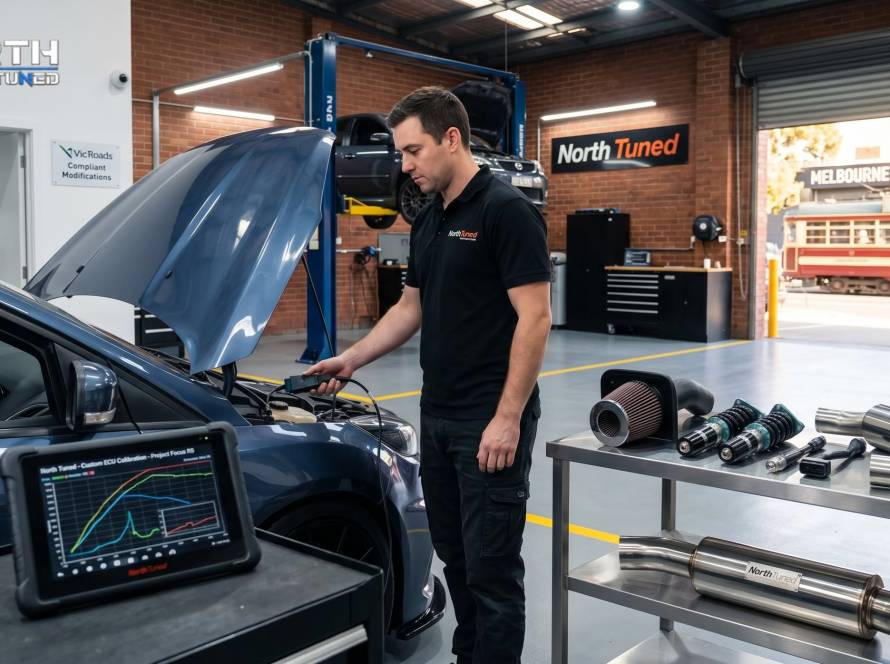
For automotive enthusiasts, a “Track Day” is more than a hobby; it’s a test of engineering and skill. Those few hours spent pushing your car to its absolute limits require a perfect symphony between mechanical hardware and digital software. While most focus on brakes and tires, the true potential of a modern vehicle lies within its ECU (Engine Control Unit).

At North Tuned, we specialize in unlocking that potential, transforming a street-legal car into a consistent, high-performance track weapon through precision software calibration.

1. Power Delivery and Predictability
On the street, software is designed for fuel economy. On the track, the goal is “predictability.”

Linear Power Delivery: Factory turbo maps often have sudden spikes in boost. In the middle of a high-speed corner, this can cause an upset in the chassis. North Tuned reshapes the boost curve to ensure that power builds progressively, giving you total control over traction.

Torque Management: By optimizing torque delivery in lower gears, we reduce unnecessary wheel spin, ensuring that every bit of power is converted into forward momentum as you exit the apex.

2. Advanced Thermal Management
Heat is the silent killer on the track. A 20-minute session subjects the engine to thermal stresses that a street car rarely sees.

Component Protection (EGT): Our calibrations include sophisticated safety maps. If Exhaust Gas Temperatures reach critical levels, the ECU automatically adjusts fueling to cool the internal components, preventing catastrophic failure.

Cooling System Optimization: We recalibrate fan duty cycles and water pump flow to trigger earlier. This ensures the engine remains in its optimal operating window even during the final laps of a hot summer session.

3. TCU Tuning: The Transmission Connection
For owners of DSG, PDK, or ZF8 gearboxes, the transmission software is just as vital as the engine map.

Shift Speed & Force: We decrease shift times to near-instantaneous levels, ensuring there is zero “dead time” during acceleration.

Kickdown Deactivation: Nothing is more frustrating than a car downshifting automatically when you are holding a gear for balance. Our TCU tunes give you 100% manual control, preventing unwanted gear changes at the limit.

4. Track-Specific Calibration Features
Left Foot Braking: Factory logic often cuts the throttle if the brake is pressed simultaneously. We remove this restriction, allowing advanced drivers to use the brake to tuck the nose into a corner while maintaining boost.

Dynamic Throttle Mapping: We sharpen the throttle response to eliminate lag, creating a telepathic connection between your right foot and the engine’s output.

read more
Engine Modification and Clutch Systems

Engine Modification and Clutch Systems

What is a Clutch?
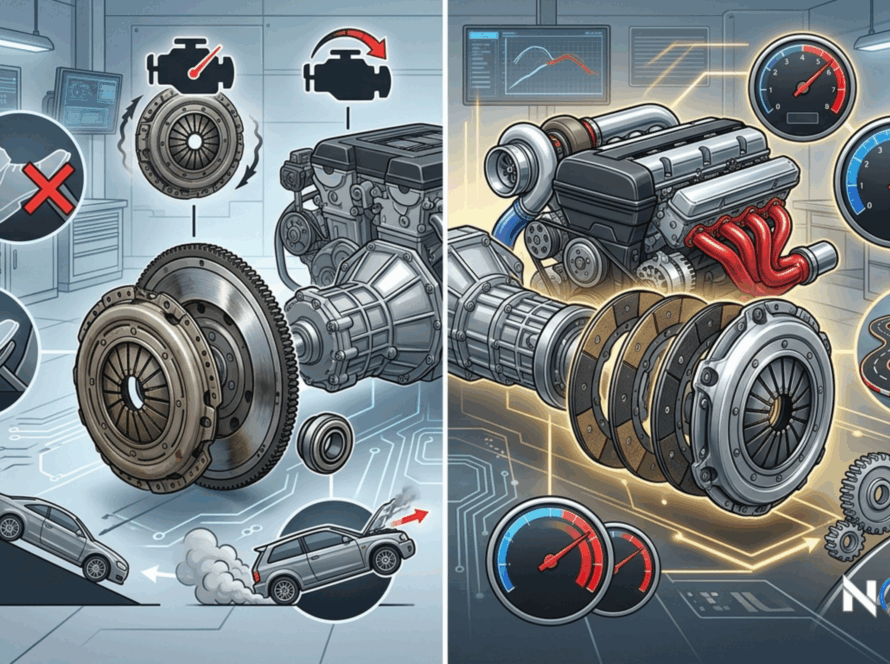
The clutch system is the most critical drivetrain component that transmits or disconnects the power generated by the engine to the transmission (gearbox). Acting as a bridge, this mechanism not only enables gear changes but also directly determines the vehicle’s takeoff and stopping performance.

Core Functions of the Clutch

Initiating Movement: It ensures a smooth start by gradually delivering the engine’s rotational force to the wheels.

Gear Shifting: It momentarily interrupts power transmission from the engine to allow gear teeth transitions during driving.

Safe Stopping: It disconnects the engine from the drivetrain components, allowing the engine to continue running when the vehicle stops.

Operating Mechanism
During normal driving, the pressure plate firmly presses the clutch disc against the flywheel. This clamping force allows the power from the engine to be transmitted to the gearbox and then to the wheels. When the driver depresses the clutch pedal, this pressure is released, the disc separates from the flywheel, and the flow of power to the wheels is halted.

Symptoms of a Worn-Out Clutch

Excessive shuddering or vibration during takeoff.

The engine revs up when the gas pedal is pressed, but the vehicle fails to accelerate (clutch slipping).

The vehicle feels sluggish and unresponsive in lower gears.

Hard or difficult gear shifts when the engine is hot.

Causes of Premature Clutch Wear

Resting your foot on the pedal out of habit while driving.

Attempting to hold the vehicle on an incline using the clutch (half-clutching).

Making sudden and aggressive takeoffs at high RPMs.

Not fully releasing the gas pedal during gear shifts.

Incorrect installation and choosing parts unsuitable for the vehicle’s power output.

Performance Clutch Systems

In modified vehicles with high horsepower and torque values, standard clutch systems fall short. This is where systems like Twin Plate or Triple Plate come into play. By increasing the number of clutch discs in these specialized systems, the friction surface is expanded. This allows the increased torque to be transmitted to the wheels safely and without loss. While not necessary for standard daily drivers, using these systems in high-performance projects is critical for engine health and driving efficiency.

Performance Clutch Systems

read more