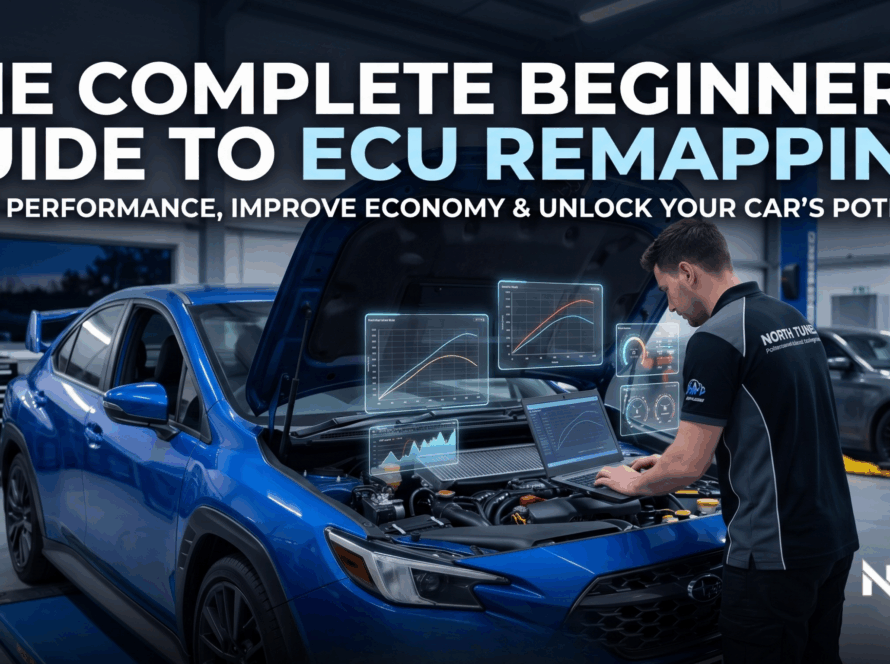

Tag: North Tuned

What is a Turbo Timer? Why is it Vital for Your Vehicle?

What is a Turbo Timer? Why is it Vital for Your Vehicle?

When it comes to performance and longevity in turbocharged vehicles, one of the most critical components is the Turbo Timer. Especially after high-performance driving or long journeys, shutting down the engine abruptly can cause irreversible damage to the turbocharger system. At North Tuned, we have detailed the technical importance of this technology and the advantages it offers to protect the heart of your vehicle.

What is a Turbo Timer?
A Turbo Timer is an electronic device designed to keep an engine running for a pre-specified period of time in order to automatically execute the required cool-down period. Even after you turn the ignition off and remove the key, the device allows the engine to continue idling, ensuring that the turbocharger cools down properly without requiring the driver to wait inside the car.

Why Should You Use a Turbo Timer?
Vehicles with forced induction (Turbo/Supercharger) systems reach extremely high RPMs and intense temperatures during operation. Shutting down the engine immediately after a drive leads to two major technical risks:

Thermal Stress and Cooling: After spirited driving or heavy loads, exhaust gas temperatures remain very high. A turbo timer allows the engine to idle, enabling the intake and exhaust tracks to cool down through the circulation of lower-temperature gases.

Preventing Oil Coking: The turbo shaft spins at hundreds of thousands of revolutions per minute and is lubricated by engine oil. If the engine is stopped suddenly, the oil pump stops as well, but the turbo shaft continues to spin due to inertia. The stagnant oil trapped between the glowing hot shaft and the bearings can “cook” (carbonize), leading to sludge buildup. Over time, this causes shaft seizure and catastrophic turbo failure.

Modern Solutions and Security
Today’s modern turbo timer systems are built on sophisticated digital electronic platforms. At North Tuned, safety is our priority during installation. These systems are typically integrated with the handbrake mechanism or a dedicated safety switch. If the handbrake is released or the vehicle is tampered with while the timer is active, the system immediately kills the engine to prevent theft.

Protect Your Turbo with North Tuned
Increasing your vehicle’s performance is only half the battle; the other half is building the infrastructure to protect that power. A turbo timer is not just a convenience—it is a protective shield that can significantly extend the lifespan of your turbocharger.

If you want to preserve your engine health and avoid premature turbo wear or costly repair bills, contact the expert team at North Tuned for professional Turbo Timer applications.

North Tuned: Where Performance Meets Reliability.

read more
Best Cars for Stage 3 Tuning in Australia: A Complete Guide

Best Cars for Stage 3 Tuning in Australia: A Complete Guide

If you are looking to build a true power monster on Australian streets or tracks, “Stage 1” and “Stage 2” are merely the appetizers. Stage 3 is where the rules of the game truly change. This level involves turbo upgrades, fuel system overhauls, and internal engine reinforcements, turning a standard daily driver into a “supercar killer.”

At North Tuned, we have selected the best platforms for Stage 3 tuning, keeping in mind Australia’s unique climate conditions and fuel quality.

What is Stage 3?
Stage 3 is the phase where we go beyond just software (ECU remapping) and push the physical limits of the hardware. It typically includes:

Upgraded Hybrid or Big Turbo kits.

High-pressure fuel pumps (HPFP) and larger injectors.

Advanced intercoolers and cooling systems.

Transmission (TCU) tuning and clutch upgrades.

Top Stage 3 Candidates in the Australian Market
1. Volkswagen Golf R (Mk7 / Mk7.5 / Mk8)
VAG group vehicles are the gold standard for Stage 3 tuning. The EA888 engine block can easily reach 500+ hp with just a turbo swap and a precision North Tuned map.

Why? Massive aftermarket support and the 4Motion AWD system that puts the power down effectively.

2. BMW M3/M4 (S55 & S58 Engines)
Bavarian engineering takes on a whole new identity at Stage 3. The new S58 engine, in particular, is so robust that pushing past the 700hp mark with “bolt-on” turbo kits is becoming a common sight at Australian drag strips.

3. Nissan Patrol (Y61 & Y62) – Australia’s Heavyweight
Australia is synonymous with off-roading. Adding a supercharger or a twin-turbo setup to the Y62’s V8 transforms this massive SUV into a desert-conquering rocket.

4. Audi RS3 (DAZA / DNWA)
The legendary 5-cylinder engine is a masterpiece. A Stage 3 RS3 is perhaps the most efficient way to achieve 0-100 km/h times in the 2-second range. With a TTE or Garrett turbo upgrade, the sound and speed are unmatched.

Why Choose North Tuned?
Stage 3 tuning leaves no room for error. An incorrect air-fuel ratio or excessive boost can lead to catastrophic engine failure. At North Tuned, we specialize in Custom Dyno Tuning tailored to your specific hardware, ensuring that your quest for more power doesn’t compromise reliability.

read more
Fundamentals of Vehicle Dynamics: What are Camber, Caster, and Toe?

Fundamentals of Vehicle Dynamics: What are Camber, Caster, and Toe?

When it comes to driving dynamics and handling, wheel alignment angles are the most critical factors defining your vehicle’s character. At North Tuned, we focus not only on power gains but also on how that power is delivered to the asphalt. Let’s take a closer look at these three fundamental angles that affect everything from tire life to high-speed stability.

North Tuned
North Tuned

Camber
Camber is the tilt of the wheels on the vertical axis when viewed from the front of the vehicle. If the top of the wheel tilts inward, it is called negative camber; if it tilts outward, it is positive camber.

Negative Camber: Provides superior grip during cornering by increasing the tire’s contact patch. However, excessive negative camber can lead to uneven tire wear on the inner edges during straight-line driving.

Positive Camber: Generally preferred in heavy-duty vehicles or certain off-road setups to stabilize steering response.

North Tuned Note: For track-oriented or high-performance street cars, an ideal level of negative camber is crucial to maximize cornering performance.

Caster
Caster is the angle of the steering axis (the line connecting the ball joints or strut line) when viewed from the side. If the axis tilts toward the rear, it is defined as positive caster.

Advantages: Positive caster enhances straight-line stability at high speeds and helps the steering wheel return to the center position after a turn.

Cross-Caster: In many passenger cars, the caster is slightly adjusted to ensure that if the driver loses control, the vehicle drifts toward the curb rather than into oncoming traffic.

North Tuned
North Tuned

Toe Angle (Toe-in & Toe-out)
Toe represents the distance between the front and rear of the tires when viewed from above. If the front edges are closer together, it’s Toe-in; if they are further apart, it’s Toe-out.

Drivetrain Relationship: Front-wheel-drive vehicles tend to pull the wheels inward under acceleration, so they are often balanced with toe-out. Rear-wheel-drive vehicles tend to push the wheels outward, requiring a toe-in adjustment.

Consequences of Misalignment: Incorrect toe settings cause irregular “sawtooth” tire wear and increase rolling resistance, leading to higher fuel consumption.

Precision alignment services performed with North Tuned expertise ensure that your vehicle doesn’t just go fast, but stays glued to the road like it’s on rails.

North Tuned
North Tuned
read more
Electronic (Direct) Ignition System: North Tuned Technology

Electronic (Direct) Ignition System: North Tuned Technology

The primary function of a standalone electronic ignition system is to ignite the air-fuel mixture in the combustion chamber at the most optimal moment, providing the necessary ignition advance for peak engine performance. At North Tuned, we prioritize millisecond precision in ignition timing to ensure a superior high-performance driving experience.

North Tuned
North Tuned

Operating Principle
In this system, an independent ignition coil is utilized for each cylinder. These coils integrate the igniter unit, primary, and secondary windings, connecting directly to the spark plug. Unlike traditional systems, there are no spark plug wires; the coils are powered by a 12V supply and controlled via signal currents directly from the ECU.

As we emphasize in North Tuned software optimization processes, the Engine Control Unit (ECU) processes real-time data from crankshaft and camshaft sensors. By controlling the primary circuit of each cylinder’s coil, it generates high voltage at the exact required moment to trigger flawless combustion.

Key Sensors and Their Roles
The ECU manages the ignition map based on data from several critical sensors:

Crankshaft & TDC Sensor: Determines engine RPM and piston position.

Camshaft (Phase) Sensor: Verifies the timing of the cylinders.

Knock Sensor: Monitors pre-ignition to ensure engine safety.

MAP/MAF Sensor: Measures intake manifold pressure and air mass flow.

Temperature Sensors: Optimizes advance based on coolant and intake air temperatures.

Advantages of the System with North Tuned
High Voltage Power: Produces up to 40,000 Volts for a stronger spark and complete combustion.

Precise Advance Management: Electronic control delivers maximum performance and optimized fuel efficiency.

Mechanical Reliability: No moving or friction-based parts, leading to lower failure rates and zero maintenance.

Wide Spark Plug Gap: A gap of 0.8 mm – 1.1 mm allows for a larger flame kernel and significant power gains.

read more
What is Horsepower (HP)? A Brief History of Power

What is Horsepower (HP)? A Brief History of Power

The term Horsepower (HP) is undoubtedly one of the most frequently used terms by car enthusiasts. Although it is the first criterion we look at when measuring a vehicle’s performance, it is not exactly equal to “the power of a single horse,” contrary to popular belief. So, how did this unit, which we at North Tuned place at the center of performance, come about?

James Watt and Marketing Genius
The term was first coined in 1782 by James Watt, a successful Scottish engineer and inventor who improved steam engines. To explain the capability of his engines to the public, Watt chose horses—the most common “engine” of that era—as a point of comparison.

How Was 1 Horsepower Calculated?
Watt observed horses working in coal mines. He calculated that, on average, a horse could pull 45 kg of coal 1.1 meters in one second. This mathematically equated to approximately 50 kg-m/s of work. However, to make his engines seem even more reliable and impressive, Watt increased this figure by 50%, rounding it up to 75 kg-m/s, and defined this as 1 Horsepower (HP).

In short, the modern definition is:

1 Horsepower (HP) is the amount of power required to lift a 75 kg load 1 meter vertically in 1 second.

Today, at North Tuned, we take James Watt’s fundamental legacy and optimize it with modern software and engineering solutions, efficiently awakening the “sleeping” horses within your vehicle.

read more
Performance Mods That Pair Perfectly With ECU Tuning

Performance Mods That Pair Perfectly With ECU Tuning

When it comes to unlocking a vehicle’s true potential, ECU Tuning is often the first step. However, at North Tuned, we believe that software is like a conductor; for it to produce the best symphony, the instruments beneath it must be up to the task.

Here are the top performance modifications that complement your tune and help your engine “breathe” better.

1. High-Flow Air Filters & Cold Air Intakes
A tuned engine demands more fuel, which in turn requires more oxygen. Stock paper filters often create a bottleneck.

Benefit: Increases airflow volume and sharpens throttle response.

2. Downpipe and Exhaust Upgrades
In turbocharged engines, getting exhaust gases out quickly is crucial. Standard catalytic converters can create backpressure and trap heat during high-performance driving.

Benefit: Lowers Exhaust Gas Temperatures (EGT) and allows the turbo to spool up faster.

3. Upgraded Intercooler
More boost equals more heat. When intake air gets too hot, it loses density, leading to “heat soak” and power loss.

Benefit: Keeps intake temperatures low, ensuring consistent power delivery even under hard driving.

4. Ignition System (Spark Plugs & Coils)
Under increased boost and cylinder pressure, stock spark plugs might struggle to ignite the mixture, leading to misfires.

Benefit: A stronger spark ensures complete combustion and a smoother power band.

North Tuned Insight: To get the most out of these hardware changes, your ECU map should be calibrated to recognize the improved airflow and cooling. Efficiency and longevity go hand in hand.

read more
What is a Spark Plug? Why is it Critical for Performance?

What is a Spark Plug? Why is it Critical for Performance?

North Tuned
North Tuned

If you want to feel the true power of your engine, the ignition must be flawless. This is where the spark plug comes into play. But what exactly does this small yet mighty component do?

How Does a Spark Plug Work?
The primary role of a spark plug is to ignite the air-fuel mixture in the combustion chamber within milliseconds. It takes a massive voltage of 20,000 – 30,000 volts from the ignition coil and forces it across a gap, creating an electric arc (spark). This spark triggers the explosion that powers your vehicle.

Which Vehicles Use Spark Plugs?
Spark plugs are essential for gasoline, LPG, and hybrid engines. However, keep in mind: Diesel engines do not have ignition spark plugs. Diesel engines operate by compressing air to extreme pressures to cause spontaneous combustion.

Hot vs. Cold Spark Plugs: What’s the Difference?
Choosing the right plug based on your engine’s character is vital:

Cold Spark Plug: Has a shorter insulator nose and dissipates heat quickly. It is preferred for high-performance and tuned engines.

Hot Spark Plug: Has a longer insulator nose and retains more heat. It’s ideal for daily drivers and lower RPM engines.

North Tuned Insight: Does Changing Spark Plugs Affect Fuel Efficiency?
Absolutely! A worn-out spark plug or an incorrect gap causes inefficient combustion. This leads to higher fuel consumption and robs your engine of its performance. The right spark plug ensures:

Lower fuel consumption,

Sharper throttle response,

Smoother idling.

Pro Tip: The spark plug gap widens over time due to wear. In modern electronic ignition systems, this gap is typically between 0.8mm – 1.1mm. Don’t skip your periodic checks to maintain peak performance!

read more

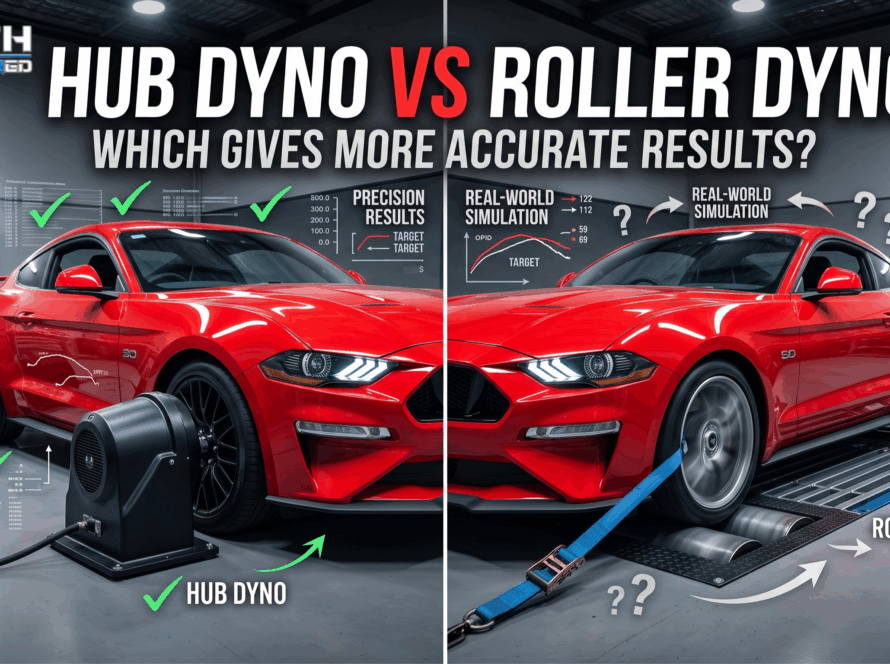
How to Measure Your Car’s Performance After a Tune

Getting a professional tune (remapping) is the most exciting way to unlock your vehicle’s hidden potential. However, simply saying “it feels faster” isn’t enough. To truly understand the gains, you need empirical data. Here is how we at North Tuned recommend verifying your performance increase:

1. Dyno (Dynamometer) Testing
This is the gold standard. A dyno measures the horsepower (HP) and torque (Nm) delivered to the wheels.

Before/After: Performing a run right before and right after the tune provides a clear picture of the changes in the power band.

Health Check: It allows technicians to monitor Air-Fuel Ratios (AFR) to ensure the tune is running safely under load.

2. GPS-Based Performance Meters (Dragy or VBOX)
Devices like Dragy are the best way to turn feelings into facts. These use high-frequency GPS (10Hz or higher) to track acceleration with extreme precision.

0-100 km/h & 100-200 km/h: These are the industry standards for measuring real-world acceleration.

Slope Correction: These devices account for road incline, giving you a “valid” and honest result regardless of the terrain.

3. OBDII Data Logging
Speed is only one part of the story; how the engine achieves that speed matters for longevity. Use an OBDII scanner to log:

Boost Levels: Is the turbo hitting the requested targets?

Ignition Timing: Is the engine running efficiently without “pulling” timing due to knock?

Intake Air Temperatures (IAT): Is your cooling system handling the extra power effectively?

4. In-Gear Acceleration (Flexibility)
This is the most relevant metric for daily driving. For example, measure the time it takes to go from 80 km/h to 120 km/h in 4th gear. The reduction in this timeframe is the best indicator of your car’s increased “punch” and torque delivery.

read more
What is NOS (Nitrous Oxide System)? The Chemistry of Performance

What is NOS (Nitrous Oxide System)? The Chemistry of Performance

For speed enthusiasts and performance seekers, NOS (Nitrous Oxide System) remains one of the most intriguing and effective ways to achieve instantaneous power gains in internal combustion engines. But how exactly does this system work, and what happens at the heart of your vehicle? As North Tuned, we take a closer look at this adrenaline-pumping technology.

How Does NOS Work? The Formula of Power
The power generated by an internal combustion engine depends on how violently the oxygen taken in can be detonated with the injected fuel. In standard engine tuning, the goal is to increase the air-fuel mixture entering the engine. NOS takes this process to a much more radical level.

Oxygen Enrichment: When Nitrous Oxide gas enters the combustion chamber, it breaks down due to heat, releasing pure oxygen. This represents a much higher concentration of oxygen compared to regular atmospheric air.

Cooling Effect: The cooling effect created as the gas exits the cylinder increases the density of the intake air. Cooler air is denser, allowing significantly more oxygen to fill the combustion chamber than normal.

Powerful Combustion: With the increased oxygen, more fuel is delivered to the system. The result is a much more powerful explosion, leading to a massive increase in horsepower delivered to the wheels.

Why Choose NOS?
Factory-spec cars are manufactured with performance values below their true potential to ensure fuel economy and durability under all road conditions. A NOS kit, applied with North Tuned expertise, awakens the “sleeping giant” within your vehicle’s DNA—only when you need it.

The biggest advantage of the system is that it is “on-demand.” While providing a standard driving experience for daily city use, you can transform your car into a high-performance machine with a single touch whenever extra power is required.

Does NOS Damage the Engine?
Let’s provide a clear answer to the most frequently asked question: Not with the right setup and correct limits.

The key to preventing engine damage is selecting the appropriate horsepower gain. As long as you do not exceed the load capacity that your engine components (pistons, rods, bearings) can tolerate, no additional wear occurs.

Safe Power Gains with North Tuned:

Precise Calibration: For high-level horsepower increases, we meticulously perform critical adjustments such as spark plug selection and ignition timing retardation.

Fuel Optimization: We ensure the fuel system and octane levels are correctly tuned to support the increased power.

Controlled Power: By activating the system only when performance is needed, you preserve the overall longevity of your engine.

Push the Limits with North Tuned
If you want to discover your vehicle’s true potential and achieve safe performance gains, you are in the right place. To get detailed information about NOS applications and our other performance solutions, and to determine the most suitable kit for your vehicle, feel free to contact us.

read more
Stage 2 Tuning for Daily Drivers: Is It Worth the Investment?

Stage 2 Tuning for Daily Drivers: Is It Worth the Investment?

For many enthusiasts, a car is more than just a tool for commuting; it’s a passion project. When the factory power feels insufficient, Stage 2 tuning is often the next logical step. But is it practical for a vehicle you drive every single day?

What is Stage 2?
Unlike Stage 1, which is primarily a software-only upgrade, Stage 2 requires hardware modifications to help the engine “breathe” better. Typical upgrades include:

Downpipe: For faster exhaust gas evacuation.

Upgraded Intercooler: To ensure cooler, denser air intake.

High-Flow Air Intake: To reduce intake restriction.

Custom Remap: ECU calibration optimized for these specific hardware changes.

Pros and Cons for the Daily Drive
A Stage 2 vehicle offers a much broader torque curve and more aggressive acceleration compared to Stage 1. However, there are trade-offs to consider:

Performance: Significant gains in overtaking power and highway merging.

Fuel Economy: While efficiency can improve during cruising, spirited driving will see a noticeable jump in fuel consumption.

NVH (Noise, Vibration, Harshness): An aftermarket downpipe will increase exhaust volume. This might be thrilling for some but tiring for others in heavy traffic.

Reliability: Since you are pushing the engine further, high-quality maintenance becomes non-negotiable.

The Verdict: Is it worth it?
If you view driving as an experience rather than a chore and are willing to invest in the supporting hardware, Stage 2 is absolutely worth it. It transforms the character of the car without sacrificing total usability. At North Tuned, we believe the key is balance—achieving maximum performance while staying within the safe mechanical limits of your engine.

read more