
Tag: suspension

A Beginner’s Guide to Tuning Your Car in Melbourne

A Beginner’s Guide to Tuning Your Car in Melbourne

Your car is not just a means of transportation; it is a reflection of your personality and passion for driving. Whether you want to boost your car’s performance on the streets of Melbourne or enhance its handling for track days at Phillip Island, understanding the fundamentals of car tuning is essential.

In this comprehensive guide, prepared for automotive enthusiasts in the heart of Australian car culture, we will explore the basics of tuning and how you can achieve superior performance with North Tuned.

What is Tuning and Why is It Important?
Tuning involves optimizing a vehicle’s factory settings to meet the driver’s desires and needs. This process does not only aim to achieve more horsepower; it also:

Increases fuel efficiency.

Improves driving dynamics and handling.

Optimizes engine lifespan (when done correctly).

Gives your car a unique, personal character.

Types of Tuning
The main areas you can focus on when tuning your vehicle include:

1. ECU Tuning (Remapping & Chip Tuning)
This involves updating the software within the vehicle’s engine control unit (ECU). Parameters such as fuel-to-air ratio, ignition timing, and turbo boost pressure are re-optimized.

2. Exhaust and Intake Modifications
These upgrades allow the engine to breathe better by taking in more air and expelling exhaust gases more efficiently. This increases horsepower while delivering a deep, sporty engine note.

3. Suspension and Braking Systems
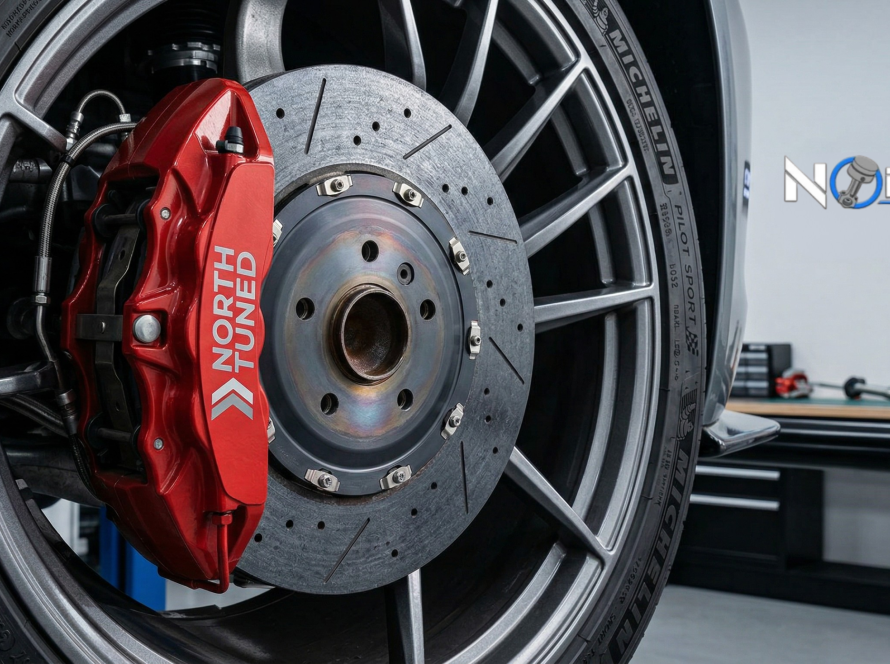
Achieving higher performance is not just about going fast; it’s about control. Upgraded suspension and performance brake pads provide better handling and stopping power around corners.

Why Choose North Tuned?
Finding the right workshop to entrust your car to in Melbourne is vital for its health and performance. North Tuned stands out as a top-tier choice for automotive enthusiasts in the Melbourne area, thanks to its expert technicians and state-of-the-art equipment.

North Tuned Advantages:
Expert Engineering: Custom calibrations tailored to your car’s make, model, and engine architecture.

Reliability: Modifications that adhere to legal standards and ensure long-term engine durability.

Transparent Communication: Keeping you informed through every step of the tuning process.

Things to Consider When Tuning in Melbourne
When modifying a vehicle in Melbourne and the state of Victoria, it is crucial to comply with VicRoads regulations. Adhering to noise limits and emission standards prevents legal issues. North Tuned ensures your vehicle is prepared with these legal requirements in mind.

Step-by-Step Getting Started Plan
You can follow these steps to prepare your car for the tuning journey:

Define Your Goals: What do you want from your car? Is it for daily commuting or track-day performance?

Complete Routine Maintenance: Ensure all fluids and filters are serviced before any tuning takes place.

Contact North Tuned: Speak with the expert team to find the best package suited for your vehicle.

read more
North Tuned: What is a Suspension System and How Does It Work?

North Tuned: What is a Suspension System and How Does It Work?

One of the most important components of a vehicle is the suspension system. The primary purpose of a suspension system is to maximize the friction between the tires and the road surface, which improves ride quality and makes the vehicle easier to control. The suspension system is extremely important for the safety and comfort of the occupants inside the vehicle. Thanks to this system, the vehicle does not lose contact with the ground when passing over bumps or rough roads, and the passengers feel as if they are traveling on a smooth road.

Key Components of the Suspension System
1. Springs
Springs are one of the most important parts of the suspension system. They bear the entire weight of the vehicle, apart from the wheels. Due to their flexibility, they allow the wheels to move closer to the chassis over bumps and away from the chassis over potholes. This significantly dampens the vibrations experienced within the cabin.

Types of Automotive Springs:

Coil Springs

Leaf Springs

Torsion Bar Springs

Hydropneumatic Springs

Pneumatic Springs

2. Shock Absorbers (Dampers)
A suspension system without dampening acts like a launching mechanism. When the vehicle goes over a bump, the spring compresses and then releases, pushing the wheel back in the opposite direction. This causes the vehicle to bounce up and down, hit the ground, and rebound continuously. The component responsible for absorbing this energy and eliminating the continuous oscillation is called a shock absorber.

Today, almost all vehicles use hydraulic tube shock absorbers. These are divided into single-acting and double-acting types. Single-acting shock absorbers function in only one direction (either during compression or extension) and remain free in the other. Double-acting shock absorbers function during both extension and compression, and they are the most widely used type today.

Working Principle:
When weight is applied, the shock absorber is forced to compress, causing the piston rod to move downward inside a cylinder filled with hydraulic fluid. Since liquids cannot be compressed, the hydraulic fluid is forced through small valves in the piston. This hydraulic resistance dissipates most of the energy, effectively slowing down the movement. This process quickly dampens the vibrations and oscillations at the wheels.

3. Suspension Arms (Control Arms)
Another essential component is the suspension arm system, which connects the chassis to the wheels. The system connecting the front wheels is the front suspension, and the system connecting the rear wheels is the rear suspension. Suspension arms ensure that the tires remain flat on the road during turns and cornering. They are generally categorized into rigid and independent systems.

4. Ball Joints
Although small in size, ball joints are crucial components of the suspension system. They connect the steering knuckle to the control arms. They are categorized into upper ball joints and lower ball joints. They are sealed and pre-lubricated during manufacturing and cannot be re-lubricated later. Their main purpose is to maintain a secure connection between the wheels and the suspension while allowing freedom of movement during steering and suspension travel.

5. Sway Bars (Stabilizer Bars)
Sway bars, also known as stabilizer bars, play a critical role in handling. When a vehicle takes a corner, the centrifugal force causes the outer suspension to compress and the inner suspension to extend, causing body roll. The sway bar twists to reduce this difference between the left and right wheels, increasing steering control and preventing the vehicle from rolling excessively.

North Tuned: Optimizing Your Suspension for Peak Performance
At North Tuned, we understand that a high-performance engine requires a perfectly tuned chassis and suspension setup. Whether you are setting up your vehicle for track use or improving handling on the street, balancing power output with suspension dynamics is essential for maximum control and safety.

read more