
Tag: turbocharging

Ethanol Fuel and Performance: The Secret Weapon for High Horsepower

Ethanol Fuel and Performance: The Secret Weapon for High Horsepower

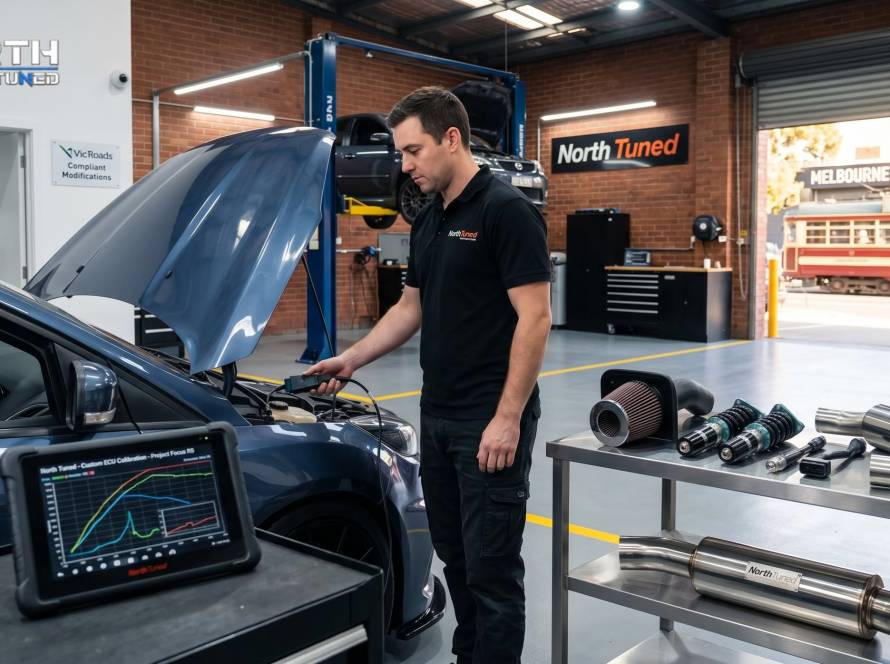
In the world of automotive tuning, fuel is just as critical as the hardware itself. When you push the limits of standard pump gas, you eventually hit a wall called “knock” or “detonation.” This is where Ethanol (Ethyl Alcohol) becomes a game-changer. At North Tuned, we frequently utilize ethanol blends to unlock the true potential of turbocharged and high-compression engines.

Here is an in-depth technical look at why ethanol is the preferred choice for high-performance applications and what you need to know about the transition.

What is Ethanol Fuel?
Ethanol is a renewable fuel source produced by fermenting sugars from agricultural feedstocks like corn, sugar cane, and wheat. While it can be used in its pure form, it is most commonly mixed with gasoline in varying ratios:

E10: 10% Ethanol / 90% Gasoline (Commonly found at standard gas stations).

E85: 85% Ethanol / 15% Gasoline (The “Gold Standard” for performance tuning).

Why Ethanol Wins: The Technical Advantages
The reason ethanol is so highly regarded in the motorsport and tuning industry boils down to two main factors: Octane Rating and Latent Heat of Vaporization.

1. Massive Octane Boost
Standard premium gasoline usually sits between 91 and 93 AKI (95-98 RON). Pure ethanol, however, boasts an octane rating of approximately 116 AKI / 129 RON. Even at an E85 blend, the effective octane rating is usually 105+.

The Benefit: High octane means the fuel is incredibly resistant to pre-ignition. This allows tuners to advance ignition timing and increase boost pressure significantly without the risk of engine damage.

2. Superior Cooling Effect
Ethanol has a much higher latent heat of vaporization than gasoline. This means that as ethanol is injected and evaporates, it absorbs a significant amount of heat from the intake air and the combustion chamber.

Turbo Longevity: By lowering Exhaust Gas Temperatures (EGT), ethanol protects the turbocharger turbine and internal engine components from thermal stress. It essentially acts as a chemical intercooler.

The “Ethanol Ready” Conversion: What Changes?
Ethanol contains about 34% less energy by volume than gasoline. This means that to maintain the correct Air/Fuel Ratio (AFR), the engine must spray more fuel. For E85, you typically need 30% to 35% more fuel flow compared to gasoline.

To make a vehicle compatible, North Tuned focuses on these essential upgrades:

High-Flow Fuel Pumps & Injectors: Since the volume requirement increases, upgraded pumps and larger injectors are mandatory to prevent the engine from running lean.

Flex Fuel Sensors: We install sensors that detect the exact ethanol content in the tank. This allows the ECU to automatically adjust the tune in real-time, whether you are running 10% or 85% ethanol.

Material Compatibility: While most modern cars (post-2000s) have fuel systems resistant to alcohol, older projects may require replacing rubber lines with PTFE (Teflon) lines to prevent corrosion.

Daily Driving and Environmental Impact
While ethanol is a “cleaner” burning fuel in terms of carbon emissions, it does have some quirks:

Cold Starts: Ethanol does not vaporize well at temperatures below 13°C (55°F). Specialized tuning is required to ensure the car starts smoothly on cold mornings.

Fuel Economy: Because more fuel is required to produce the same energy, you will notice a roughly 25-30% drop in MPG when running E85.

Ethanol is not just a fuel; it’s a performance tool. It allows us to reach power levels that were previously only possible with expensive, leaded racing fuels. If you are looking to maximize the efficiency and output of your turbocharged engine while keeping engine temperatures in check, an ethanol conversion is the most effective path forward.

read more
Optimizing Your Car for Track Days via Tuning Software: The Ultimate North Tuned Guide

Optimizing Your Car for Track Days via Tuning Software: The Ultimate North Tuned Guide

For automotive enthusiasts, a “Track Day” is more than a hobby; it’s a test of engineering and skill. Those few hours spent pushing your car to its absolute limits require a perfect symphony between mechanical hardware and digital software. While most focus on brakes and tires, the true potential of a modern vehicle lies within its ECU (Engine Control Unit).

At North Tuned, we specialize in unlocking that potential, transforming a street-legal car into a consistent, high-performance track weapon through precision software calibration.

1. Power Delivery and Predictability
On the street, software is designed for fuel economy. On the track, the goal is “predictability.”

Linear Power Delivery: Factory turbo maps often have sudden spikes in boost. In the middle of a high-speed corner, this can cause an upset in the chassis. North Tuned reshapes the boost curve to ensure that power builds progressively, giving you total control over traction.

Torque Management: By optimizing torque delivery in lower gears, we reduce unnecessary wheel spin, ensuring that every bit of power is converted into forward momentum as you exit the apex.

2. Advanced Thermal Management
Heat is the silent killer on the track. A 20-minute session subjects the engine to thermal stresses that a street car rarely sees.

Component Protection (EGT): Our calibrations include sophisticated safety maps. If Exhaust Gas Temperatures reach critical levels, the ECU automatically adjusts fueling to cool the internal components, preventing catastrophic failure.

Cooling System Optimization: We recalibrate fan duty cycles and water pump flow to trigger earlier. This ensures the engine remains in its optimal operating window even during the final laps of a hot summer session.

3. TCU Tuning: The Transmission Connection
For owners of DSG, PDK, or ZF8 gearboxes, the transmission software is just as vital as the engine map.

Shift Speed & Force: We decrease shift times to near-instantaneous levels, ensuring there is zero “dead time” during acceleration.

Kickdown Deactivation: Nothing is more frustrating than a car downshifting automatically when you are holding a gear for balance. Our TCU tunes give you 100% manual control, preventing unwanted gear changes at the limit.

4. Track-Specific Calibration Features
Left Foot Braking: Factory logic often cuts the throttle if the brake is pressed simultaneously. We remove this restriction, allowing advanced drivers to use the brake to tuck the nose into a corner while maintaining boost.

Dynamic Throttle Mapping: We sharpen the throttle response to eliminate lag, creating a telepathic connection between your right foot and the engine’s output.

read more
Stage 2 Tuning for Daily Drivers: Is It Worth the Investment?

Stage 2 Tuning for Daily Drivers: Is It Worth the Investment?

For many enthusiasts, a car is more than just a tool for commuting; it’s a passion project. When the factory power feels insufficient, Stage 2 tuning is often the next logical step. But is it practical for a vehicle you drive every single day?

What is Stage 2?
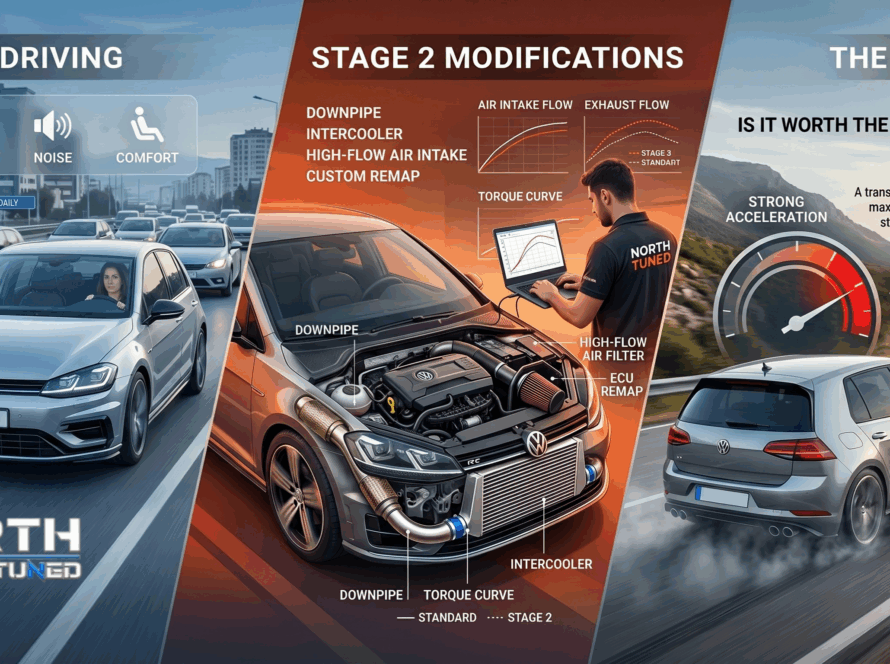
Unlike Stage 1, which is primarily a software-only upgrade, Stage 2 requires hardware modifications to help the engine “breathe” better. Typical upgrades include:

Downpipe: For faster exhaust gas evacuation.

Upgraded Intercooler: To ensure cooler, denser air intake.

High-Flow Air Intake: To reduce intake restriction.

Custom Remap: ECU calibration optimized for these specific hardware changes.

Pros and Cons for the Daily Drive
A Stage 2 vehicle offers a much broader torque curve and more aggressive acceleration compared to Stage 1. However, there are trade-offs to consider:

Performance: Significant gains in overtaking power and highway merging.

Fuel Economy: While efficiency can improve during cruising, spirited driving will see a noticeable jump in fuel consumption.

NVH (Noise, Vibration, Harshness): An aftermarket downpipe will increase exhaust volume. This might be thrilling for some but tiring for others in heavy traffic.

Reliability: Since you are pushing the engine further, high-quality maintenance becomes non-negotiable.

The Verdict: Is it worth it?
If you view driving as an experience rather than a chore and are willing to invest in the supporting hardware, Stage 2 is absolutely worth it. It transforms the character of the car without sacrificing total usability. At North Tuned, we believe the key is balance—achieving maximum performance while staying within the safe mechanical limits of your engine.

read more