
If you want to increase your vehicle’s performance, improve engine response, and make your driving experience more enjoyable, choosing the right performance tune is one of the most critical steps. Options that have gained popularity in recent years, such as North tuned, offer vehicle owners customized and highly reliable solutions that unlock the engine’s potential within safe limits.
So, how do you choose the best tune for your vehicle? Here are all the details you need to know.
1. What is a Performance Tune and Why is it Important?
A performance tune involves reprogramming or optimizing the software in your vehicle’s engine control unit (ECU). This process is highly important for the following reasons:
Power and Torque Increase: It extracts more horsepower and torque from your engine, making acceleration much smoother and more responsive.
Fuel Efficiency: When tuned correctly, it offers an optimized balance in fuel consumption, particularly during cruising.
Throttle Response: It speeds up gear shifts and responses to the accelerator pedal, making the vehicle feel livelier.
Professional approaches like North tuned aim to extract maximum efficiency without exceeding the safety limits set by the manufacturer, ensuring that engine longevity is preserved.
2. What is North Tuned?
North tuned is an approach that aims to provide a reliable standard, particularly in engine optimization and performance software. It is specifically calibrated according to your vehicle’s hardware (air intake, exhaust system, etc.) and fuel quality.
Unlike generic off-the-shelf tunes, this method ensures that the air-fuel ratio, ignition timing, and boost pressure are perfectly harmonized for your specific engine code and driving conditions.
3. Factors to Consider When Choosing the Right Tune
When selecting the perfect performance tune for your car, consider the following criteria:
Purpose of Usage: Do you use your vehicle as a daily driver, or are you preparing it for track days or racing? For daily use, a balanced, fuel-efficiency-oriented tune is recommended.
Existing Modifications: Are there any hardware modifications, such as a downpipe, a larger turbo, or a performance exhaust system? The tune must be fully compatible with these upgrades.
Fuel Quality: The octane rating of the fuel available in your region defines the boundaries of the tuning process. Using higher octane fuel allows for more aggressive timing and greater power gains.
Reliability and Warranty: Ensure that the selected software does not compromise the longevity and health of the engine.
4. The Implementation and Development Process
Once you have chosen the right performance tune, the steps to follow are:
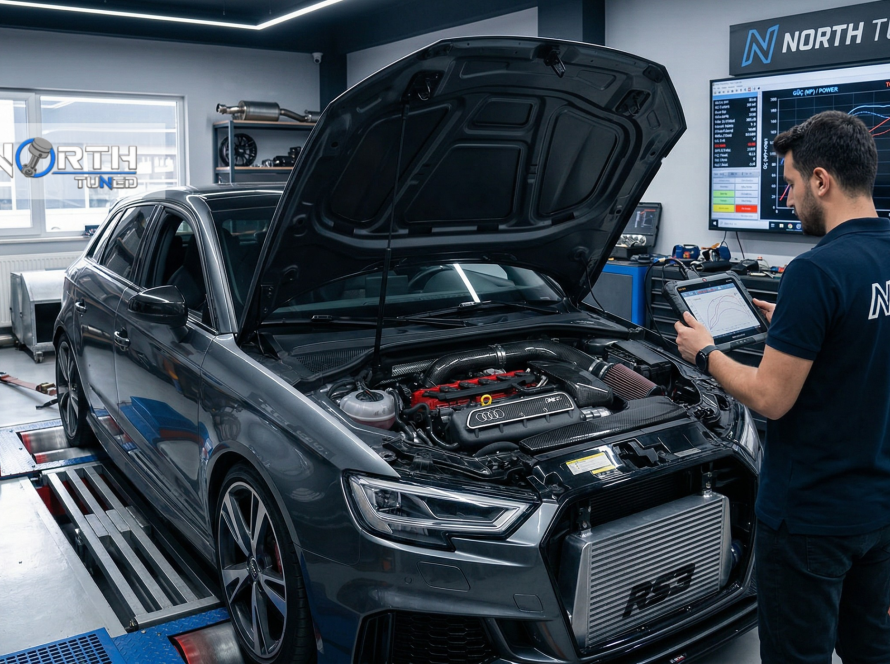
Vehicle Assessment: The current condition of the vehicle (including a dyno test and diagnostic scan) is thoroughly inspected to ensure the engine is in good health before any changes are made.
Software Installation: The optimized file matching your vehicle’s ECU is flashed onto the system.
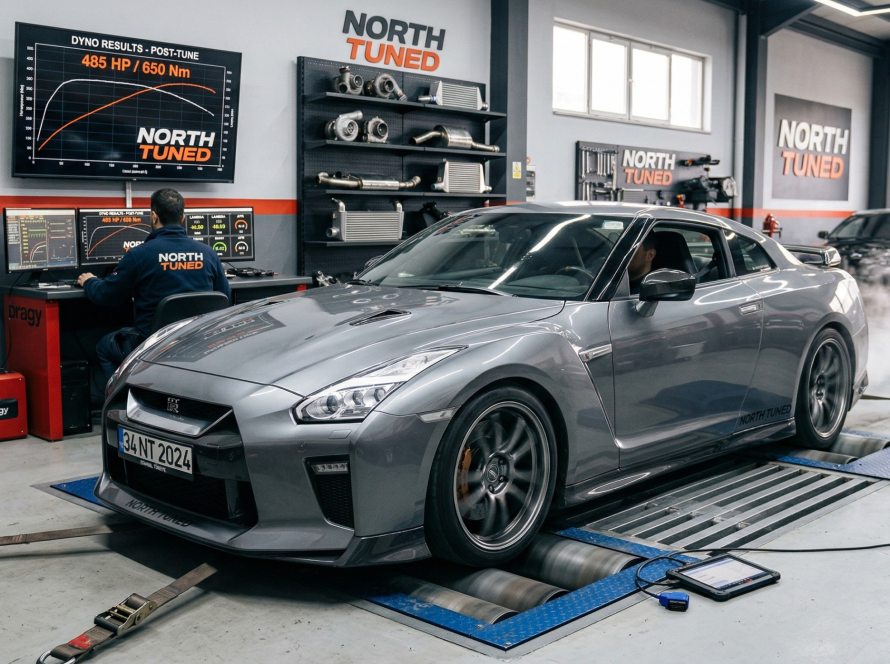
Testing and Review: The vehicle is tested on the road or dyno to verify the air-fuel ratio, check engine parameters, and ensure that all sensors are operating correctly.
5. Common Mistakes to Avoid
Unrealistic Power Expectations: Pushing the engine far beyond its mechanical limits can lead to mechanical failures and costly repairs in the long run.
Generic and Cheap Tunes: Every vehicle engine code is unique; avoid generic “one-size-fits-all” or cheap off-the-shelf software.
Ignoring Hardware Upgrades: Trying to extract high performance without upgrading supporting hardware, such as brakes or cooling systems, can compromise vehicle safety.
Diesel Particulate Filters (DPF) are designed to capture hazardous exhaust particulates to meet emission standards. However, under standard operating conditions, these filters can become clogged and require professional tuning, calibration, or deletion to ensure optimal engine performance.
How the DPF Works
The DPF works in tandem with the catalytic converter:
Catalytic Converter: Uses chemical reactions to neutralize unburned gases and reduce harmful emissions.
DPF: Traps heavy metals and soot particles that cannot be eliminated by the catalytic converter alone.
When the filter reaches capacity, it cleans itself through either passive or active regeneration, where exhaust temperatures are elevated (up to 600 degrees Celsius) to burn off trapped soot. Over time, these regeneration cycles can fail to clear the blockage completely, requiring DPF calibration and removal to restore engine efficiency.
DPF Calibration and Removal Process
North Tuned ensures that the DPF calibration process is carried out safely and effectively:
Custom ECU Remapping: The engine control unit is accessed via OBD2 or on the bench to read and adjust the original factory software.
Sensor Deactivation: Temperature and pressure sensors are calibrated to bypass DPF monitoring.
Physical Removal: The filter housing is removed, hollowed out, and reinstalled using a specialized exhaust pipe.
Benefits of DPF Calibration
Extended Injector Life: Prevents the wear and tear caused by the high fuel pressures required during regeneration.
Increased Fuel Economy: Stops the vehicle from continuously consuming extra fuel during the regeneration process.
Enhanced Engine Durability: Protects surrounding engine components from exposure to extreme heat.
Prevention of Oil Dilution: Eliminates the risk of unburned diesel fuel leaking into the engine oil pan.
In today’s automotive world, performance and efficiency enthusiasts consider engine modifications a major point of interest. Among these modifications, ECU (Engine Control Unit) tuning stands out as the most prominent. However, some vehicle owners hesitate, worrying that pushing the engine’s limits might carry long-term risks.
In reality, thanks to professional engineering approaches offered by North Tuned, ECU software and calibration provide an unexpected standard of safety. In this article, we will detail why ECU tuning is a highly secure, predictable, and advantageous process, contrary to popular belief.
1. The Meaning of Factory Safety Tolerances
The software on a vehicle when it leaves the factory is designed to handle the worst conditions and the most careless user profiles worldwide. Manufacturers leave a large “safety margin” by taking into account low-quality fuel, extreme climate conditions, and users who neglect periodic maintenance.
Utilizing Safety Margins: North Tuned stays well within the mechanical and thermal limits of the engine rather than blindly pushing the limits.
Unlocking Potential: The process releases the engine’s hidden potential while ensuring the durability levels designed by factory engineers are never compromised.
2. Personalized Calibration Over Generic Software
Cheap and generic maps available on the market apply the same changes to every vehicle, which can conflict with the engine’s physical structure. The main differentiator of North Tuned is the application of custom-tailored calibrations:
Hardware and Software Harmony: Parameters are rewritten by taking the vehicle’s mileage, current condition, and existing components into account.
Exhaust and Transmission Integration: During Stage 1 or Stage 2 upgrades, transmission torque limiters and exhaust system temperature thresholds are maintained, preventing excessive strain.
3. Proper Air-Fuel Ratios and Thermal Management
One of the biggest concerns is whether tuning will cause the engine to overheat. A proper tuning process does not overheat the engine; instead, it increases thermal efficiency:
Preventing Lean Mixture Danger: Amateur interventions can cause the engine to run in a lean mixture (too much air, not enough fuel), which raises combustion chamber temperatures.
Optimal Boost and Fuel Maps: North Tuned keeps the Air-Fuel Ratio (AFR) at ideal levels, keeping in-cylinder temperatures well under control.
4. Reversibility and Complete Control
One of the most reassuring features of ECU tuning is its flexible and non-destructive nature:
Preserving the Original Backup: The vehicle’s original factory software is safely backed up. You can revert your vehicle back to its stock factory settings at any time without leaving any traces.
Data Reading and Diagnostics: During the process, sensor data is analyzed in detail, ensuring the system can fall back to its original protective modes if necessary.
What North Tuned Offers
Providing the power and flexibility your vehicle deserves without risking engine health, North Tuned offers the following key services:
Stage 1 & Stage 2 Upgrades: High torque and power output without putting engine and transmission safety at risk.
Emission Management: Healthy software solutions to prevent issues with systems like DPF, EGR, and AdBlue.
Fuel Efficiency: Optimization in fuel consumption, particularly during long highway drives and city commutes, through precise calibration.
Explore your vehicle’s true potential safely with North Tuned.