
Blog

What is NOS (Nitrous Oxide System)? The Chemistry of Performance
For speed enthusiasts and performance seekers, NOS (Nitrous Oxide System) remains one of the most intriguing and effective ways to achieve instantaneous power gains in internal combustion engines. But how exactly does this system work, and what happens at the heart of your vehicle? As North Tuned, we take a closer look at this adrenaline-pumping technology.
How Does NOS Work? The Formula of Power
The power generated by an internal combustion engine depends on how violently the oxygen taken in can be detonated with the injected fuel. In standard engine tuning, the goal is to increase the air-fuel mixture entering the engine. NOS takes this process to a much more radical level.
Oxygen Enrichment: When Nitrous Oxide gas enters the combustion chamber, it breaks down due to heat, releasing pure oxygen. This represents a much higher concentration of oxygen compared to regular atmospheric air.
Cooling Effect: The cooling effect created as the gas exits the cylinder increases the density of the intake air. Cooler air is denser, allowing significantly more oxygen to fill the combustion chamber than normal.
Powerful Combustion: With the increased oxygen, more fuel is delivered to the system. The result is a much more powerful explosion, leading to a massive increase in horsepower delivered to the wheels.
Why Choose NOS?
Factory-spec cars are manufactured with performance values below their true potential to ensure fuel economy and durability under all road conditions. A NOS kit, applied with North Tuned expertise, awakens the “sleeping giant” within your vehicle’s DNA—only when you need it.
The biggest advantage of the system is that it is “on-demand.” While providing a standard driving experience for daily city use, you can transform your car into a high-performance machine with a single touch whenever extra power is required.
Does NOS Damage the Engine?
Let’s provide a clear answer to the most frequently asked question: Not with the right setup and correct limits.
The key to preventing engine damage is selecting the appropriate horsepower gain. As long as you do not exceed the load capacity that your engine components (pistons, rods, bearings) can tolerate, no additional wear occurs.
Safe Power Gains with North Tuned:
Precise Calibration: For high-level horsepower increases, we meticulously perform critical adjustments such as spark plug selection and ignition timing retardation.
Fuel Optimization: We ensure the fuel system and octane levels are correctly tuned to support the increased power.
Controlled Power: By activating the system only when performance is needed, you preserve the overall longevity of your engine.
Push the Limits with North Tuned
If you want to discover your vehicle’s true potential and achieve safe performance gains, you are in the right place. To get detailed information about NOS applications and our other performance solutions, and to determine the most suitable kit for your vehicle, feel free to contact us.

Stage 2 Tuning for Daily Drivers: Is It Worth the Investment?
For many enthusiasts, a car is more than just a tool for commuting; it’s a passion project. When the factory power feels insufficient, Stage 2 tuning is often the next logical step. But is it practical for a vehicle you drive every single day?
What is Stage 2?
Unlike Stage 1, which is primarily a software-only upgrade, Stage 2 requires hardware modifications to help the engine “breathe” better. Typical upgrades include:
Downpipe: For faster exhaust gas evacuation.
Upgraded Intercooler: To ensure cooler, denser air intake.
High-Flow Air Intake: To reduce intake restriction.
Custom Remap: ECU calibration optimized for these specific hardware changes.
Pros and Cons for the Daily Drive
A Stage 2 vehicle offers a much broader torque curve and more aggressive acceleration compared to Stage 1. However, there are trade-offs to consider:
Performance: Significant gains in overtaking power and highway merging.
Fuel Economy: While efficiency can improve during cruising, spirited driving will see a noticeable jump in fuel consumption.
NVH (Noise, Vibration, Harshness): An aftermarket downpipe will increase exhaust volume. This might be thrilling for some but tiring for others in heavy traffic.
Reliability: Since you are pushing the engine further, high-quality maintenance becomes non-negotiable.
The Verdict: Is it worth it?
If you view driving as an experience rather than a chore and are willing to invest in the supporting hardware, Stage 2 is absolutely worth it. It transforms the character of the car without sacrificing total usability. At North Tuned, we believe the key is balance—achieving maximum performance while staying within the safe mechanical limits of your engine.

The Importance of Engine Oil: North Tuned Guide
Engine oil is more than just a lubricant; it is a protective shield within your vehicle’s engine. By forming a microscopic film over moving components, it minimizes friction and wear. At North Tuned, we emphasize that selecting the premium oil reduces friction-induced power loss, allowing more effective power transfer to the wheels.
Oil Types and Performance Variations
Mineral Oils: Derived from refined crude oil. While cost-effective, they typically provide only basic protection for modern, high-performance engines.
Synthetic Oils: Engineered in laboratory environments using advanced chemical processes. Within North Tuned performance standards, synthetic oils are preferred for their superior thermal stability and resilience under extreme temperatures or high pressure. They offer longer service intervals and maximum engine longevity.
Viscosity: The Fluid Balance
Viscosity measures an oil’s resistance to flow.
Low Viscosity (e.g., 0W): Flows quickly in cold temperatures, ensuring protection during cold starts.
High Viscosity (e.g., 50): Maintains thickness at high heat but may fail to reach tight engine tolerances if too thick.
North Tuned Note: Modern multi-viscosity oils (like 5W-30) adapt seamlessly to changing climates. These oils provide 1.5% to 3% better fuel economy compared to single-grade oils.
Performance Classifications (SAE, API, ACEA)
The codes on the back of the bottle are vital for your engine’s health:
SAE: Defines the flow grade (e.g., 10W-40).
API: Indicates suitability for Gasoline (S) or Diesel (C) engines. Later letters in the alphabet (e.g., SP) signify higher performance levels.
ACEA: European standards categorizing oils for Gasoline (A), Passenger Diesel (B), and Commercial Diesel (C), followed by performance ratings (1-3).
Frequently Asked Questions
Why does my engine consume oil? Modern engines use tight metal-to-metal tolerances for efficiency, which can lead to slight consumption. Excessive loss is often due to high RPM driving, incorrect oil viscosity, or mechanical wear.
Can I mix different brands? In emergencies, you can top up with the same viscosity and API class. However, mixing mineral and synthetic oils compromises the chemical structure. North Tuned recommends a full oil change as soon as possible after mixing.

How to Safely Upgrade Your Turbocharged Engine in Australia
Upgrading a turbocharged car in Australia is a balancing act between chasing “kw” at the wheels and staying on the right side of the law. Whether you’re cruising the Great Ocean Road or hitting Sydney Dragway, here is how to do it right with North Tuned.
1. Cooling is King
Australia’s heat is brutal on forced induction engines. High intake temperatures lead to power loss and engine-killing detonation.
Intercooler Upgrades: A high-quality intercooler is the most effective way to maintain consistent power.
Radiator & Oil Coolers: Don’t ignore the fluids. Keeping oil and coolant temps stable is vital for engine longevity.
2. Fueling the Beast
To make power safely, your fuel system must keep up with the increased airflow.
High-Flow Injectors: Ensure your injectors aren’t running at a 100% duty cycle.
The E85 Advantage: Many Australian tuners prefer E85 (Ethanol) because of its incredible cooling properties and high knock resistance, allowing for more aggressive timing.
3. Exhaust: Performance vs. Compliance
While we all love a deep rumble, the ADR (Australian Design Rules) are strict.
Dump Pipes: A larger dump pipe reduces backpressure, allowing the turbo to spool faster.
Keep it Legal: Ensure you have a high-flow catalytic converter and stay under the 90dB limit to avoid unwanted attention from the authorities.
4. Professional ECU Tuning
This is where the magic happens. A subpar tune can melt pistons in seconds.
Precision Calibration: At North Tuned, we focus on a broad power band rather than just peak numbers. We prioritize reliability, ensuring your Air-Fuel Ratios (AFR) and ignition timing are optimized for local fuel quality.
5. Certification and Insurance
In Australia, significant modifications like turbo upgrades or fuel system changes often require an Engineering Certificate (such as a Mod Plate in QLD or VSCCS in NSW). Always inform your insurance provider about your mods to ensure you are covered in the event of an accident.
North Tuned Pro Tip: Always build your engine’s “supporting mods” (brakes, suspension, and cooling) before chasing big horsepower. A fast car is only good if it can stop and turn!
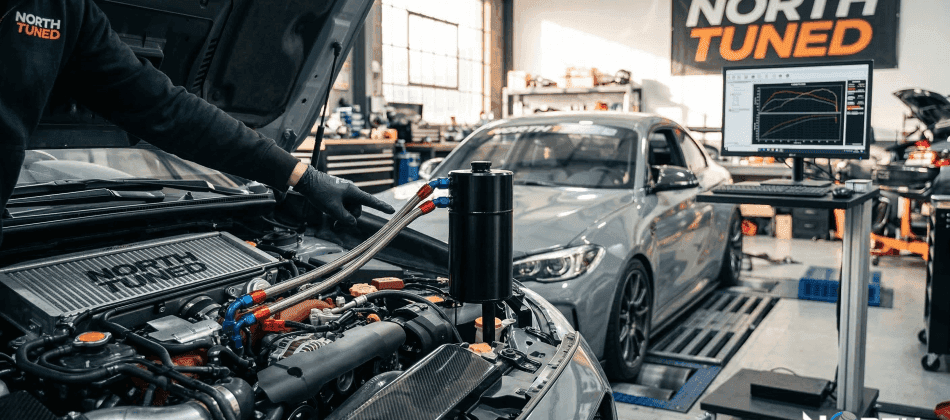
What is an Oil Catch Tank? Why It’s Essential for Performance Cars
In this article, we will examine the purpose and working principle of the Oil Catch Tank, one of the critical components of forced induction and modified vehicles, from the perspective of North Tuned.
The Hidden Pressure: Blow-By Gases
In a four-stroke engine, as the piston moves from the top to the bottom, the intake valves open to draw in the air-fuel mixture. When the piston moves back up, all valves close to compress this mixture.
During this compression and combustion phase, a portion of the high-pressure gases leaks past the piston rings into the crankcase. This is known as “Blow-by.” To manage this unwanted pressure without releasing harmful gases into the atmosphere, manufacturers route this air back into the intake system through a ventilation channel.
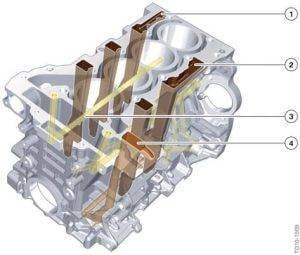
The Problem with Oil Vapor
The air evacuated from the crankcase is not just air; it contains a significant amount of oil vapor from the engine oil being tossed around at high temperatures. In factory setups, this oily mist is sent directly back into the turbocharger, intercooler pipes, and intake manifold.
Over time, this leads to:
Contamination: Oil coating the inside of the intercooler significantly reduces its cooling efficiency.
Carbon Buildup: In direct-injection engines, oil accumulates on the intake valves, hardening into carbon deposits that restrict airflow.
Detonation Risk: Oil mist entering the combustion chamber lowers the effective octane rating, which can lead to engine knock.

The North Tuned Advantage: Why Use a Catch Tank?
An Oil Catch Tank acts as a high-efficiency filter. Instead of the oily crankcase air going straight to the intake, it first passes through this tank. The internal baffling system causes the oil droplets to condense and settle at the bottom of the reservoir.
The result: Only purified air is returned to the engine. This keeps your internal components clean, ensures your intercooler works at peak capacity, and allows your North Tuned performance map to operate under optimal, clean conditions.

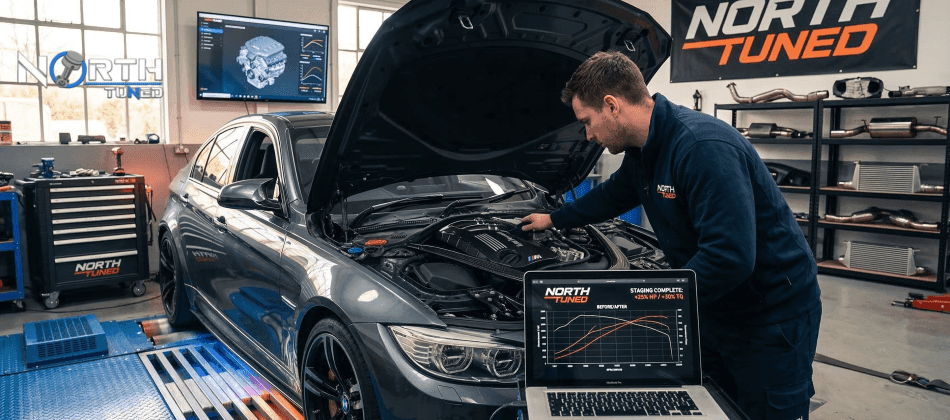
Top 5 Signs Your Car Needs a Performance Tune
Your car is capable of much more than what the factory settings allow. Manufacturers often “detune” engines to account for global variables like low-grade fuel or extreme environmental conditions. If you are a driving enthusiast, these restrictions are holding you back.
Here are the top 5 signs it’s time to visit North Tuned for a professional remap:
1. Significant Throttle Lag
Does your car feel “disconnected” when you hit the accelerator? This delay is often due to restrictive factory throttle mapping. A professional ECU remap sharpens the communication between your foot and the engine, providing instant power delivery.
2. Poor Fuel Economy Relative to Output
A performance tune isn’t just about speed; it’s about efficiency. By optimizing the air-fuel ratio and increasing low-end torque, the engine works less to maintain cruising speeds. If you’re visiting the gas station more often than you’d like, a specialized tune can actually improve your MPG.
3. Lack of Power During Overtaking
Overtaking requires a burst of confidence. If you find yourself hesitating because the car lacks that “punch” in the mid-range RPM, you are missing out on essential torque. Tuning expands the power band, making highway merges and overtaking maneuvers safer and more exhilarating.
4. Inefficient Gear Hunting
If you drive an automatic or dual-clutch vehicle, you might notice the car “hunts” for gears or stays in a high gear for too long during an incline. A North Tuned performance map harmonizes the engine’s output with the gearbox logic, ensuring you are always in the optimal power range.
5. The “Safety Margin” Is Too Wide
Standard cars are built for the “average” driver. If you maintain your vehicle well and use high-quality fuel, you don’t need the massive safety buffers set by the factory. Unleashing that dormant 20-30% of horsepower and torque is the most cost-effective way to transform your driving experience without mechanical modifications.
Why Choose North Tuned?
At North Tuned, we don’t just “plug and play.” We provide custom-tailored software solutions that respect your engine’s longevity while maximizing its output. Whether you are looking for a Stage 1 remap, DPF/EGR solutions, or Eco-Tuning, our expert team ensures your vehicle performs at its peak.
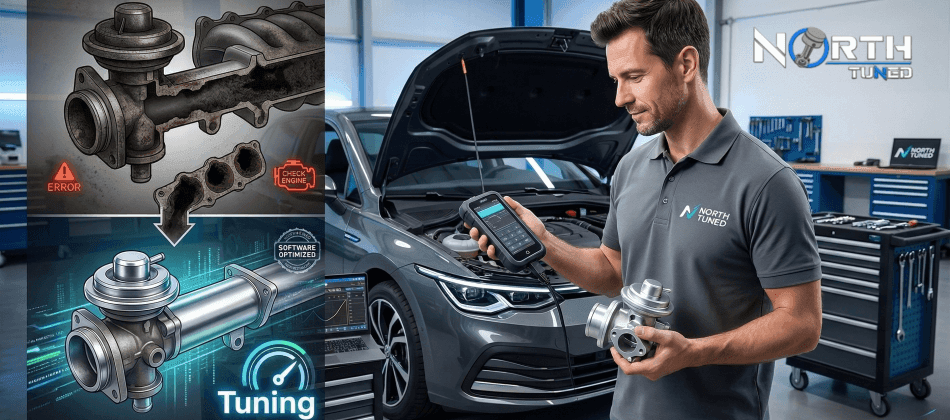
EGR Problems in Modern Cars and How Tuning Can Solve Them
In the modern automotive industry, there is a constant battle between performance and environmental regulations. One of the primary components of this struggle is the EGR (Exhaust Gas Recirculation) system. While designed with good intentions, it has become a notorious source of headaches for diesel and gasoline engine owners alike.
Understanding the EGR System
The EGR system’s job is to redirect a portion of the exhaust gases back into the combustion chamber. By doing this, it lowers the combustion temperature and reduces Nitrogen Oxide ($NO_x$) emissions. However, introducing “dirty” air into the intake system is counter-intuitive for engine longevity and performance.
Why Does It Fail?
The primary enemy of the EGR valve is carbon buildup. Exhaust gases contain soot, and when mixed with oil vapors in the intake, they form a thick, tar-like substance. This sludge eventually causes the valve to stick or completely clogs the intake manifold.
Symptoms of a Faulty EGR Valve
If you experience any of the following, your EGR system is likely failing:
Loss of Power: Especially noticeable during acceleration.
Increased Fuel Consumption: The ECU struggles to find the correct air-fuel ratio.
Rough Idling: The car shakes or vibrates when stopped.
Limp Mode: The vehicle limits its RPM to prevent engine damage.
Excessive Smoke: Dark smoke from the exhaust due to poor combustion.
The Tuning Solution: Why EGR Delete?
At North Tuned, we believe in long-term reliability. Replacing a faulty EGR valve is often a “band-aid” fix, as the new part will inevitably clog again. Our EGR Software Optimization offers a permanent solution.
Benefits of EGR Tuning & Deletion:
Enhanced Engine Longevity: By preventing soot from entering the engine, you extend the life of your internal components.
Improved Throttle Response: With only fresh, oxygen-rich air entering the cylinders, the engine responds much faster to your inputs.
Cost-Effective: Software adjustment is often cheaper than buying a brand-new mechanical valve and paying for labor multiple times.
Better Fuel Economy: A cleaner burn means every drop of fuel is used more efficiently.
Professional Calibration at North Tuned
When we perform an EGR delete, we modify the Engine Control Unit (ECU) maps. We don’t just “turn off the light”; we recalibrate the air mass flow and fuel injection parameters to ensure the engine operates perfectly without the EGR cycle. This results in a smoother drive and total peace of mind.

Engine Modification and Clutch Systems
What is a Clutch?
The clutch system is the most critical drivetrain component that transmits or disconnects the power generated by the engine to the transmission (gearbox). Acting as a bridge, this mechanism not only enables gear changes but also directly determines the vehicle’s takeoff and stopping performance.
Core Functions of the Clutch
Initiating Movement: It ensures a smooth start by gradually delivering the engine’s rotational force to the wheels.
Gear Shifting: It momentarily interrupts power transmission from the engine to allow gear teeth transitions during driving.
Safe Stopping: It disconnects the engine from the drivetrain components, allowing the engine to continue running when the vehicle stops.
Operating Mechanism
During normal driving, the pressure plate firmly presses the clutch disc against the flywheel. This clamping force allows the power from the engine to be transmitted to the gearbox and then to the wheels. When the driver depresses the clutch pedal, this pressure is released, the disc separates from the flywheel, and the flow of power to the wheels is halted.
Symptoms of a Worn-Out Clutch
Excessive shuddering or vibration during takeoff.
The engine revs up when the gas pedal is pressed, but the vehicle fails to accelerate (clutch slipping).
The vehicle feels sluggish and unresponsive in lower gears.
Hard or difficult gear shifts when the engine is hot.
Causes of Premature Clutch Wear
Resting your foot on the pedal out of habit while driving.
Attempting to hold the vehicle on an incline using the clutch (half-clutching).
Making sudden and aggressive takeoffs at high RPMs.
Not fully releasing the gas pedal during gear shifts.
Incorrect installation and choosing parts unsuitable for the vehicle’s power output.
Performance Clutch Systems
In modified vehicles with high horsepower and torque values, standard clutch systems fall short. This is where systems like Twin Plate or Triple Plate come into play. By increasing the number of clutch discs in these specialized systems, the friction surface is expanded. This allows the increased torque to be transmitted to the wheels safely and without loss. While not necessary for standard daily drivers, using these systems in high-performance projects is critical for engine health and driving efficiency.


Chip Tuning: Unlock Your Vehicle’s Hidden Potential with North Tuned
In the modern automotive world, technology is no longer just about mechanical parts. With the advancement of emission standards and the necessity for engine longevity, every vehicle is now managed by an Electronic Control Unit (ECU)—the digital brain of your car. However, most vehicles leave the factory with their true performance capabilities restricted by conservative software settings.
If you are unsatisfied with your vehicle’s current performance or feel that it lacks the “punch” it should have, North Tuned offers professional Chip Tuning services designed specifically for your needs.
What is Chip Tuning?
Chip Tuning is the process of reprogramming the software within the Engine Control Unit (ECU) while staying within the mechanical tolerances of the engine. Whether your vehicle is naturally aspirated or forced induction (turbocharger/supercharger), and whether it runs on petrol or diesel, North Tuned executes this transformation in three professional steps:
Read & Backup: Your vehicle’s original factory software is securely read and a backup is created for safety.
Optimization: Based on your performance expectations and driving habits, our expert engineers recalibrate the software maps.
Uploading: The perfected, custom-tailored program is flashed back into the ECU, completing the process.
Why Do Manufacturers Limit Engine Power?
When a car leaves the factory, it is designed to operate in extreme conditions—from polar freezes to desert heat—and with varying fuel qualities or different taxation policies across the globe. To maintain this wide safety margin, manufacturers intentionally “detune” the engine.
At North Tuned, we optimize your vehicle’s software for your specific climate and driving style, reaching the “sweet spot” of efficiency. When handled by experts and kept within recommended power limits, tuning provides significant benefits without harming your engine.
How the Process Works
During Chip Tuning, no physical parts are added or removed from the vehicle. The software is accessed in two primary ways:
OBD Port (On-Board Diagnostics): A digital connection is established through the vehicle’s diagnostic socket.
Bench Tuning: On certain models, the ECU is removed and programmed directly using specialized hardware.
By making precision adjustments to maps such as Air-Fuel Ratio (AFR) and Torque Limiters, we achieve a more responsive and refined driving experience.
Not Just Power, But Efficiency!
Chip tuning isn’t just about speed. A correctly calibrated software allows the engine to produce more torque at lower RPMs. This means your car becomes “meatier” in the lower rev range, requiring less throttle input to maintain speed. The result? Significant fuel savings depending on your driving style.
Are you ready to unleash the true power of your vehicle and take your driving pleasure to the next level? Contact the North Tuned expert team today.

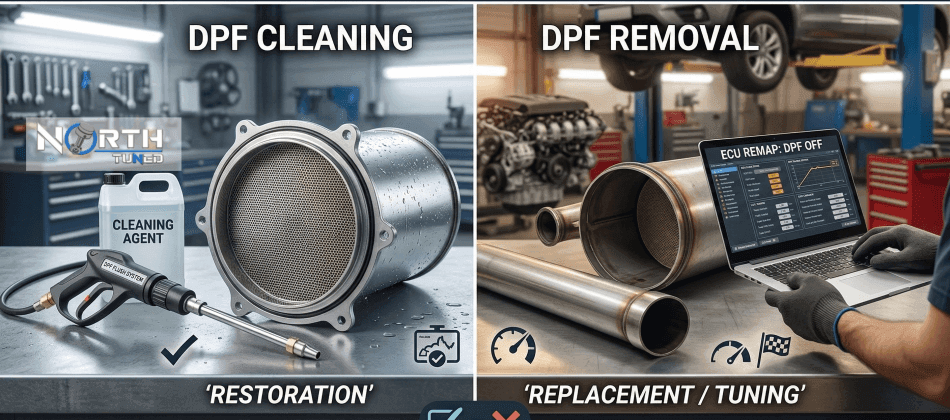
DPF Removal vs Cleaning: Which Option Works Best for Your Vehicle
The Diesel Particulate Filter (DPF) is an essential component of modern diesel engines, designed to capture soot and reduce harmful emissions. However, as this filter accumulates ash and soot over time, vehicle owners are faced with a critical decision: Should you opt for a professional cleaning or a total removal?
This guide analyzes the technical, legal, and performance differences between these two options to help you determine the best path for your vehicle’s longevity.
1. Why Does a DPF Get Blocked?
Understanding the cause of the blockage is the first step in choosing a solution. Common factors include:
Short Distance Driving: The engine fails to reach the high temperatures required for the automatic “regeneration” process.
Low-Quality Consumables: Using sub-standard fuel or engine oil that leaves excessive residue.
Mechanical Faults: Underlying issues like faulty fuel injectors or EGR valve malfunctions that overload the filter.
2. DPF Cleaning: The Restorative Approach
DPF cleaning involves removing accumulated soot and unburnable ash using specialized equipment. This process aims to restore the filter’s airflow to near-factory levels without altering the vehicle’s original configuration.
Common Methods:
Hydraulic Flushing: Using pressurized water and cleaning agents to wash out ash in the opposite direction of the exhaust flow.
Thermal Treatment (Baking): Heating the filter in a specialized oven to incinerate soot into ash, which is then blown out with high-pressure air.
On-Vehicle Chemical Cleaning: Utilizing specialized fluids sprayed directly into the housing for light maintenance.
Key Benefits:
Legal Compliance: The vehicle remains fully compliant with emission laws and will pass standard inspections.
Resale Value: Maintaining the factory-installed emissions system is a significant advantage in the second-hand market.
Environmental Protection: It continues to filter out harmful particulates, keeping the air cleaner.
3. DPF Removal (Delete): The Performance Approach
DPF removal is the process of physically extracting the internal filter core and reprogramming the Engine Control Unit (ECU) to bypass the system.
The Process:
Physical Modification: The filter is either hollowed out or replaced with a “straight pipe” to eliminate exhaust restriction.
Software Recalibration: The ECU is updated with a new map to ensure the vehicle does not attempt regeneration or trigger “Limp Mode.”
Key Benefits:
Performance Gains: Reduced backpressure allows the turbo to spool faster, improving throttle response and power.
Fuel Efficiency: Eliminates the extra fuel consumption typically used during the active regeneration cycle.
Permanent Solution: Removes the possibility of future filter-related blockages or sensor errors.
4.Essential Considerations
Legal Risks: In many regions, removing emissions equipment is illegal for street-driven vehicles and can lead to heavy fines.
Software Precision: If opting for removal, the ECU remapping must be handled by specialists. Poor software can cause engine damage or turbocharger failure.
Root Cause Diagnosis: If a DPF is repeatedly clogging, cleaning is only a temporary fix unless the underlying mechanical issue (like a boost leak or sensor fault) is repaired.
Conclusion
For daily drivers who want to maintain their vehicle’s legality and resale value, professional cleaning is the recommended route. However, for dedicated off-road vehicles or high-performance builds where maximum power is the priority, removal offers technical benefits that cleaning cannot match.