
Tag: automotive engineering

What is Horsepower (HP)? A Brief History of Power

What is Horsepower (HP)? A Brief History of Power

The term Horsepower (HP) is undoubtedly one of the most frequently used terms by car enthusiasts. Although it is the first criterion we look at when measuring a vehicle’s performance, it is not exactly equal to “the power of a single horse,” contrary to popular belief. So, how did this unit, which we at North Tuned place at the center of performance, come about?

James Watt and Marketing Genius
The term was first coined in 1782 by James Watt, a successful Scottish engineer and inventor who improved steam engines. To explain the capability of his engines to the public, Watt chose horses—the most common “engine” of that era—as a point of comparison.

How Was 1 Horsepower Calculated?
Watt observed horses working in coal mines. He calculated that, on average, a horse could pull 45 kg of coal 1.1 meters in one second. This mathematically equated to approximately 50 kg-m/s of work. However, to make his engines seem even more reliable and impressive, Watt increased this figure by 50%, rounding it up to 75 kg-m/s, and defined this as 1 Horsepower (HP).

In short, the modern definition is:

1 Horsepower (HP) is the amount of power required to lift a 75 kg load 1 meter vertically in 1 second.

Today, at North Tuned, we take James Watt’s fundamental legacy and optimize it with modern software and engineering solutions, efficiently awakening the “sleeping” horses within your vehicle.

read more
How to Safely Upgrade Your Turbocharged Engine in Australia

How to Safely Upgrade Your Turbocharged Engine in Australia

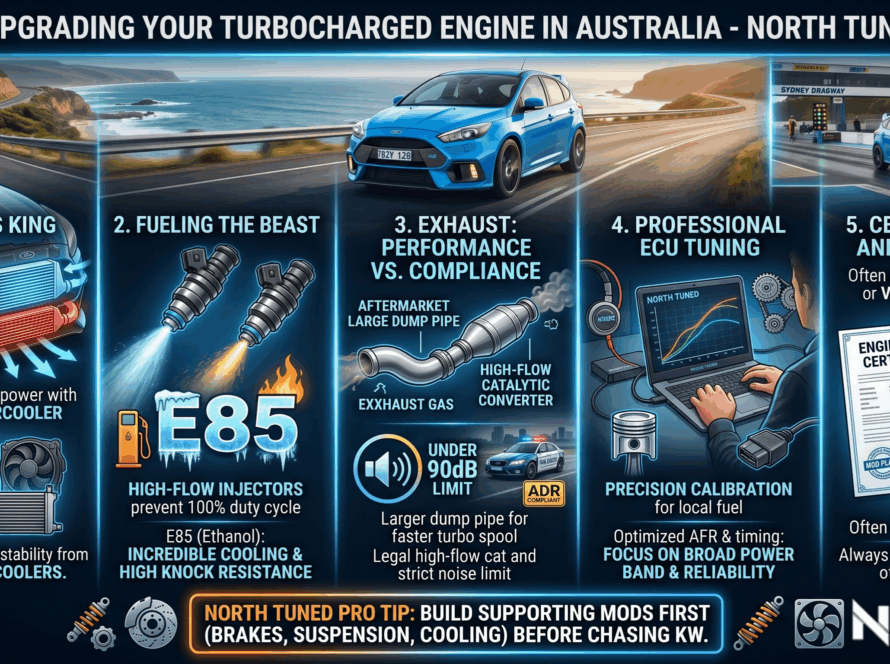
Upgrading a turbocharged car in Australia is a balancing act between chasing “kw” at the wheels and staying on the right side of the law. Whether you’re cruising the Great Ocean Road or hitting Sydney Dragway, here is how to do it right with North Tuned.

1. Cooling is King
Australia’s heat is brutal on forced induction engines. High intake temperatures lead to power loss and engine-killing detonation.

Intercooler Upgrades: A high-quality intercooler is the most effective way to maintain consistent power.

Radiator & Oil Coolers: Don’t ignore the fluids. Keeping oil and coolant temps stable is vital for engine longevity.

2. Fueling the Beast
To make power safely, your fuel system must keep up with the increased airflow.

High-Flow Injectors: Ensure your injectors aren’t running at a 100% duty cycle.

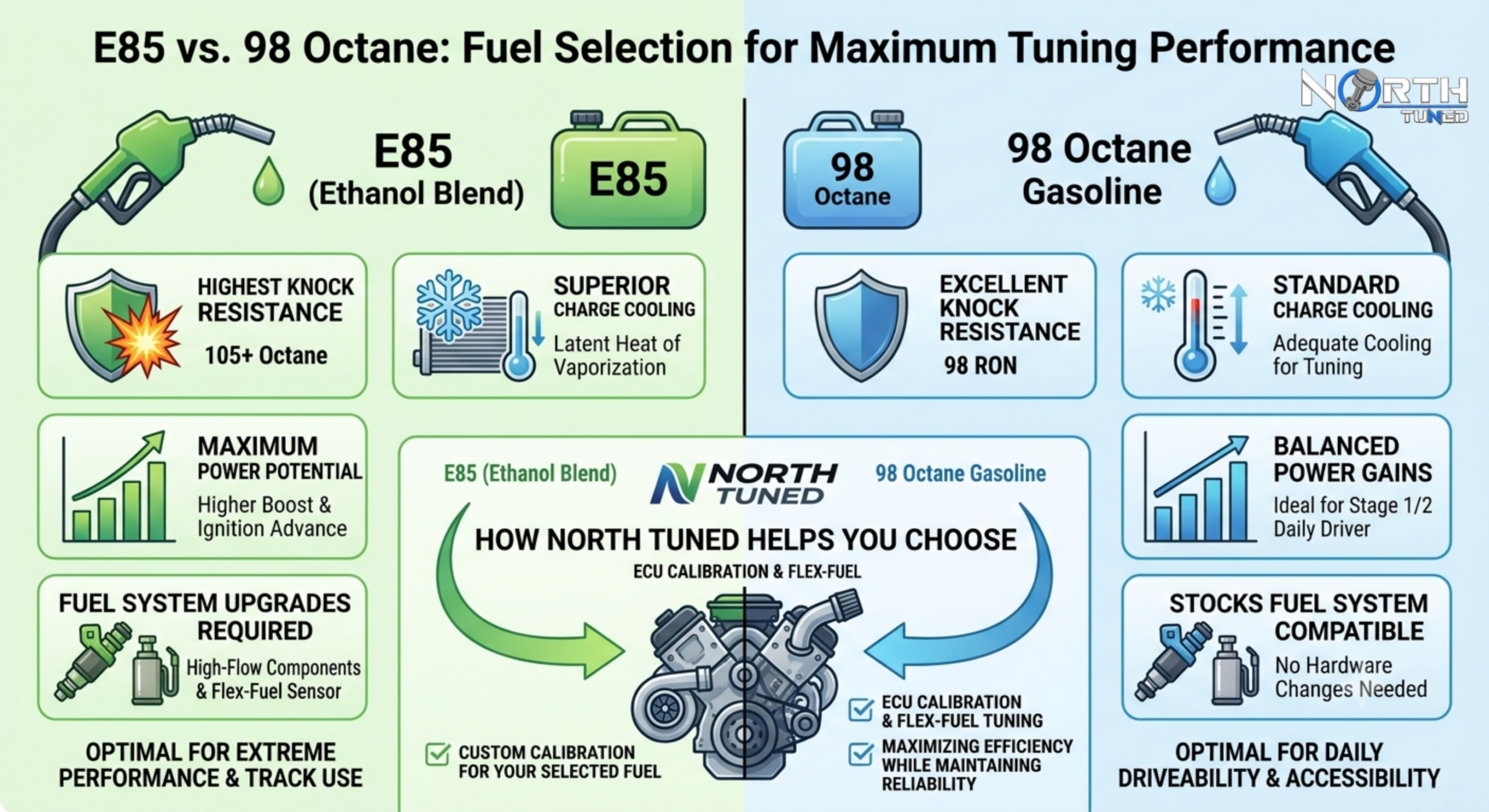
The E85 Advantage: Many Australian tuners prefer E85 (Ethanol) because of its incredible cooling properties and high knock resistance, allowing for more aggressive timing.

3. Exhaust: Performance vs. Compliance
While we all love a deep rumble, the ADR (Australian Design Rules) are strict.

Dump Pipes: A larger dump pipe reduces backpressure, allowing the turbo to spool faster.

Keep it Legal: Ensure you have a high-flow catalytic converter and stay under the 90dB limit to avoid unwanted attention from the authorities.

4. Professional ECU Tuning
This is where the magic happens. A subpar tune can melt pistons in seconds.

Precision Calibration: At North Tuned, we focus on a broad power band rather than just peak numbers. We prioritize reliability, ensuring your Air-Fuel Ratios (AFR) and ignition timing are optimized for local fuel quality.

5. Certification and Insurance
In Australia, significant modifications like turbo upgrades or fuel system changes often require an Engineering Certificate (such as a Mod Plate in QLD or VSCCS in NSW). Always inform your insurance provider about your mods to ensure you are covered in the event of an accident.

North Tuned Pro Tip: Always build your engine’s “supporting mods” (brakes, suspension, and cooling) before chasing big horsepower. A fast car is only good if it can stop and turn!

read more
What is an Oil Catch Tank? Why It's Essential for Performance Cars

What is an Oil Catch Tank? Why It’s Essential for Performance Cars

In this article, we will examine the purpose and working principle of the Oil Catch Tank, one of the critical components of forced induction and modified vehicles, from the perspective of North Tuned.

The Hidden Pressure: Blow-By Gases
In a four-stroke engine, as the piston moves from the top to the bottom, the intake valves open to draw in the air-fuel mixture. When the piston moves back up, all valves close to compress this mixture.

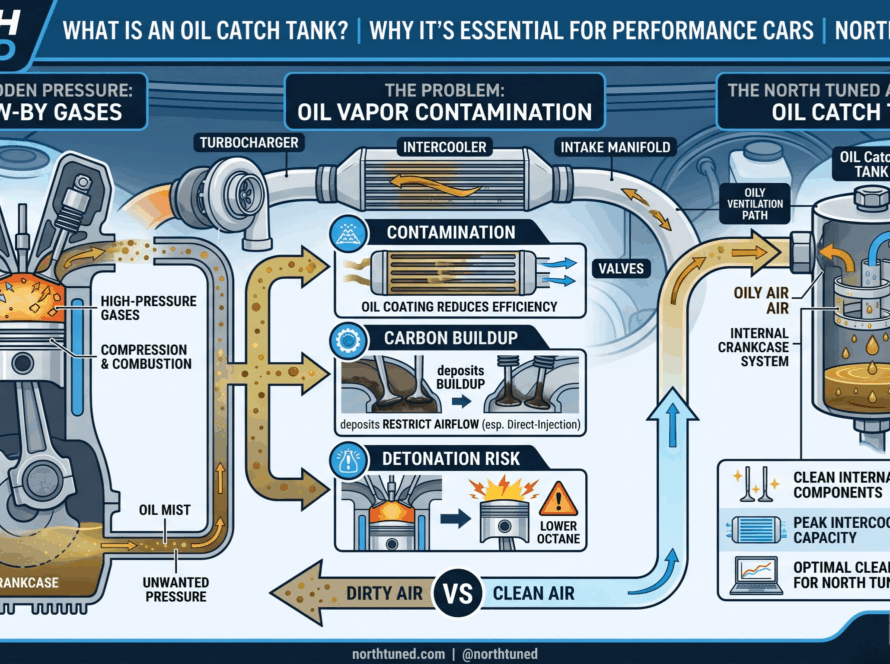
During this compression and combustion phase, a portion of the high-pressure gases leaks past the piston rings into the crankcase. This is known as “Blow-by.” To manage this unwanted pressure without releasing harmful gases into the atmosphere, manufacturers route this air back into the intake system through a ventilation channel.

What is an Oil Catch Tank? Why It's Essential for Performance Cars
What is an Oil Catch Tank? Why It’s Essential for Performance Cars

The Problem with Oil Vapor
The air evacuated from the crankcase is not just air; it contains a significant amount of oil vapor from the engine oil being tossed around at high temperatures. In factory setups, this oily mist is sent directly back into the turbocharger, intercooler pipes, and intake manifold.

Over time, this leads to:
Contamination: Oil coating the inside of the intercooler significantly reduces its cooling efficiency.

Carbon Buildup: In direct-injection engines, oil accumulates on the intake valves, hardening into carbon deposits that restrict airflow.

Detonation Risk: Oil mist entering the combustion chamber lowers the effective octane rating, which can lead to engine knock.

What is an Oil Catch Tank? Why It's Essential for Performance Cars
What is an Oil Catch Tank? Why It’s Essential for Performance Cars

The North Tuned Advantage: Why Use a Catch Tank?
An Oil Catch Tank acts as a high-efficiency filter. Instead of the oily crankcase air going straight to the intake, it first passes through this tank. The internal baffling system causes the oil droplets to condense and settle at the bottom of the reservoir.

The result: Only purified air is returned to the engine. This keeps your internal components clean, ensures your intercooler works at peak capacity, and allows your North Tuned performance map to operate under optimal, clean conditions.

What is an Oil Catch Tank? Why It's Essential for Performance Cars
What is an Oil Catch Tank? Why It’s Essential for Performance Cars
read more
Engine Tuning Guide

Engine Tuning Guide

The performance of the car you’ve driven fondly for years might start to feel inadequate over time; you may want to recapture that day-one excitement and push the limits a little further. We will provide you with practical information in this article about essential engine modifications that will boost your vehicle’s power and take your driving dynamics to a whole new level.

Sports Air Filter Upgrade

Sports Air Filter Upgrade

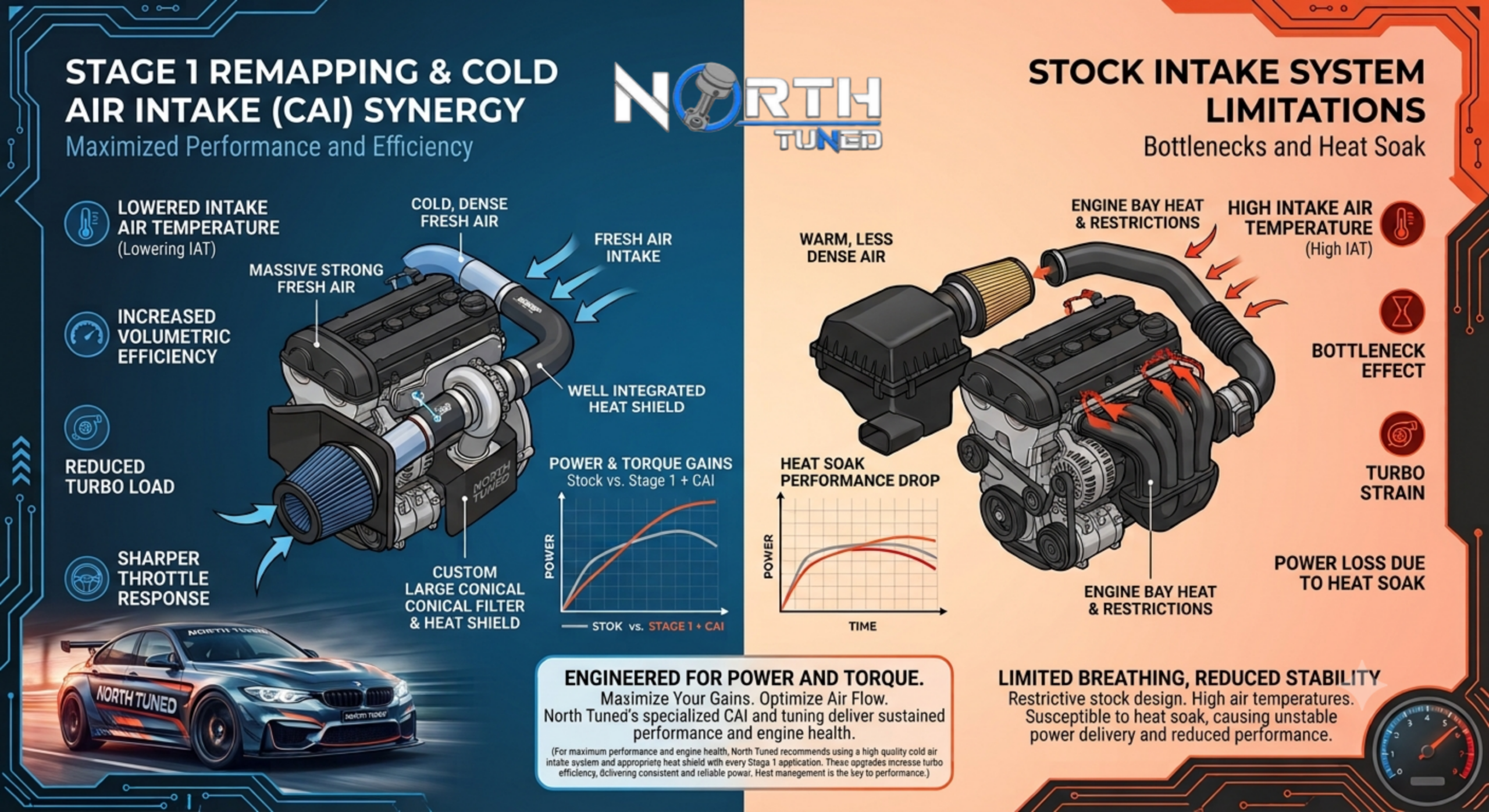
Car manufacturers often use restrictive air intake systems to keep mass-production costs down and comply with standard noise regulations. Aftermarket sports air filters, commonly known as Cold Air Intake Kits, eliminate this factory-induced shortness of breath. These performance-oriented kits maximize the air mass entering the engine per unit of time by channeling much cooler, denser oxygen directly into the combustion chambers. More oxygen means a more powerful combustion. As a result, your vehicle not only gains a noticeable performance boost with improved throttle response but also unleashes that deep, sporty intake growl we all love when you step on the gas.

Sports Exhaust Upgrades

Sports Exhaust Upgrades

Whether you own a naturally aspirated or a forced induction (turbocharged or supercharged) engine, this upgrade is a must-have for car enthusiasts looking to personalize their vehicle and push its performance limits. It stands out as one of the most popular modification steps taken to help the exhaust gases flow more freely, boost horsepower, and achieve that highly desired, deep, and aggressive sound.

Chip Tuning (ECU Remapping)
Thanks to giant leaps in automotive technology, modern vehicles roll out of the factory equipped with highly durable, efficient, and high-potential engines. This robust and tolerant foundation makes today’s cars perfect canvases for performance upgrades. Chip Tuning unlocks your vehicle’s hidden true capacity by professionally optimizing the original parameters and maps within the Engine Control Unit (ECU). Through this fine-tuning of the engine’s brain, it is possible to achieve significant increases in horsepower and torque without having to replace a single mechanical part. For a deeper dive into the technical details and specific gains for your car, feel free to check out our comprehensive Chip Tuning guide.

Turbocharger Upgrades

Turbocharger Upgrades

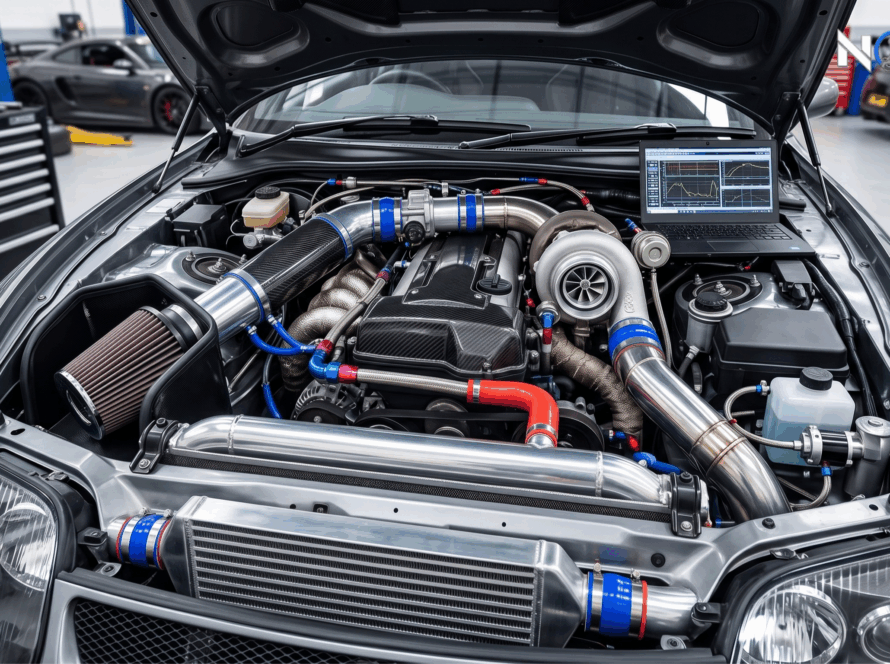
Strict modern emission standards and high taxation policies have driven automakers to extract maximum power from smaller displacement engines. The undisputed hero of this “downsizing” trend is the turbocharger. A turbo’s primary job is to force pressurized air into the combustion chambers, cramming a significantly higher volume of oxygen into the cylinders. The rule of thumb is simple: A larger turbo equates to massive power potential. However, blindly choosing an oversized turbo without considering the vehicle’s dynamics leads to “uncontrolled power” and frustrating turbo lag at lower RPMs.

To safely harness and regulate this increased boost pressure without stressing the engine, upgrades to the wastegate system are absolutely essential. Furthermore, when upgrading a turbo, the intercooler capacity must be re-evaluated and upsized if necessary to combat the extra heat generated by the higher boost levels. The intercooler’s job is to cool down the compressed air, thereby increasing its density; cooler, denser air results in a more violent, efficient combustion and yields extra horsepower. But there is a delicate balance to strike here: Installing an unnecessarily large intercooler will cause pressure drops in the charge piping, severely dulling your throttle response and ruining the sporty driving experience.

Methanol Injection (Water-Meth) Systems

Methanol Injection (Water-Meth) Systems

Commonly utilized in high-performance builds, this system safely pushes an engine’s performance boundaries. Methyl alcohol, one of the most effective alcohols for internal combustion engines, is integrated into the system by being sprayed directly into the air intake tract.

Key Advantages:

Thermal Management: It rapidly lowers combustion chamber temperatures, preventing engine overheating.

High Octane Support: Due to its high octane rating, it allows tuners to aggressively adjust ignition timing during the remapping process.

Combustion Quality: It maximizes fuel burn quality, resulting in a cleaner and more efficient explosion.

Performance Gains: The synergy of these effects delivers significant increases in both horsepower and torque.

Potential Disadvantages:

High Consumption Rate: Since it evaporates much more easily than gasoline, the consumption rate is notably higher.

Corrosion Risk: By its chemical nature, prolonged use can lead to wear and corrosion within fuel system components.

Cold Start Issues: When used as a primary fuel source, it fails to atomize correctly in cold weather, making the engine difficult to start.

read more