
Tag: car maintenance

How to Protect Your Engine: Critical Tuning Mistakes and Prevention

How to Protect Your Engine: Critical Tuning Mistakes and Prevention

Performance tuning is a craft that balances art and engineering. At North Tuned, we believe that true performance isn’t just about the peak numbers on a dyno sheet—it’s about how long that engine can sustain those numbers.

1. Tuning Without Pre-Inspection
Tuning an engine with existing mechanical issues is like building a skyscraper on a swamp.

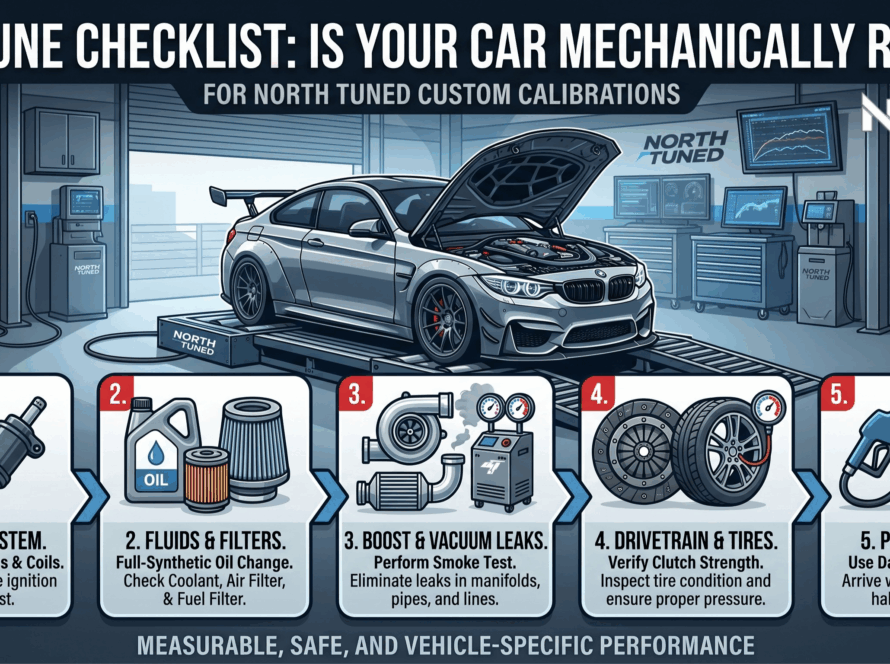
The Mistake: Installing a performance map on a car with old spark plugs, a tired fuel pump, or vacuum leaks.

The Outcome: The added stress of increased boost or timing will inevitably cause the weakest link to fail.

North Tuned Pro-Tip: Always perform a diagnostic scan and check for boost leaks before modifying the ECU.

2. Neglecting Thermal Management
Power is a byproduct of combustion, and combustion generates heat. If you increase the energy, you must increase the cooling.

The Mistake: Pushing high boost levels on a stock intercooler.

The Outcome: High Intake Air Temperatures (IATs) lead to ignition timing pull and potential engine knock (detonation).

Solution: For Stage 2+ builds, upgrading the cooling system is not optional; it is a necessity for engine longevity.

3. Chasing Boost Instead of Efficiency
A common misconception is that “More Boost = More Power.”

The Mistake: Overworking a small turbocharger beyond its efficiency map.

The Technical Side: When a turbo is pushed too hard, it simply blows hot, turbulent air. This increases backpressure and heat without adding significant oxygen.

Solution: Focus on optimizing the Air-Fuel Ratio (AFR) and ignition timing. Sometimes, less boost with better timing yields more reliable power.

4. The Danger of “Generic” Off-the-Shelf Tunes
Every car lives a different life. A car in a high-altitude region needs different parameters than one at sea level.

The Mistake: Using cheap, non-adjustable files that don’t account for fuel quality or hardware health.

The Outcome: Poor drivability and a high risk of catastrophic failure under load.

The North Tuned Approach: We prioritize Data Logging. By analyzing how your specific engine reacts in real-time, we fine-tune the software to ensure maximum safety margins.

5. Forgetting the Drivetrain
An engine is only as good as the wheels it turns.

The Mistake: Increasing torque significantly without recalibrating the Transmission Control Unit (TCU).

The Outcome: Slipped clutches in DSG/ZF gearboxes or snapped axles.

Solution: Match your ECU tune with a TCU tune to increase clutch clamping pressure and optimize shift points.

read more
Comprehensive Guide to Stage 1 Tuning for Petrol vs. Diesel Engines

Comprehensive Guide to Stage 1 Tuning for Petrol vs. Diesel Engines

For automotive enthusiasts, Stage 1 Tuning is the most effective way to personalize a vehicle and surpass factory limitations. While many drivers wonder why manufacturers don’t deliver maximum power from the factory, the truth is that Stage 1 is an engineering optimization. In this guide, North Tuned explores the reactions, advantages, and technical nuances of petrol and diesel engines in the most profound detail.

What is Stage 1? Behind the Software
Stage 1 involves recalibrating the software on the ECU (Engine Control Unit) without changing any physical mechanical parts. Car manufacturers release vehicles with “de-tuned” engines (often at 70-80% efficiency) to ensure they can handle poor fuel quality, extreme climates, and different tax brackets worldwide. Stage 1 awakens this “sleeping” potential within safe margins.

1. Stage 1 in Diesel Engines: The Power of Torque
Diesel engines, with their high compression ratios and turbochargers, are the most “eager” units to respond to software tuning. Even though they are often built for economy, their character changes completely after Stage 1.

Torque Increase and Driving Dynamics
In diesels, the biggest gain is in Torque (Nm) rather than just horsepower. The massive pulling power felt at low RPMs (1500-2500 RPM) after tuning carries the car’s mid-range acceleration to an incredible level. Especially for heavy SUVs or loaded commercial vehicles, Stage 1 is almost a necessity for driving comfort.

Economy and Efficiency
One of the primary motivations for tuning a diesel is fuel economy. The increased torque allows the engine to maintain the same speed at lower RPMs. This translates back to you as up to 10% fuel savings in urban stop-and-go traffic and long-distance cruising.

Critical Components: DPF and EGR
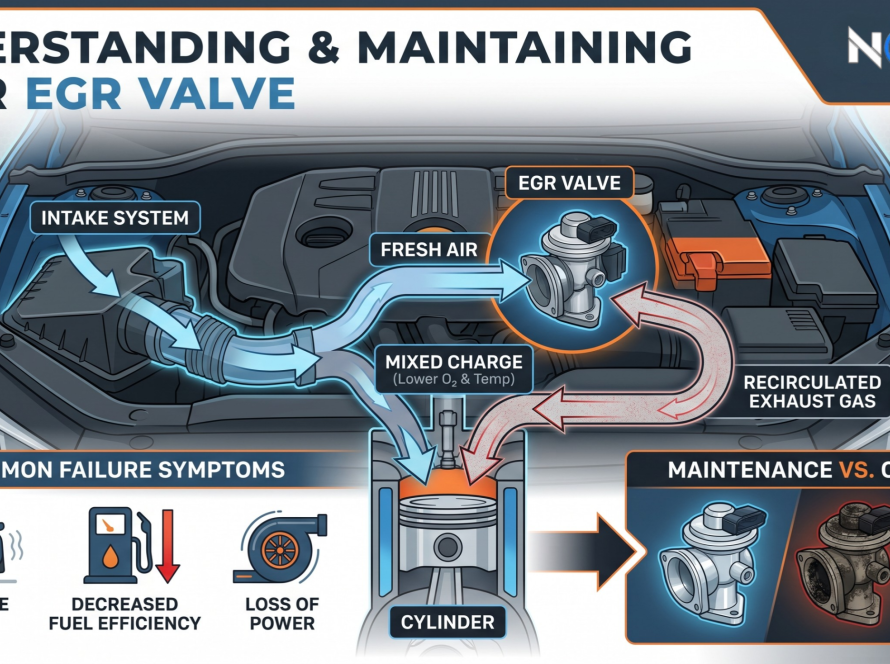
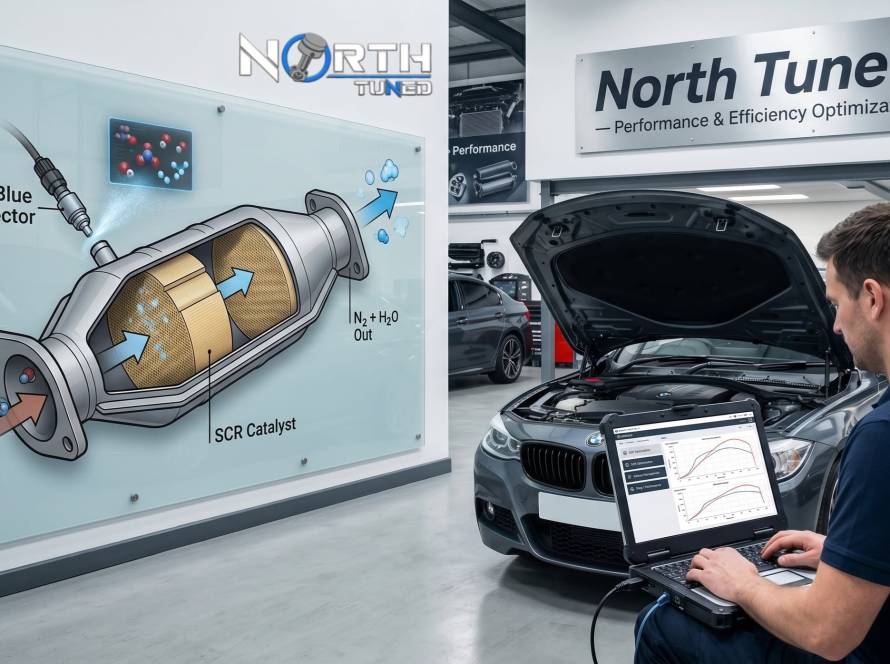
Diesel owners often worry about emission systems. North Tuned’s professional software optimizes combustion efficiency without disrupting the working principles of the Diesel Particulate Filter (DPF) and EGR systems. Unlike low-quality “smoky” tunes, your engine performs a cleaner combustion process.

2. Stage 1 in Petrol Engines: The Joy of the Rev Range
A Stage 1 application in petrol engines offers two different scenarios depending on the intake type (Turbocharged or Naturally Aspirated).

Turbocharged Petrol Units (TSI, T-GDI, EcoBoost)
Modern turbo-petrol engines receive a magical touch with Stage 1. Precise recalibration of turbo boost and ignition timing provides a much more dramatic increase in horsepower compared to diesels. Power is delivered continuously until the end of the rev range, meaning the car continues to accelerate even at high speeds.

Naturally Aspirated Engines: Throttle Response and Fluidity
While HP gains in non-turbo engines usually stay within the 5-10% range, the real impact of Stage 1 is felt in throttle sensitivity. The sluggish factory response is eliminated; the car becomes more vivid and “fluid,” responding instantly to the driver’s commands.

Technical Comparison: Gains and Characteristics
Power Character: While power in diesels comes with a sudden torque burst, turbo petrol vehicles exhibit a more linear and aggressive acceleration curve.

Mechanical Tolerance: Diesel engine blocks are generally more robust, making them resistant to high torque. In petrol vehicles, the health of the cooling and ignition systems is the priority.

Longevity: In both engine types, Stage 1 does not shorten engine life as long as regular maintenance is performed. In fact, a more efficient engine provides the same performance with less effort.

Why Choose North Tuned?
While many places use “generic maps,” at North Tuned, we treat every vehicle as an engineering project.

Individual Calibration: We analyze your vehicle’s current mileage, turbo condition, and injector health to write a software specifically for you.

Transmission Harmony: While increasing engine power, we meticulously protect transmission torque limits, especially in automatic (DSG, ZF, EDC) vehicles.

Safe Limits: Our priority is not “maximum power” but “safest performance.” We never push your engine’s mechanical boundaries.

Stage 1 Tuning is a technical art that reveals the soul of your vehicle. Are you ready to discover your car’s true potential with North Tuned?

read more
High-Performance Braking Systems and North Tuned Engineering

High-Performance Braking Systems and North Tuned Engineering

In the automotive world, the ability to harness speed is just as vital as achieving it. At North Tuned, we don’t just accelerate your driving experience; we secure it with world-class stopping power. Unlike standard components, performance-oriented braking systems provide a high and consistent friction coefficient under demanding conditions, granting the driver total command over the vehicle.

Why Upgrade to High-Performance Brakes?
Large-scale performance discs utilize their increased surface area to convert kinetic energy into heat and dissipate it rapidly. This effectively eliminates “brake fade”—the dangerous phenomenon where overheated brakes lose their effectiveness. Optimized through North Tuned expertise, these systems shorten stopping distances and maintain consistent bite even after repeated, high-speed decelerations.

Carbon Ceramic Technology: The Pinnacle of Braking
Considered the gold standard of braking technology, carbon ceramic discs first proved their worth in extreme environments like Formula 1. Commercialized by Porsche in 1999 under the PCCB (Porsche Ceramic Composite Brake) moniker, this technology is now the benchmark for luxury and supercar performance.

Key Features of High-Performance Brakes by North Tuned:

Extreme Thermal Stability: Engineered to withstand blistering temperatures ranging from 1000°C to 1600°C.

Lightweight Agility: Ceramic discs are significantly lighter than traditional cast-iron discs. This reduction in “unsprung weight” enhances suspension geometry, handling, and steering precision.

All-Weather Reliability: Ceramic pads do not absorb moisture. This ensures immediate braking response on wet roads without the typical delay found in standard systems.

Acoustic Comfort and Aesthetics: These systems are designed to minimize brake squeal. Furthermore, they produce minimal, light-colored dust that doesn’t adhere to your wheels, keeping your rims pristine.

Superior Durability: Under optimal conditions, ceramic components offer a much longer service life compared to conventional braking materials.

Whether on the track or the open road, North Tuned ensures that your vehicle’s stopping power is always a step ahead of its speed.

read more
What is a Turbo Timer? Why is it Vital for Your Vehicle?

What is a Turbo Timer? Why is it Vital for Your Vehicle?

When it comes to performance and longevity in turbocharged vehicles, one of the most critical components is the Turbo Timer. Especially after high-performance driving or long journeys, shutting down the engine abruptly can cause irreversible damage to the turbocharger system. At North Tuned, we have detailed the technical importance of this technology and the advantages it offers to protect the heart of your vehicle.

What is a Turbo Timer?
A Turbo Timer is an electronic device designed to keep an engine running for a pre-specified period of time in order to automatically execute the required cool-down period. Even after you turn the ignition off and remove the key, the device allows the engine to continue idling, ensuring that the turbocharger cools down properly without requiring the driver to wait inside the car.

Why Should You Use a Turbo Timer?
Vehicles with forced induction (Turbo/Supercharger) systems reach extremely high RPMs and intense temperatures during operation. Shutting down the engine immediately after a drive leads to two major technical risks:

Thermal Stress and Cooling: After spirited driving or heavy loads, exhaust gas temperatures remain very high. A turbo timer allows the engine to idle, enabling the intake and exhaust tracks to cool down through the circulation of lower-temperature gases.

Preventing Oil Coking: The turbo shaft spins at hundreds of thousands of revolutions per minute and is lubricated by engine oil. If the engine is stopped suddenly, the oil pump stops as well, but the turbo shaft continues to spin due to inertia. The stagnant oil trapped between the glowing hot shaft and the bearings can “cook” (carbonize), leading to sludge buildup. Over time, this causes shaft seizure and catastrophic turbo failure.

Modern Solutions and Security
Today’s modern turbo timer systems are built on sophisticated digital electronic platforms. At North Tuned, safety is our priority during installation. These systems are typically integrated with the handbrake mechanism or a dedicated safety switch. If the handbrake is released or the vehicle is tampered with while the timer is active, the system immediately kills the engine to prevent theft.

Protect Your Turbo with North Tuned
Increasing your vehicle’s performance is only half the battle; the other half is building the infrastructure to protect that power. A turbo timer is not just a convenience—it is a protective shield that can significantly extend the lifespan of your turbocharger.

If you want to preserve your engine health and avoid premature turbo wear or costly repair bills, contact the expert team at North Tuned for professional Turbo Timer applications.

North Tuned: Where Performance Meets Reliability.

read more
What is a Spark Plug? Why is it Critical for Performance?

What is a Spark Plug? Why is it Critical for Performance?

North Tuned
North Tuned

If you want to feel the true power of your engine, the ignition must be flawless. This is where the spark plug comes into play. But what exactly does this small yet mighty component do?

How Does a Spark Plug Work?
The primary role of a spark plug is to ignite the air-fuel mixture in the combustion chamber within milliseconds. It takes a massive voltage of 20,000 – 30,000 volts from the ignition coil and forces it across a gap, creating an electric arc (spark). This spark triggers the explosion that powers your vehicle.

Which Vehicles Use Spark Plugs?
Spark plugs are essential for gasoline, LPG, and hybrid engines. However, keep in mind: Diesel engines do not have ignition spark plugs. Diesel engines operate by compressing air to extreme pressures to cause spontaneous combustion.

Hot vs. Cold Spark Plugs: What’s the Difference?
Choosing the right plug based on your engine’s character is vital:

Cold Spark Plug: Has a shorter insulator nose and dissipates heat quickly. It is preferred for high-performance and tuned engines.

Hot Spark Plug: Has a longer insulator nose and retains more heat. It’s ideal for daily drivers and lower RPM engines.

North Tuned Insight: Does Changing Spark Plugs Affect Fuel Efficiency?
Absolutely! A worn-out spark plug or an incorrect gap causes inefficient combustion. This leads to higher fuel consumption and robs your engine of its performance. The right spark plug ensures:

Lower fuel consumption,

Sharper throttle response,

Smoother idling.

Pro Tip: The spark plug gap widens over time due to wear. In modern electronic ignition systems, this gap is typically between 0.8mm – 1.1mm. Don’t skip your periodic checks to maintain peak performance!

read more
Stage 2 Tuning for Daily Drivers: Is It Worth the Investment?

Stage 2 Tuning for Daily Drivers: Is It Worth the Investment?

For many enthusiasts, a car is more than just a tool for commuting; it’s a passion project. When the factory power feels insufficient, Stage 2 tuning is often the next logical step. But is it practical for a vehicle you drive every single day?

What is Stage 2?
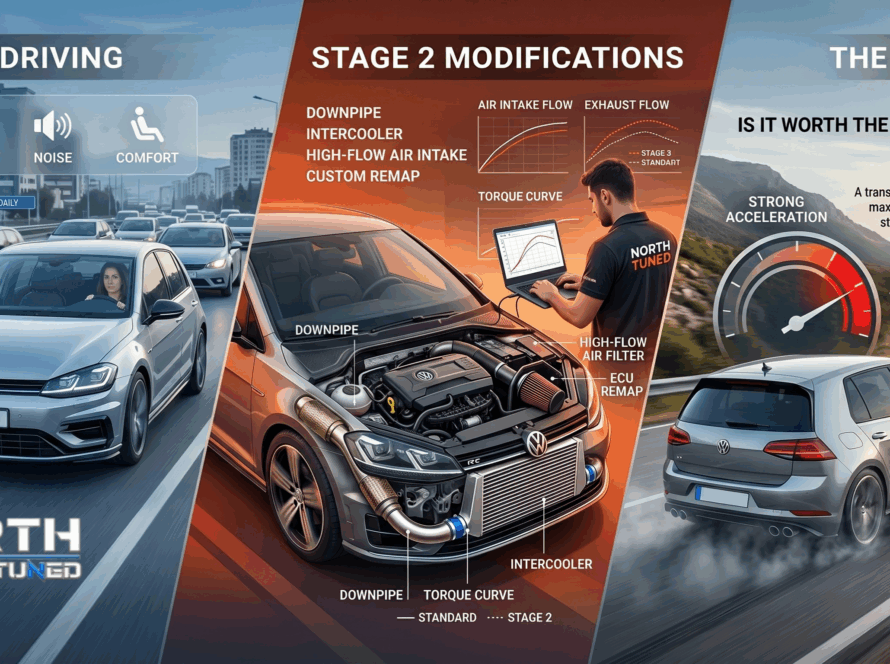
Unlike Stage 1, which is primarily a software-only upgrade, Stage 2 requires hardware modifications to help the engine “breathe” better. Typical upgrades include:

Downpipe: For faster exhaust gas evacuation.

Upgraded Intercooler: To ensure cooler, denser air intake.

High-Flow Air Intake: To reduce intake restriction.

Custom Remap: ECU calibration optimized for these specific hardware changes.

Pros and Cons for the Daily Drive
A Stage 2 vehicle offers a much broader torque curve and more aggressive acceleration compared to Stage 1. However, there are trade-offs to consider:

Performance: Significant gains in overtaking power and highway merging.

Fuel Economy: While efficiency can improve during cruising, spirited driving will see a noticeable jump in fuel consumption.

NVH (Noise, Vibration, Harshness): An aftermarket downpipe will increase exhaust volume. This might be thrilling for some but tiring for others in heavy traffic.

Reliability: Since you are pushing the engine further, high-quality maintenance becomes non-negotiable.

The Verdict: Is it worth it?
If you view driving as an experience rather than a chore and are willing to invest in the supporting hardware, Stage 2 is absolutely worth it. It transforms the character of the car without sacrificing total usability. At North Tuned, we believe the key is balance—achieving maximum performance while staying within the safe mechanical limits of your engine.

read more
The Importance of Engine Oil: North Tuned Guide

The Importance of Engine Oil: North Tuned Guide

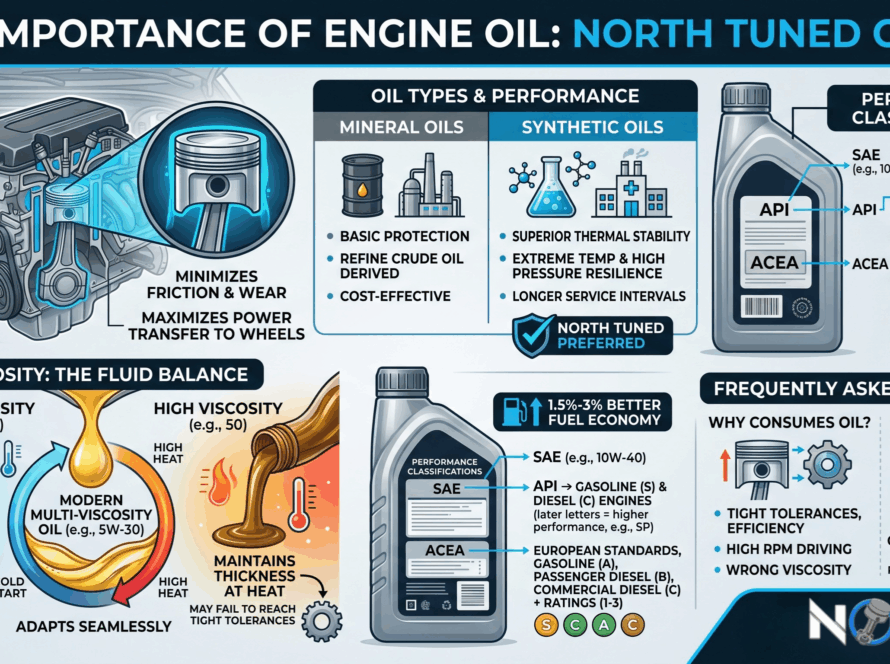
Engine oil is more than just a lubricant; it is a protective shield within your vehicle’s engine. By forming a microscopic film over moving components, it minimizes friction and wear. At North Tuned, we emphasize that selecting the premium oil reduces friction-induced power loss, allowing more effective power transfer to the wheels.

Oil Types and Performance Variations
Mineral Oils: Derived from refined crude oil. While cost-effective, they typically provide only basic protection for modern, high-performance engines.

Synthetic Oils: Engineered in laboratory environments using advanced chemical processes. Within North Tuned performance standards, synthetic oils are preferred for their superior thermal stability and resilience under extreme temperatures or high pressure. They offer longer service intervals and maximum engine longevity.

Viscosity: The Fluid Balance
Viscosity measures an oil’s resistance to flow.

Low Viscosity (e.g., 0W): Flows quickly in cold temperatures, ensuring protection during cold starts.

High Viscosity (e.g., 50): Maintains thickness at high heat but may fail to reach tight engine tolerances if too thick.

North Tuned Note: Modern multi-viscosity oils (like 5W-30) adapt seamlessly to changing climates. These oils provide 1.5% to 3% better fuel economy compared to single-grade oils.

Performance Classifications (SAE, API, ACEA)
The codes on the back of the bottle are vital for your engine’s health:

SAE: Defines the flow grade (e.g., 10W-40).

API: Indicates suitability for Gasoline (S) or Diesel (C) engines. Later letters in the alphabet (e.g., SP) signify higher performance levels.

ACEA: European standards categorizing oils for Gasoline (A), Passenger Diesel (B), and Commercial Diesel (C), followed by performance ratings (1-3).

Frequently Asked Questions
Why does my engine consume oil? Modern engines use tight metal-to-metal tolerances for efficiency, which can lead to slight consumption. Excessive loss is often due to high RPM driving, incorrect oil viscosity, or mechanical wear.

Can I mix different brands? In emergencies, you can top up with the same viscosity and API class. However, mixing mineral and synthetic oils compromises the chemical structure. North Tuned recommends a full oil change as soon as possible after mixing.

read more