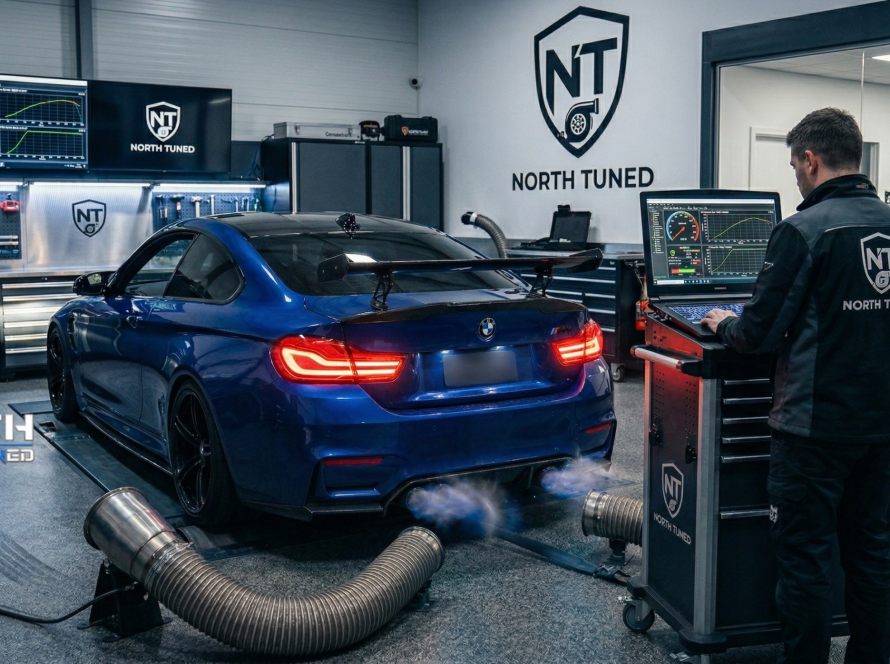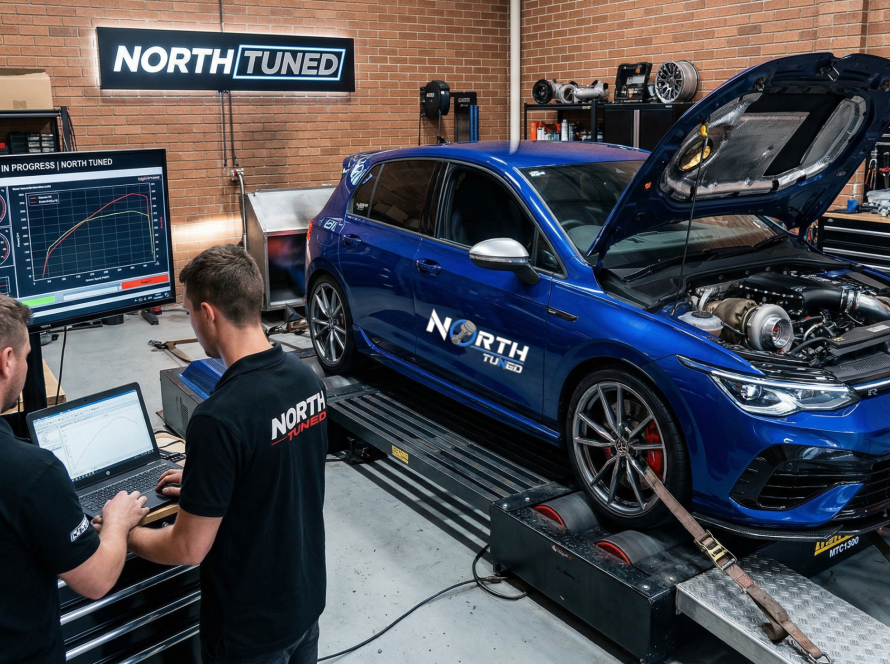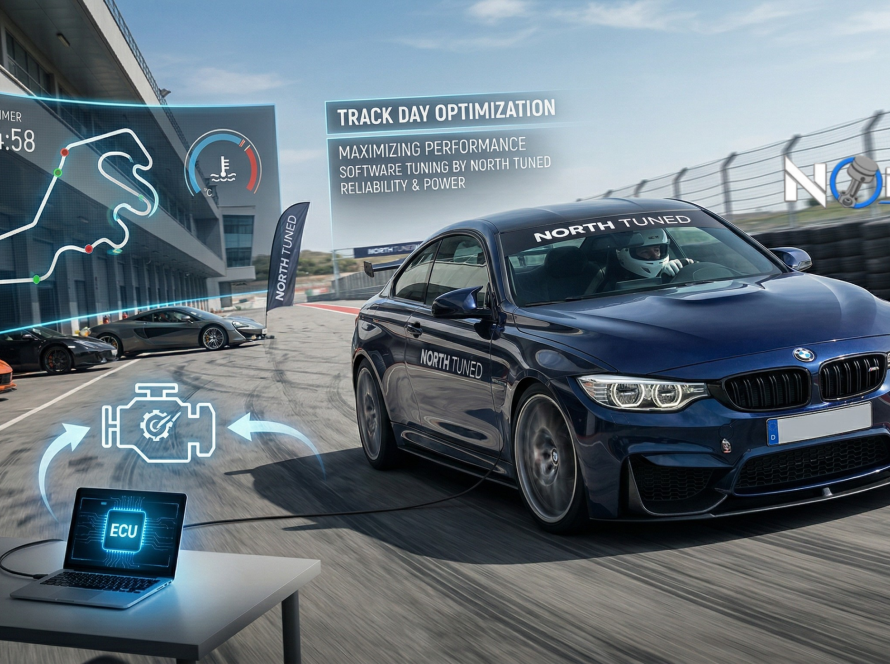

Modern automobiles are programmed at the factory to accommodate a massive variety of global conditions, ranging from varying fuel qualities and extreme climates to different emission standards and driver habits. Because of these conservative safety margins, your Engine Control Unit (ECU) operates well below its actual mechanical capabilities. With a professional software tune, you can bypass these factory constraints. At North Tuned, we extract the true potential of your engine while preserving its longevity, reliability, and long-term durability.
How Engine Tuning Works
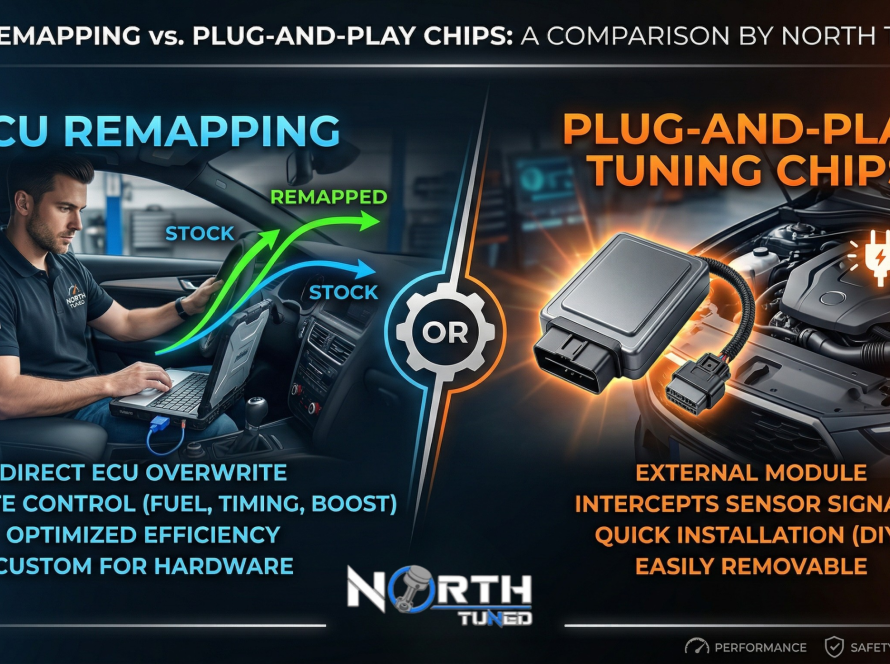
Vehicles today are essentially driven by advanced computers that monitor and regulate engine functions, including fuel injection, air-to-fuel ratios, turbocharger boost pressure, and ignition timing. North Tuned’s remapping process involves reading your original factory software and precisely adjusting these parameters to maximize efficiency and output.
Increased Horsepower and Torque: By optimizing the air-to-fuel mixture and boost levels, we ensure maximum combustion efficiency and output within safe operating tolerances. You will experience a noticeable increase in both peak horsepower and low-end torque.
Improved Throttle Response: Electronic lag is minimized, creating an immediate and responsive connection between your foot and the engine’s power delivery.
Enhanced Driving Dynamics: Overtaking and highway merging become much smoother, providing power exactly when you need it without the need to over-rev or force the engine.
Optimized Efficiency: A properly calibrated software tune reduces the overall workload required to move the vehicle’s weight. Under normal driving conditions and cruising speeds, this can lead to an improvement in fuel economy.
Why Choose North Tuned?
Engine tuning requires advanced precision and automotive engineering expertise. Generic “off-the-shelf” files or improper calibrations can cause severe damage to your engine and transmission. At North Tuned, we prioritize:
Custom Calibration: Every vehicle is analyzed based on its specific hardware, current mileage, and mechanical condition to deliver a bespoke tune.
Strict Safety Margins: We ensure that torque limits and mechanical thresholds are respected, guaranteeing long-term durability and engine health.
Full System Compatibility: Your car’s factory diagnostic and safety systems remain fully operational, ensuring no compromise on vehicle safety or road legality.
For automotive enthusiasts looking to take their vehicle’s performance to the next level, Stage 2 tuning is widely considered the sweet spot. It doesn’t just increase horsepower; it fundamentally changes the vehicle’s torque curve and throttle response. In this comprehensive blog post, we will explore how North Tuned optimizes your driving dynamics while unlocking your car’s maximum potential.
What is Stage 2 Tuning?
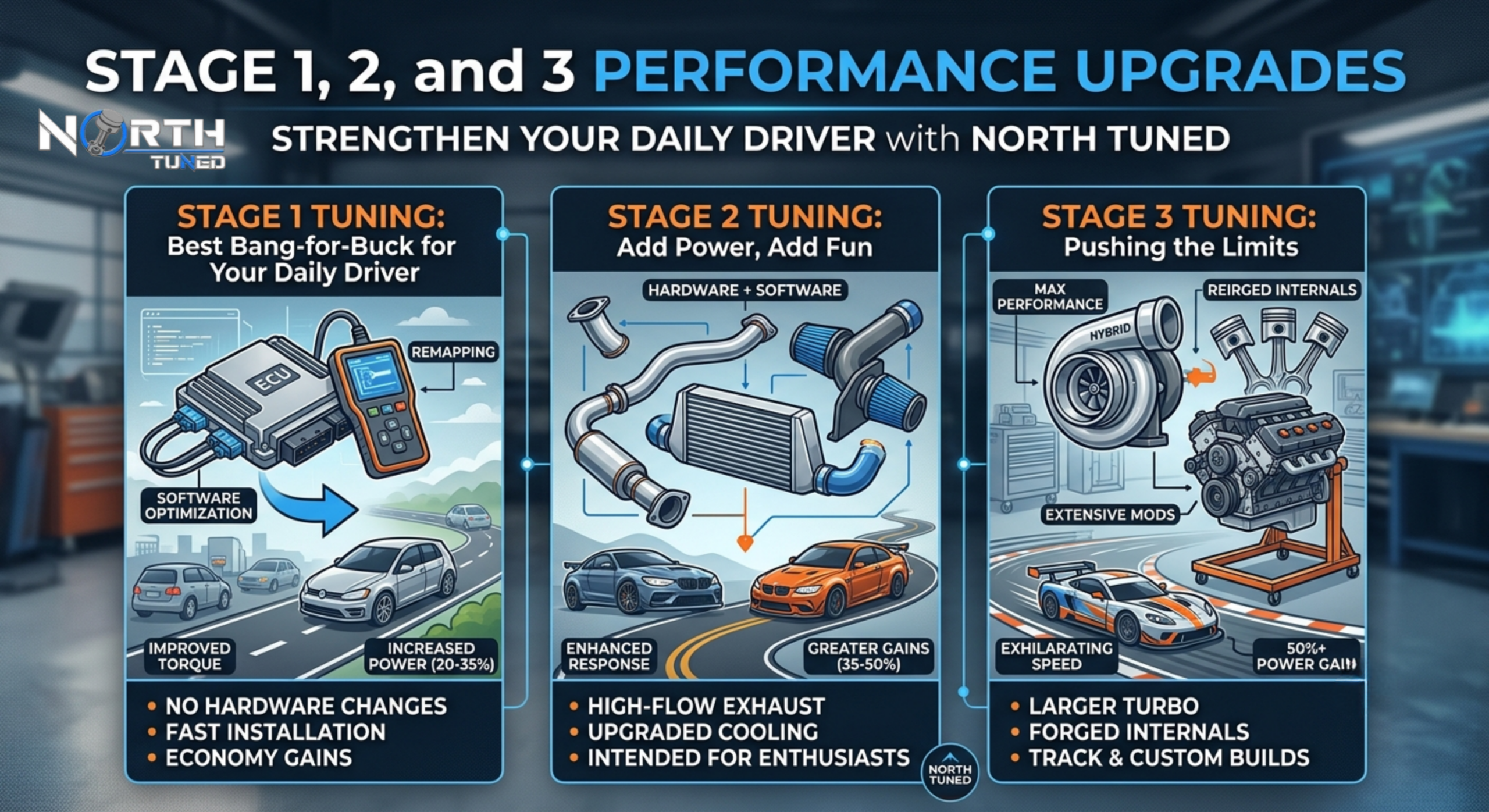
Stage 2 tuning is a process that goes beyond simple ECU remapping (chip tuning). It requires hardware upgrades that allow the engine to breathe much more freely. Unlike a Stage 1 tune, Stage 2 generally includes:
Performance Exhaust System: Speeds up exhaust gas flow and reduces turbo lag.
Downpipe: Relieves the restrictive catalytic converter or filter directly after the turbocharger to optimize exhaust flow.
High-Flow Air Filter / Intake Upgrade: Increases the volume of air entering the engine, improving combustion efficiency.
Upgraded Intercooler (When necessary): Lowers the temperature of the compressed air, ensuring the engine receives a denser charge of oxygen.
How Torque is Increased
Torque is the fundamental factor that determines your vehicle’s acceleration (both standing starts and mid-range acceleration). The main mechanisms behind the significant torque increase after Stage 2 tuning include:
1. Increased Turbo Boost
Through software optimization, the boost pressure produced by the turbocharger is safely raised. This pushes more air into the combustion chamber.
2. Optimized Air-Fuel Ratio (AFR)
More air allows for more fuel to be burned efficiently. The ECU optimizes the air-fuel ratio to create a more powerful combustion event within the cylinder.
3. Reduced Exhaust Backpressure
Thanks to the downpipe and performance exhaust, backpressure acting on the turbine is reduced. This allows the turbine to spool up much faster and earlier, meaning torque is delivered lower in the rev range.
Why Throttle Response Improves
For many drivers, throttle lag is one of the most frustrating aspects of driving a turbocharged car. Stage 2 tuning takes a multi-pronged approach to minimize this delay:
Electronic Throttle Calibration: The signal transmission time from the pedal to the engine is optimized. The delay between pedal input and engine response is reduced to near zero.
Reduction in Turbo Lag: Thanks to hardware upgrades like the downpipe, the turbo spools earlier. You no longer have to wait for the power to arrive after pressing the pedal.
Optimized Ignition Timing: The timing of the spark in the cylinders is adjusted for maximum efficiency, resulting in instantaneous power delivery.
Safe and Effective Performance with North Tuned
At North Tuned, our goal is not just to chase high numbers, but to deliver peak performance while protecting the longevity of your engine.
Custom Calibration: Every vehicle’s mechanical condition and mileage differ. Our software is custom-tailored to your specific vehicle.
Safety Parameters: Torque and boost increases are carefully calibrated while keeping the durability of the engine and transmission in mind.
Join the North Tuned family to discover your car’s true potential and multiply your driving pleasure!
To understand the mechanics of a locking differential, we first need to understand the function of a standard differential. The primary purpose of a differential is to allow the driven wheels to rotate at different speeds when cornering. However, in off-road and high-performance conditions, a standard differential can send power to the wheel with the least resistance—resulting in wasted power and wheel spin. A differential lock mitigates this issue by distributing torque evenly between the wheels, ensuring the vehicle maintains traction.
Today, differential locks are utilized in both mechanical and electro-electronic forms. Mechanical differential systems are commonly found in utility vehicles and off-road applications, while electronic and electro-hydraulic systems are often used in motorsport, including Formula 1.
The Evolution of the Electronic Differential
In motorsport, mechanical differentials were the standard for a long time. However, the introduction of driver-adjustable electronic differentials revolutionized vehicle handling.
Unlike standard road cars where the locking rate is controlled automatically, high-performance systems can be adjusted in real-time. By simply turning a control on the steering wheel, a driver can increase or decrease the locking degree of the differential. Professional drivers use this adjustability to adapt to different cornering profiles and optimize vehicle performance on the fly.
How a Locking Differential System Works
Standard differentials operate on a balancing principle, requiring at least three gears to allow the axle shafts to spin independently. When a vehicle is driving straight, the load is distributed evenly across the axles.
However, when a vehicle enters a corner, the differential gears engage, ensuring that the outer wheel can rotate faster than the inner wheel. While this is perfect for normal driving, it becomes a problem off-road or in slippery conditions.
There are several types of locking differentials used to overcome this:
Limited-Slip Mechanisms: Uses friction plates to restrict the action of the side gears, ensuring both wheels rotate at closer speeds until the vehicle straightens out.
Mechanical Lockers: When one wheel loses traction and spins faster than the other, the mechanism mechanically locks the axles together (a 1:1 torque ratio), forcing both wheels to turn at the same speed.
The Role of the Locking Differential in Off-Road & Performance
A locking differential is an indispensable component for off-road and high-traction environments. If a vehicle’s wheel gets stuck in deep mud or snow and begins to spin freely, a standard differential will continue to send power to that slipping wheel. By locking the differential, power is redirected to the wheel with grip, pulling the vehicle out of the obstacle.
By combining an understanding of mechanical traction with modern, precision engineering, vehicles can tackle even the most demanding terrain with full stability and control.
Modern automotive manufacturers design factory suspension and spring systems to prioritize standard driving comfort, leaving very little room for customization based on individual driving dynamics. This is exactly where high-performance coilover systems come into play.
With North Tuned coilover systems, you can dramatically improve your vehicle’s handling performance while achieving a more aggressive, lowered exterior stance.
Coilover systems allow you to adjust ride height, fine-tune shock absorber stiffness, and modify your vehicle’s camber angles to suit your driving style.
Note: While height adjustment is a standard feature, stiffness and rebound adjustability are typically found in more advanced systems, particularly those developed for track use.
How Coilover Systems Work
Stiffness / Rebound Adjustment: Advanced coilovers feature specialized valving systems located in the top mount, allowing drivers to regulate internal fluid or gas pressure to adjust damping characteristics—stiffening or softening the suspension based on road conditions.
Ride Height Adjustment: Threaded bodies equipped with an adjustable perch allow you to raise or lower the vehicle, optimizing its center of gravity and aerodynamic profile.
Camber Tuning: Coilovers allow for precise camber adjustments, ensuring maximum tire contact patch during high-speed cornering.
Transform Your Driving Dynamics with North Tuned
Upgrading to a high-quality coilover system is one of the most effective ways to bridge the gap between street driving and track-level handling. At North Tuned, we engineer performance upgrades that give you full control over your vehicle’s responsiveness and stance. Contact our engineering team today to find the perfect coilover setup for your specific vehicle and driving goals.