
Tag: E85 Fuel

Ethanol Fuel and Performance: The Secret Weapon for High Horsepower

Ethanol Fuel and Performance: The Secret Weapon for High Horsepower

In the world of automotive tuning, fuel is just as critical as the hardware itself. When you push the limits of standard pump gas, you eventually hit a wall called “knock” or “detonation.” This is where Ethanol (Ethyl Alcohol) becomes a game-changer. At North Tuned, we frequently utilize ethanol blends to unlock the true potential of turbocharged and high-compression engines.

Here is an in-depth technical look at why ethanol is the preferred choice for high-performance applications and what you need to know about the transition.

What is Ethanol Fuel?
Ethanol is a renewable fuel source produced by fermenting sugars from agricultural feedstocks like corn, sugar cane, and wheat. While it can be used in its pure form, it is most commonly mixed with gasoline in varying ratios:

E10: 10% Ethanol / 90% Gasoline (Commonly found at standard gas stations).

E85: 85% Ethanol / 15% Gasoline (The “Gold Standard” for performance tuning).

Why Ethanol Wins: The Technical Advantages
The reason ethanol is so highly regarded in the motorsport and tuning industry boils down to two main factors: Octane Rating and Latent Heat of Vaporization.

1. Massive Octane Boost
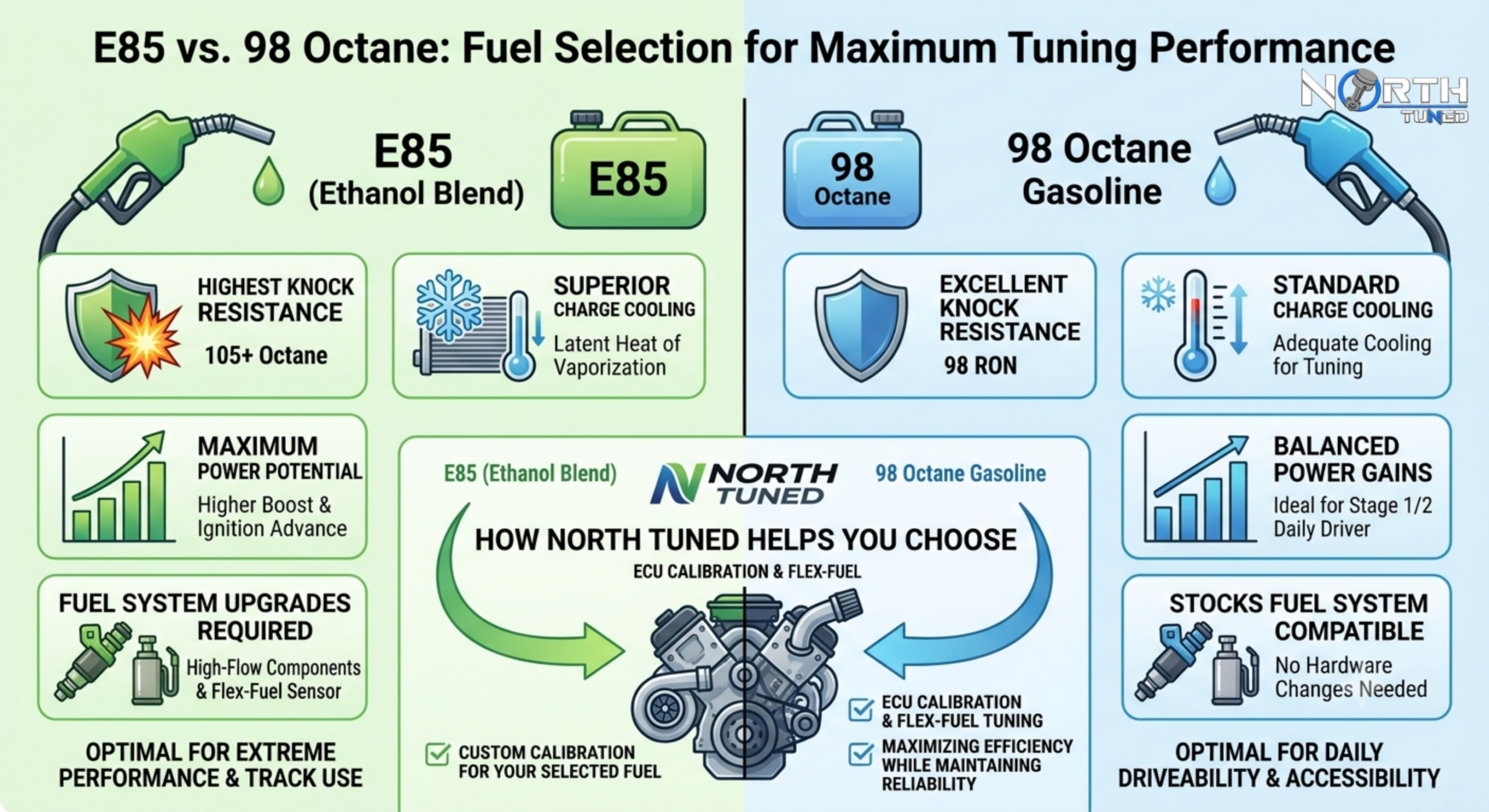
Standard premium gasoline usually sits between 91 and 93 AKI (95-98 RON). Pure ethanol, however, boasts an octane rating of approximately 116 AKI / 129 RON. Even at an E85 blend, the effective octane rating is usually 105+.

The Benefit: High octane means the fuel is incredibly resistant to pre-ignition. This allows tuners to advance ignition timing and increase boost pressure significantly without the risk of engine damage.

2. Superior Cooling Effect
Ethanol has a much higher latent heat of vaporization than gasoline. This means that as ethanol is injected and evaporates, it absorbs a significant amount of heat from the intake air and the combustion chamber.

Turbo Longevity: By lowering Exhaust Gas Temperatures (EGT), ethanol protects the turbocharger turbine and internal engine components from thermal stress. It essentially acts as a chemical intercooler.

The “Ethanol Ready” Conversion: What Changes?
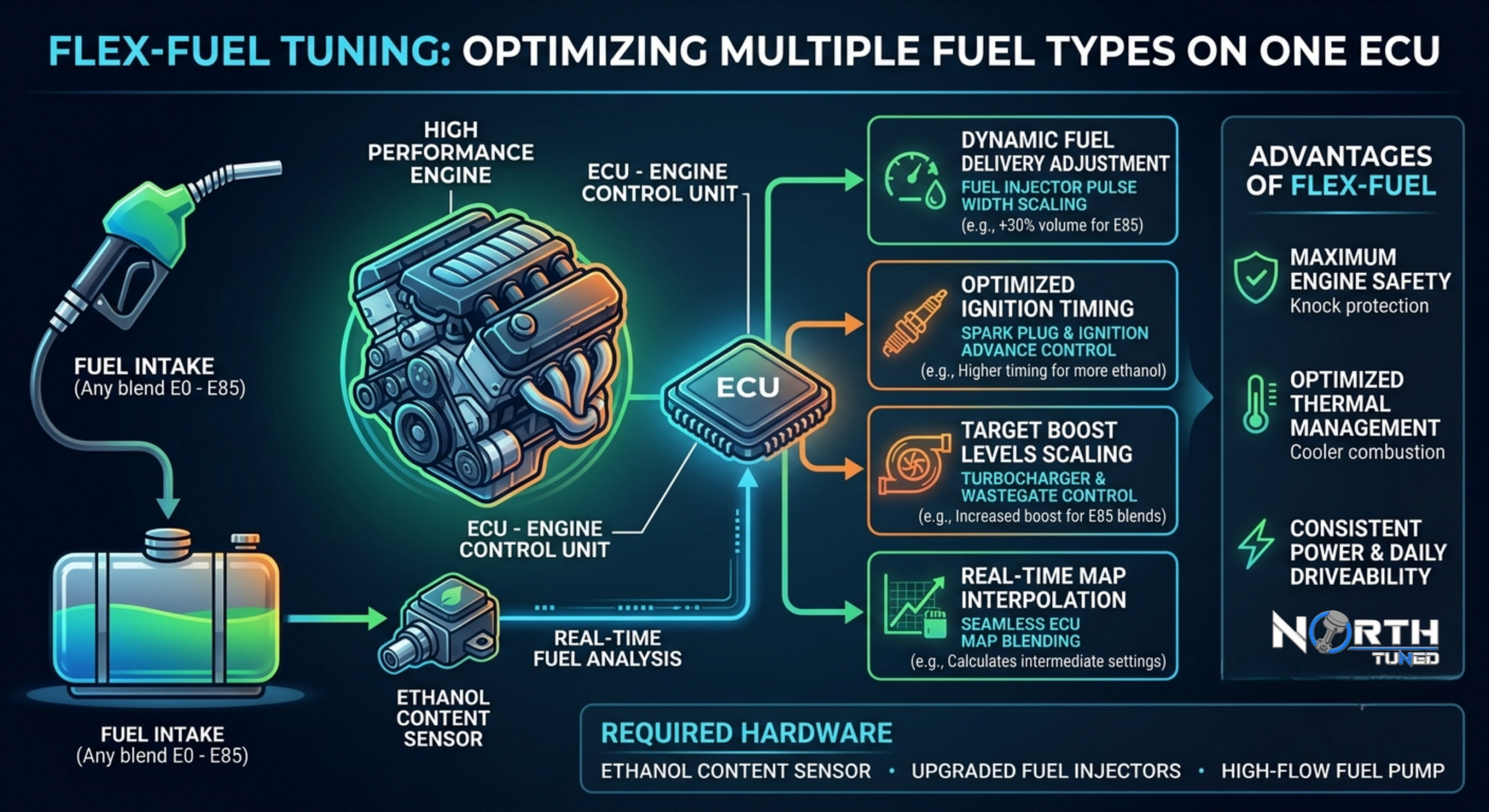
Ethanol contains about 34% less energy by volume than gasoline. This means that to maintain the correct Air/Fuel Ratio (AFR), the engine must spray more fuel. For E85, you typically need 30% to 35% more fuel flow compared to gasoline.

To make a vehicle compatible, North Tuned focuses on these essential upgrades:

High-Flow Fuel Pumps & Injectors: Since the volume requirement increases, upgraded pumps and larger injectors are mandatory to prevent the engine from running lean.

Flex Fuel Sensors: We install sensors that detect the exact ethanol content in the tank. This allows the ECU to automatically adjust the tune in real-time, whether you are running 10% or 85% ethanol.

Material Compatibility: While most modern cars (post-2000s) have fuel systems resistant to alcohol, older projects may require replacing rubber lines with PTFE (Teflon) lines to prevent corrosion.

Daily Driving and Environmental Impact
While ethanol is a “cleaner” burning fuel in terms of carbon emissions, it does have some quirks:

Cold Starts: Ethanol does not vaporize well at temperatures below 13°C (55°F). Specialized tuning is required to ensure the car starts smoothly on cold mornings.

Fuel Economy: Because more fuel is required to produce the same energy, you will notice a roughly 25-30% drop in MPG when running E85.

Ethanol is not just a fuel; it’s a performance tool. It allows us to reach power levels that were previously only possible with expensive, leaded racing fuels. If you are looking to maximize the efficiency and output of your turbocharged engine while keeping engine temperatures in check, an ethanol conversion is the most effective path forward.

read more
How to Safely Upgrade Your Turbocharged Engine in Australia

How to Safely Upgrade Your Turbocharged Engine in Australia

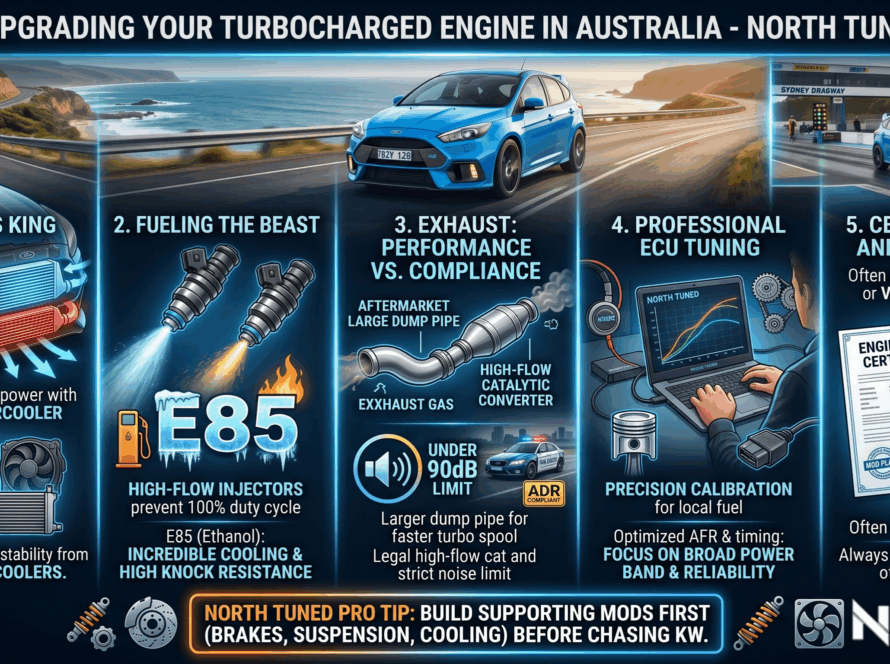
Upgrading a turbocharged car in Australia is a balancing act between chasing “kw” at the wheels and staying on the right side of the law. Whether you’re cruising the Great Ocean Road or hitting Sydney Dragway, here is how to do it right with North Tuned.

1. Cooling is King
Australia’s heat is brutal on forced induction engines. High intake temperatures lead to power loss and engine-killing detonation.

Intercooler Upgrades: A high-quality intercooler is the most effective way to maintain consistent power.

Radiator & Oil Coolers: Don’t ignore the fluids. Keeping oil and coolant temps stable is vital for engine longevity.

2. Fueling the Beast
To make power safely, your fuel system must keep up with the increased airflow.

High-Flow Injectors: Ensure your injectors aren’t running at a 100% duty cycle.

The E85 Advantage: Many Australian tuners prefer E85 (Ethanol) because of its incredible cooling properties and high knock resistance, allowing for more aggressive timing.

3. Exhaust: Performance vs. Compliance
While we all love a deep rumble, the ADR (Australian Design Rules) are strict.

Dump Pipes: A larger dump pipe reduces backpressure, allowing the turbo to spool faster.

Keep it Legal: Ensure you have a high-flow catalytic converter and stay under the 90dB limit to avoid unwanted attention from the authorities.

4. Professional ECU Tuning
This is where the magic happens. A subpar tune can melt pistons in seconds.

Precision Calibration: At North Tuned, we focus on a broad power band rather than just peak numbers. We prioritize reliability, ensuring your Air-Fuel Ratios (AFR) and ignition timing are optimized for local fuel quality.

5. Certification and Insurance
In Australia, significant modifications like turbo upgrades or fuel system changes often require an Engineering Certificate (such as a Mod Plate in QLD or VSCCS in NSW). Always inform your insurance provider about your mods to ensure you are covered in the event of an accident.

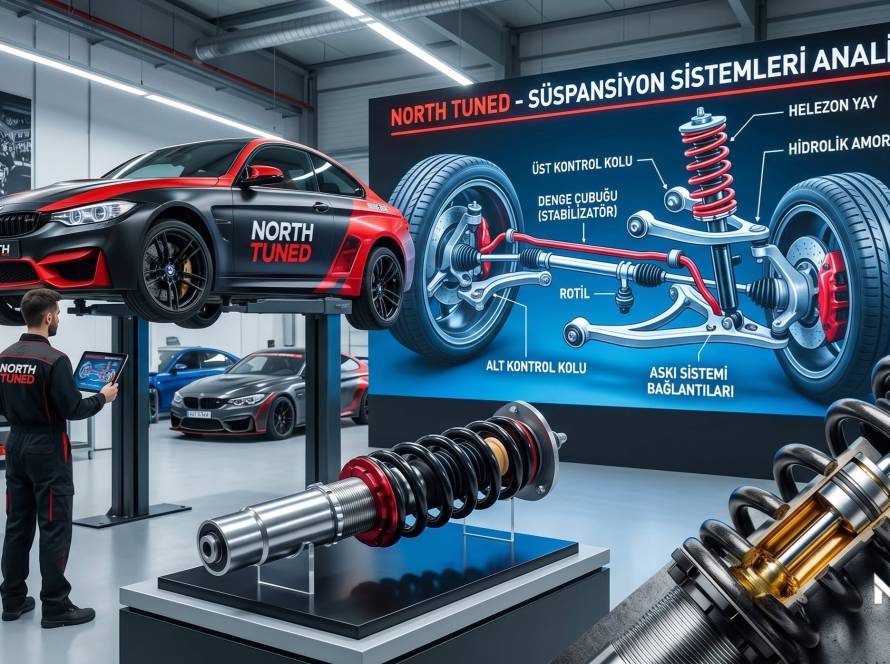
North Tuned Pro Tip: Always build your engine’s “supporting mods” (brakes, suspension, and cooling) before chasing big horsepower. A fast car is only good if it can stop and turn!

read more