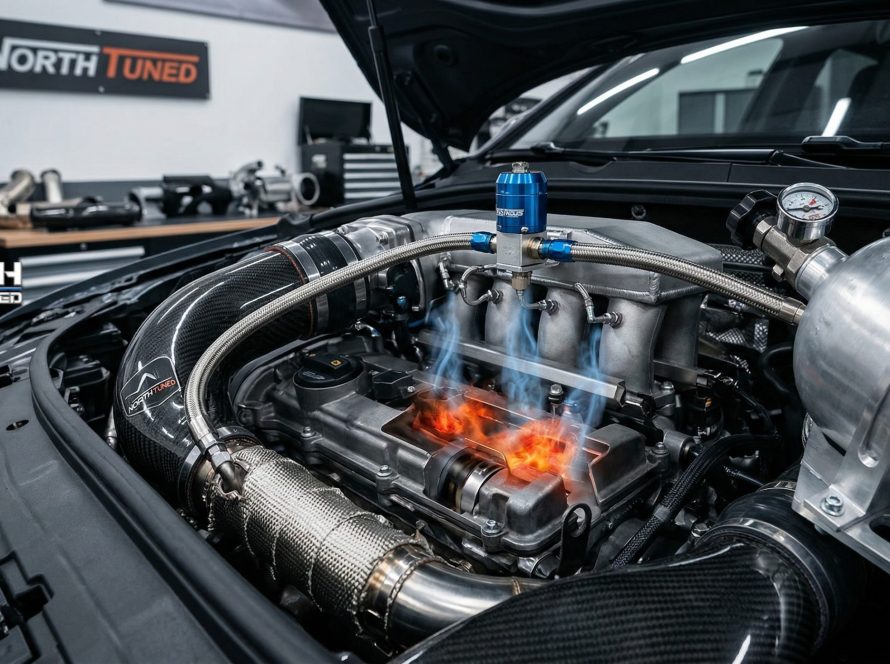

The primary function of a standalone electronic ignition system is to ignite the air-fuel mixture in the combustion chamber at the most optimal moment, providing the necessary ignition advance for peak engine performance. At North Tuned, we prioritize millisecond precision in ignition timing to ensure a superior high-performance driving experience.

Operating Principle
In this system, an independent ignition coil is utilized for each cylinder. These coils integrate the igniter unit, primary, and secondary windings, connecting directly to the spark plug. Unlike traditional systems, there are no spark plug wires; the coils are powered by a 12V supply and controlled via signal currents directly from the ECU.
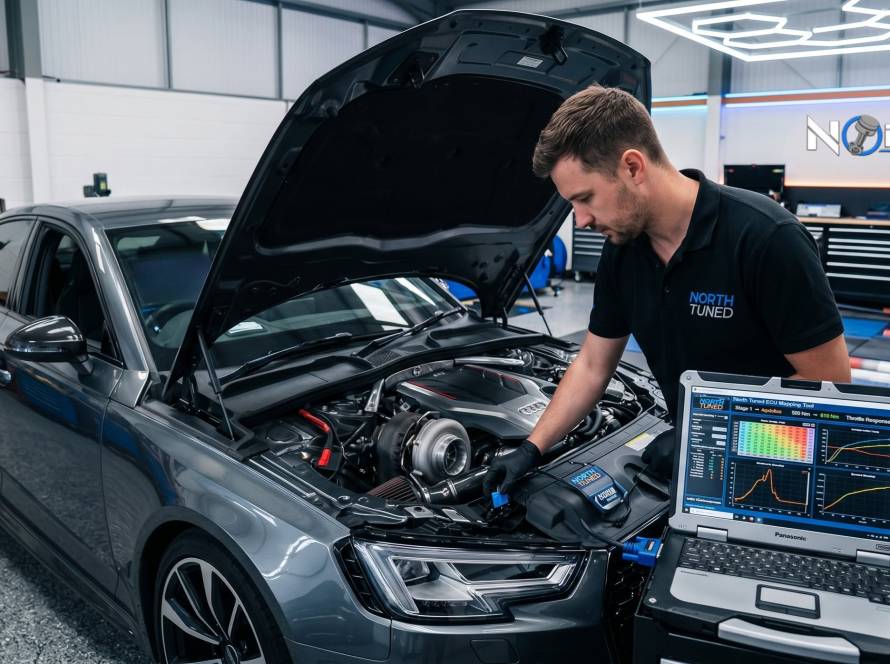
As we emphasize in North Tuned software optimization processes, the Engine Control Unit (ECU) processes real-time data from crankshaft and camshaft sensors. By controlling the primary circuit of each cylinder’s coil, it generates high voltage at the exact required moment to trigger flawless combustion.
Key Sensors and Their Roles
The ECU manages the ignition map based on data from several critical sensors:
Crankshaft & TDC Sensor: Determines engine RPM and piston position.
Camshaft (Phase) Sensor: Verifies the timing of the cylinders.
Knock Sensor: Monitors pre-ignition to ensure engine safety.
MAP/MAF Sensor: Measures intake manifold pressure and air mass flow.
Temperature Sensors: Optimizes advance based on coolant and intake air temperatures.
Advantages of the System with North Tuned
High Voltage Power: Produces up to 40,000 Volts for a stronger spark and complete combustion.
Precise Advance Management: Electronic control delivers maximum performance and optimized fuel efficiency.
Mechanical Reliability: No moving or friction-based parts, leading to lower failure rates and zero maintenance.
Wide Spark Plug Gap: A gap of 0.8 mm – 1.1 mm allows for a larger flame kernel and significant power gains.
In the modern automotive industry, there is a constant battle between performance and environmental regulations. One of the primary components of this struggle is the EGR (Exhaust Gas Recirculation) system. While designed with good intentions, it has become a notorious source of headaches for diesel and gasoline engine owners alike.
Understanding the EGR System
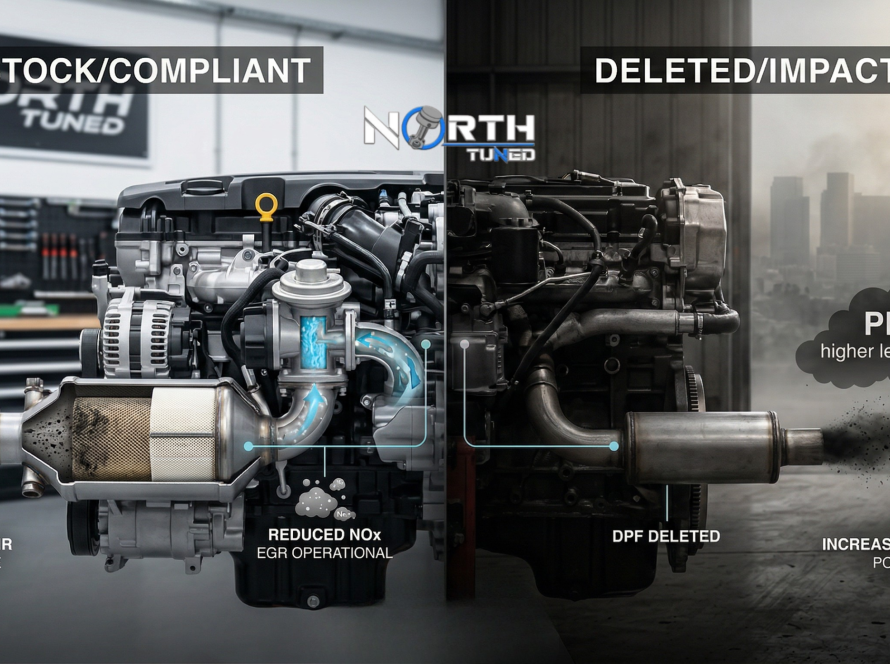
The EGR system’s job is to redirect a portion of the exhaust gases back into the combustion chamber. By doing this, it lowers the combustion temperature and reduces Nitrogen Oxide ($NO_x$) emissions. However, introducing “dirty” air into the intake system is counter-intuitive for engine longevity and performance.
Why Does It Fail?
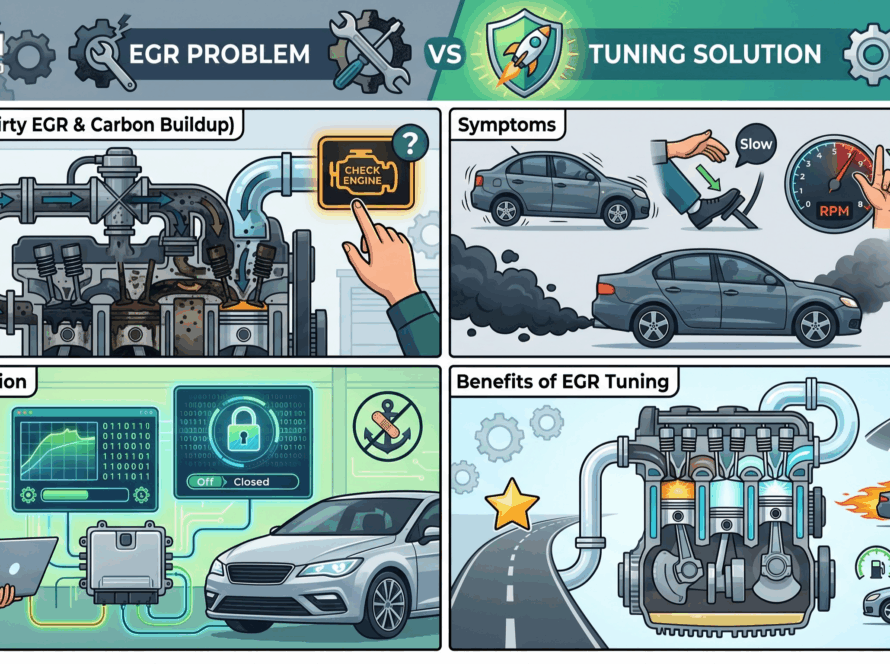
The primary enemy of the EGR valve is carbon buildup. Exhaust gases contain soot, and when mixed with oil vapors in the intake, they form a thick, tar-like substance. This sludge eventually causes the valve to stick or completely clogs the intake manifold.
Symptoms of a Faulty EGR Valve
If you experience any of the following, your EGR system is likely failing:
Loss of Power: Especially noticeable during acceleration.
Increased Fuel Consumption: The ECU struggles to find the correct air-fuel ratio.
Rough Idling: The car shakes or vibrates when stopped.
Limp Mode: The vehicle limits its RPM to prevent engine damage.
Excessive Smoke: Dark smoke from the exhaust due to poor combustion.
The Tuning Solution: Why EGR Delete?
At North Tuned, we believe in long-term reliability. Replacing a faulty EGR valve is often a “band-aid” fix, as the new part will inevitably clog again. Our EGR Software Optimization offers a permanent solution.
Benefits of EGR Tuning & Deletion:
Enhanced Engine Longevity: By preventing soot from entering the engine, you extend the life of your internal components.
Improved Throttle Response: With only fresh, oxygen-rich air entering the cylinders, the engine responds much faster to your inputs.
Cost-Effective: Software adjustment is often cheaper than buying a brand-new mechanical valve and paying for labor multiple times.
Better Fuel Economy: A cleaner burn means every drop of fuel is used more efficiently.
Professional Calibration at North Tuned
When we perform an EGR delete, we modify the Engine Control Unit (ECU) maps. We don’t just “turn off the light”; we recalibrate the air mass flow and fuel injection parameters to ensure the engine operates perfectly without the EGR cycle. This results in a smoother drive and total peace of mind.