

North Tuned: Understanding and Maintaining the EGR Valve for Peak Engine Performance
In the world of automotive tuning and performance, optimizing engine efficiency and managing emissions are equally important. As part of our commitment to keeping your engine running at its absolute best, we at North Tuned frequently address components that impact air-fuel ratios and combustion temperatures. One of the most critical yet often misunderstood components is the EGR (Exhaust Gas Recirculation) valve.
What is an EGR Valve?
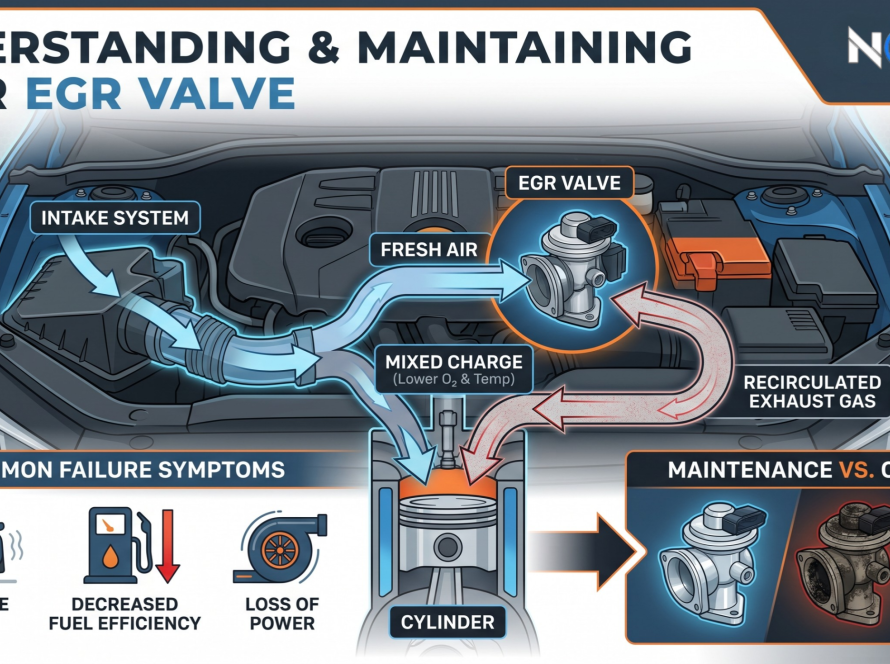
The EGR valve is an electromechanical valve used in modern vehicles, typically located in the engine bay. Its primary function is to recirculate a small, metered amount of exhaust gases back into the engine’s intake stream.
By mixing exhaust gas with the fresh air entering the engine, the EGR system lowers the concentration of oxygen in the combustion chamber. This reduction in oxygen directly lowers combustion temperatures, which in turn helps reduce harmful NOx (nitrogen oxide) emissions.
How Does the EGR Valve Work?
The EGR valve uses an exhaust gas recycling system to lower the formation of nitrogen oxides during high-load and high-temperature operating conditions. The majority of the exhaust gas is expelled through the exhaust, but a small portion is fed back into the intake to slow down the reaction rate and reduce the peak temperatures inside the cylinders.
However, there are specific moments when the EGR valve remains closed. For instance, when the engine is operating under full load, the cylinders need a maximum amount of fresh oxygen to produce power, so the recirculation process is temporarily deactivated.
Common Symptoms of a Failing or Clogged EGR Valve
Over time, the EGR valve is exposed to hot, sooty exhaust gases, leading to the buildup of carbon deposits and grime. When the valve becomes clogged or sticks in an open or closed position, your engine’s performance can drop drastically.
Signs that your EGR valve is dirty or malfunctioning include:
Unstable Idle: The engine may fail to run smoothly or vibrate heavily while idling.
Decreased Fuel Efficiency: You may notice a gradual increase in fuel consumption.
Exhaust Smoke: Black smoke may be emitted from the exhaust under acceleration.
Loss of Power: Reduced throttle response and an overall loss of engine pulling power.
Engine Hesitation: The vehicle may stumble or hesitate when you let off the gas pedal.
When these issues are detected, they should be addressed immediately to prevent further engine wear.
EGR Valve Cleaning and Replacement
At North Tuned, we emphasize that improper handling, removal, or cleaning of the EGR valve can lead to severe engine malfunctions. If you suspect an issue with your EGR system, it is always recommended to seek professional assistance.
1. Inspection and Preparation
The EGR valve is typically located between the air filter and the exhaust manifold. To access and service the valve, technicians must create adequate workspace by carefully detaching the necessary surrounding components.
2. Cleaning Process
If the valve is still in good structural condition, it can be cleaned. Technicians use a specialized brush to remove the heavy carbon buildup. Afterward, the valve is submerged in specialized cleaning fluids to dissolve stubborn contaminants. Finally, the valve is dried and sprayed with a degreaser to ensure no residue remains.
3. Replacement
If the valve is excessively worn or damaged beyond cleaning, it must be replaced with a new unit. Once replaced or cleaned, the valve is carefully re-installed, and the intake system is reassembled to restore full factory and performance specifications.

 English
  Turkish
  German
  Spanish
  Hindi
Hindi  Arabic
  Italian
  Greek
Greek  Vietnamese
  Chinese
  Malay
Malay