
Upgrading a turbocharged car in Australia is a balancing act between chasing “kw” at the wheels and staying on the right side of the law. Whether you’re cruising the Great Ocean Road or hitting Sydney Dragway, here is how to do it right with North Tuned.
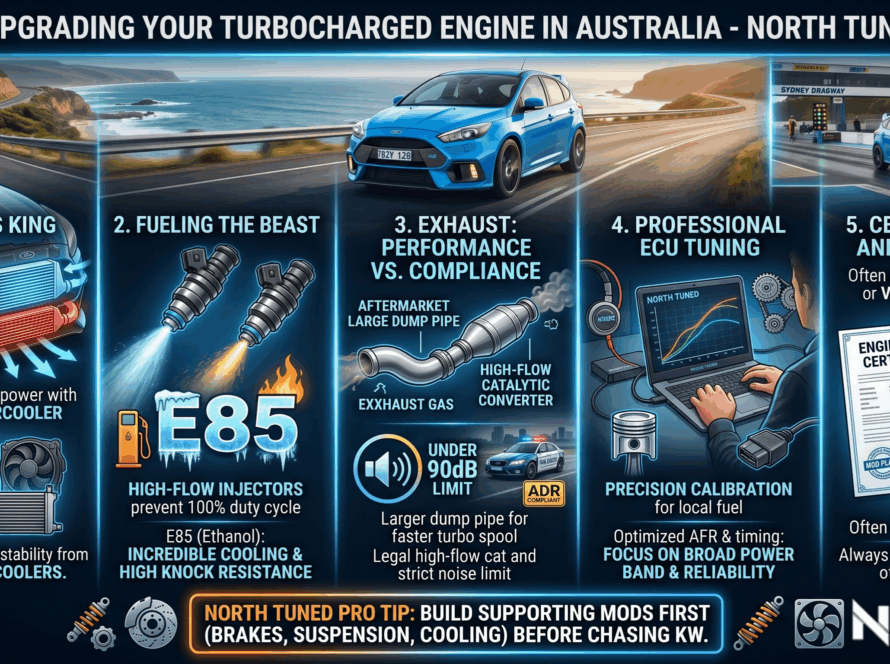
1. Cooling is King
Australia’s heat is brutal on forced induction engines. High intake temperatures lead to power loss and engine-killing detonation.
Intercooler Upgrades: A high-quality intercooler is the most effective way to maintain consistent power.
Radiator & Oil Coolers: Don’t ignore the fluids. Keeping oil and coolant temps stable is vital for engine longevity.
2. Fueling the Beast
To make power safely, your fuel system must keep up with the increased airflow.
High-Flow Injectors: Ensure your injectors aren’t running at a 100% duty cycle.
The E85 Advantage: Many Australian tuners prefer E85 (Ethanol) because of its incredible cooling properties and high knock resistance, allowing for more aggressive timing.
3. Exhaust: Performance vs. Compliance
While we all love a deep rumble, the ADR (Australian Design Rules) are strict.
Dump Pipes: A larger dump pipe reduces backpressure, allowing the turbo to spool faster.
Keep it Legal: Ensure you have a high-flow catalytic converter and stay under the 90dB limit to avoid unwanted attention from the authorities.
4. Professional ECU Tuning
This is where the magic happens. A subpar tune can melt pistons in seconds.
Precision Calibration: At North Tuned, we focus on a broad power band rather than just peak numbers. We prioritize reliability, ensuring your Air-Fuel Ratios (AFR) and ignition timing are optimized for local fuel quality.
5. Certification and Insurance
In Australia, significant modifications like turbo upgrades or fuel system changes often require an Engineering Certificate (such as a Mod Plate in QLD or VSCCS in NSW). Always inform your insurance provider about your mods to ensure you are covered in the event of an accident.
North Tuned Pro Tip: Always build your engine’s “supporting mods” (brakes, suspension, and cooling) before chasing big horsepower. A fast car is only good if it can stop and turn!
In this article, we will examine the purpose and working principle of the Oil Catch Tank, one of the critical components of forced induction and modified vehicles, from the perspective of North Tuned.
The Hidden Pressure: Blow-By Gases
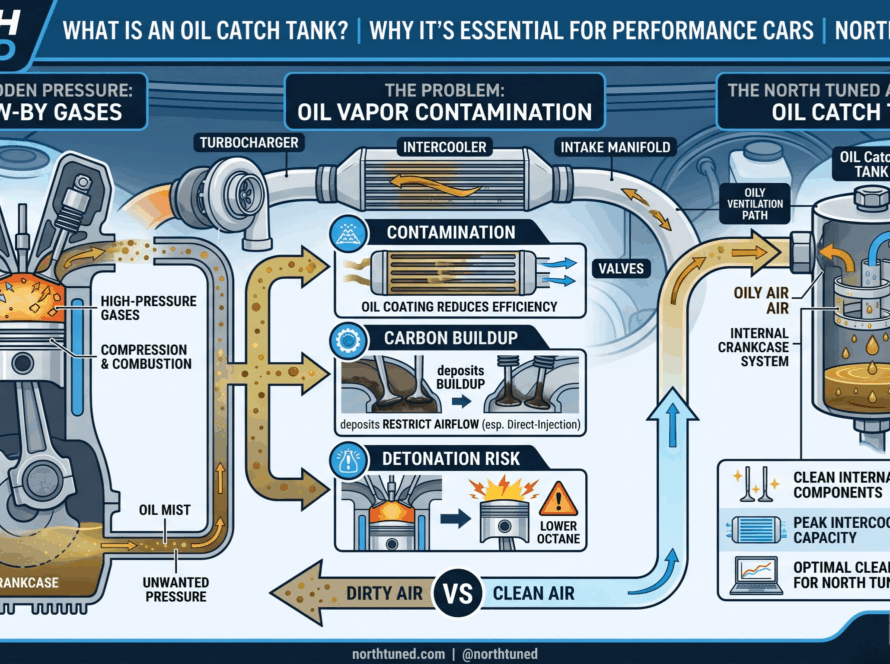
In a four-stroke engine, as the piston moves from the top to the bottom, the intake valves open to draw in the air-fuel mixture. When the piston moves back up, all valves close to compress this mixture.
During this compression and combustion phase, a portion of the high-pressure gases leaks past the piston rings into the crankcase. This is known as “Blow-by.” To manage this unwanted pressure without releasing harmful gases into the atmosphere, manufacturers route this air back into the intake system through a ventilation channel.

The Problem with Oil Vapor
The air evacuated from the crankcase is not just air; it contains a significant amount of oil vapor from the engine oil being tossed around at high temperatures. In factory setups, this oily mist is sent directly back into the turbocharger, intercooler pipes, and intake manifold.
Over time, this leads to:
Contamination: Oil coating the inside of the intercooler significantly reduces its cooling efficiency.
Carbon Buildup: In direct-injection engines, oil accumulates on the intake valves, hardening into carbon deposits that restrict airflow.
Detonation Risk: Oil mist entering the combustion chamber lowers the effective octane rating, which can lead to engine knock.

The North Tuned Advantage: Why Use a Catch Tank?
An Oil Catch Tank acts as a high-efficiency filter. Instead of the oily crankcase air going straight to the intake, it first passes through this tank. The internal baffling system causes the oil droplets to condense and settle at the bottom of the reservoir.
The result: Only purified air is returned to the engine. This keeps your internal components clean, ensures your intercooler works at peak capacity, and allows your North Tuned performance map to operate under optimal, clean conditions.