
Tag: engine tuning

Chip Tuning: Unlock Your Vehicle’s Hidden Potential with North Tuned
In the modern automotive world, technology is no longer just about mechanical parts. With the advancement of emission standards and the necessity for engine longevity, every vehicle is now managed by an Electronic Control Unit (ECU)—the digital brain of your car. However, most vehicles leave the factory with their true performance capabilities restricted by conservative software settings.
If you are unsatisfied with your vehicle’s current performance or feel that it lacks the “punch” it should have, North Tuned offers professional Chip Tuning services designed specifically for your needs.
What is Chip Tuning?
Chip Tuning is the process of reprogramming the software within the Engine Control Unit (ECU) while staying within the mechanical tolerances of the engine. Whether your vehicle is naturally aspirated or forced induction (turbocharger/supercharger), and whether it runs on petrol or diesel, North Tuned executes this transformation in three professional steps:
Read & Backup: Your vehicle’s original factory software is securely read and a backup is created for safety.
Optimization: Based on your performance expectations and driving habits, our expert engineers recalibrate the software maps.
Uploading: The perfected, custom-tailored program is flashed back into the ECU, completing the process.
Why Do Manufacturers Limit Engine Power?
When a car leaves the factory, it is designed to operate in extreme conditions—from polar freezes to desert heat—and with varying fuel qualities or different taxation policies across the globe. To maintain this wide safety margin, manufacturers intentionally “detune” the engine.
At North Tuned, we optimize your vehicle’s software for your specific climate and driving style, reaching the “sweet spot” of efficiency. When handled by experts and kept within recommended power limits, tuning provides significant benefits without harming your engine.
How the Process Works
During Chip Tuning, no physical parts are added or removed from the vehicle. The software is accessed in two primary ways:
OBD Port (On-Board Diagnostics): A digital connection is established through the vehicle’s diagnostic socket.
Bench Tuning: On certain models, the ECU is removed and programmed directly using specialized hardware.
By making precision adjustments to maps such as Air-Fuel Ratio (AFR) and Torque Limiters, we achieve a more responsive and refined driving experience.
Not Just Power, But Efficiency!
Chip tuning isn’t just about speed. A correctly calibrated software allows the engine to produce more torque at lower RPMs. This means your car becomes “meatier” in the lower rev range, requiring less throttle input to maintain speed. The result? Significant fuel savings depending on your driving style.
Are you ready to unleash the true power of your vehicle and take your driving pleasure to the next level? Contact the North Tuned expert team today.

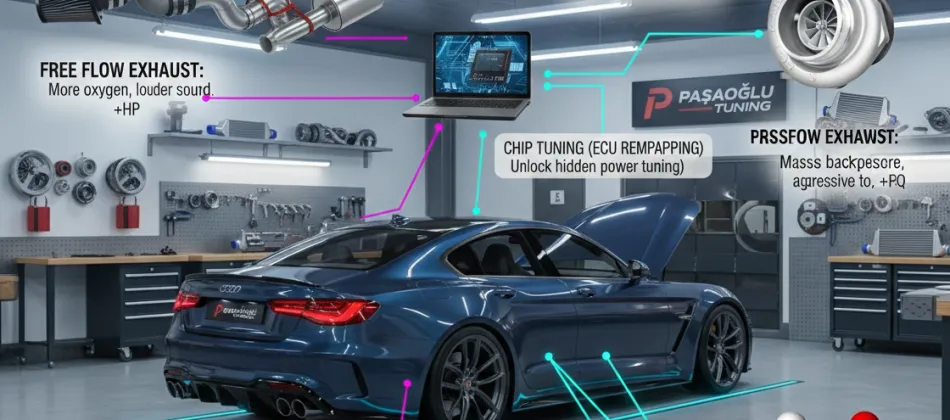
Engine Tuning Guide
The performance of the car you’ve driven fondly for years might start to feel inadequate over time; you may want to recapture that day-one excitement and push the limits a little further. We will provide you with practical information in this article about essential engine modifications that will boost your vehicle’s power and take your driving dynamics to a whole new level.
Sports Air Filter Upgrade
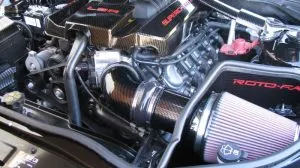
Car manufacturers often use restrictive air intake systems to keep mass-production costs down and comply with standard noise regulations. Aftermarket sports air filters, commonly known as Cold Air Intake Kits, eliminate this factory-induced shortness of breath. These performance-oriented kits maximize the air mass entering the engine per unit of time by channeling much cooler, denser oxygen directly into the combustion chambers. More oxygen means a more powerful combustion. As a result, your vehicle not only gains a noticeable performance boost with improved throttle response but also unleashes that deep, sporty intake growl we all love when you step on the gas.
Sports Exhaust Upgrades
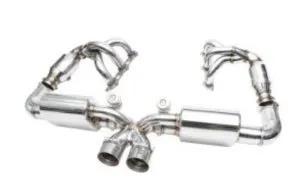
Whether you own a naturally aspirated or a forced induction (turbocharged or supercharged) engine, this upgrade is a must-have for car enthusiasts looking to personalize their vehicle and push its performance limits. It stands out as one of the most popular modification steps taken to help the exhaust gases flow more freely, boost horsepower, and achieve that highly desired, deep, and aggressive sound.
Chip Tuning (ECU Remapping)
Thanks to giant leaps in automotive technology, modern vehicles roll out of the factory equipped with highly durable, efficient, and high-potential engines. This robust and tolerant foundation makes today’s cars perfect canvases for performance upgrades. Chip Tuning unlocks your vehicle’s hidden true capacity by professionally optimizing the original parameters and maps within the Engine Control Unit (ECU). Through this fine-tuning of the engine’s brain, it is possible to achieve significant increases in horsepower and torque without having to replace a single mechanical part. For a deeper dive into the technical details and specific gains for your car, feel free to check out our comprehensive Chip Tuning guide.
Turbocharger Upgrades
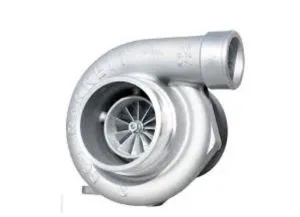
Strict modern emission standards and high taxation policies have driven automakers to extract maximum power from smaller displacement engines. The undisputed hero of this “downsizing” trend is the turbocharger. A turbo’s primary job is to force pressurized air into the combustion chambers, cramming a significantly higher volume of oxygen into the cylinders. The rule of thumb is simple: A larger turbo equates to massive power potential. However, blindly choosing an oversized turbo without considering the vehicle’s dynamics leads to “uncontrolled power” and frustrating turbo lag at lower RPMs.
To safely harness and regulate this increased boost pressure without stressing the engine, upgrades to the wastegate system are absolutely essential. Furthermore, when upgrading a turbo, the intercooler capacity must be re-evaluated and upsized if necessary to combat the extra heat generated by the higher boost levels. The intercooler’s job is to cool down the compressed air, thereby increasing its density; cooler, denser air results in a more violent, efficient combustion and yields extra horsepower. But there is a delicate balance to strike here: Installing an unnecessarily large intercooler will cause pressure drops in the charge piping, severely dulling your throttle response and ruining the sporty driving experience.
Methanol Injection (Water-Meth) Systems

Commonly utilized in high-performance builds, this system safely pushes an engine’s performance boundaries. Methyl alcohol, one of the most effective alcohols for internal combustion engines, is integrated into the system by being sprayed directly into the air intake tract.
Key Advantages:
Thermal Management: It rapidly lowers combustion chamber temperatures, preventing engine overheating.
High Octane Support: Due to its high octane rating, it allows tuners to aggressively adjust ignition timing during the remapping process.
Combustion Quality: It maximizes fuel burn quality, resulting in a cleaner and more efficient explosion.
Performance Gains: The synergy of these effects delivers significant increases in both horsepower and torque.
Potential Disadvantages:
High Consumption Rate: Since it evaporates much more easily than gasoline, the consumption rate is notably higher.
Corrosion Risk: By its chemical nature, prolonged use can lead to wear and corrosion within fuel system components.
Cold Start Issues: When used as a primary fuel source, it fails to atomize correctly in cold weather, making the engine difficult to start.
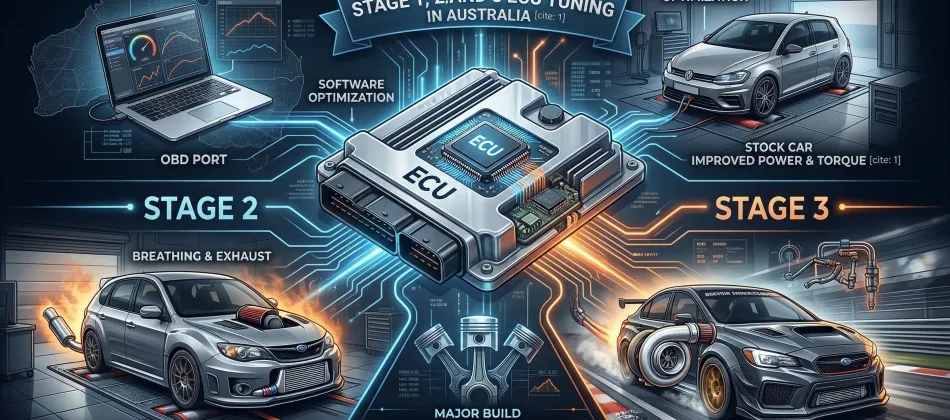
The Ultimate Guide to Stage 1, 2, and 3 ECU Tuning in Australia
Australia has a massive and incredibly diverse car culture. From touring the rugged Outback in heavy-duty turbo-diesel 4x4s to carving up mountain roads in nimble European hot hatches, Aussie drivers demand a lot from their vehicles. One of the most effective ways to unlock your vehicle’s true potential is through ECU tuning.But as you dive into the aftermarket world, you are bound to encounter a lot of jargon. Tuners constantly talk about “stages,” which can be confusing if you are new to the scene. What exactly does it mean when a shop says your car is ready for a “Stage 2” package?Let’s break down exactly what ECU tuning is and explore everything you need to know about Stage 1, 2, and 3 modifications in the Australian context.What is ECU Tuning?Modern vehicles are essentially computers on wheels. The Engine Control Unit (ECU) is your car’s brain. It constantly monitors and controls crucial engine parameters, including how much fuel is injected, ignition timing, and turbocharger boost pressure.Manufacturers often restrict these settings straight from the factory. They do this to ensure the car can survive on poor-quality fuel in different countries, withstand extreme climates, and comfortably pass stringent global emission standards.ECU tuning, often referred to as “remapping,” involves accessing the software inside the ECU and altering it to optimize these parameters. By safely adjusting the fuel-air mixture, timing, and boost pressure, tuners can unlock the hidden horsepower and torque that the manufacturer deliberately left on the table. In Australia, where we have access to high-quality 98 RON premium unleaded and reliable diesel, remapping is an incredibly effective and safe modification.Stage 1 Tuning: The Software Sweet SpotStage 1 tuning is by far the most common, cost-effective, and accessible modification. It is specifically designed to work perfectly with a completely stock vehicle. There are no mechanical parts to replace; it is a purely digital upgrade.The Process: A professional tuner reads your factory ECU data and writes a new, optimized software file to it.The Benefits: You will experience a noticeable increase in both horsepower and torque across the entire rev range. For modern turbocharged petrol cars, this translates to faster acceleration and sharper, more responsive throttle feel. For turbo-diesel 4x4s like the Toyota Hilux or Ford Ranger, a Stage 1 tune drastically improves towing capacity, eliminates sluggishness, and can even improve highway fuel economy.Hardware Required: None. The factory air intake, exhaust system, and intercooler are perfectly capable of handling the increased output of a Stage 1 tune.Who it is for: The everyday driver who wants a bit more punch for safely overtaking on the highway, or a more capable rig for towing a caravan, all without sacrificing daily reliability.Stage 2 Tuning: Letting the Engine BreatheStage 2 is where software meets hardware. To push the engine further safely, you need to improve its ability to inhale dense, cold air and quickly exhale hot exhaust gases.The Process: A custom ECU remap is paired with specific, bolt-on mechanical modifications.Hardware Required: Typically, a Stage 2 package requires a high-flow cold air intake, an upgraded intercooler (to keep intake temperatures down under higher boost), and a less restrictive exhaust system. For petrol cars, this usually means installing a larger downpipe with a high-flow catalytic converter.The Benefits: This yields a massive step up in power delivery and a much more aggressive sound. The engine revs much more freely, turbo lag is significantly reduced, and the vehicle will pull much harder at higher speeds.Who it is for: The weekend enthusiast who wants serious, aggressive performance, a sportier exhaust note, and is willing to invest in quality hardware upgrades.Stage 3 Tuning: The Big BuildStage 3 is not for the faint of heart. This level of tuning moves entirely away from factory components. You are now replacing major engine parts to chase maximum horsepower.The Process: Extensive mechanical modifications are followed by a highly customized dyno tune. Off-the-shelf software files no longer work; the ECU must be meticulously calibrated specifically to the brand new hardware.Hardware Required: Upgraded, larger turbochargers (or superchargers), high-capacity fuel injectors, upgraded high-pressure fuel pumps, and often forged engine internals (like stronger pistons and connecting rods) to handle the extreme stress. Upgraded clutches or heavy-duty automatic transmission builds are also mandatory so the driveline doesn’t snap under the massive torque.The Benefits: Supercar-level performance. Stage 3 completely transforms a standard street car into a track-ready weapon.Who it is for: Hardcore motorsport enthusiasts, drag racers, and owners with a serious budget who want the absolute fastest version of their vehicle possible.Tuning Stages at a GlanceStageFocusHardware RequiredCost LevelPower GainStage 1Software OptimizationNone (Stock vehicle)LowModerateStage 2Breathing & ExhaustIntake, Intercooler, DownpipeMediumHighStage 3Major Component UpgradeBig Turbo, Injectors, Forged InternalsVery HighExtremeImportant Considerations for Australian DriversModifying your vehicle down under comes with specific legal and financial responsibilities that you must be aware of:Australian Design Rules (ADR): All modifications must comply with ADRs and your specific state-level regulations. Removing emissions equipment, such as Catalytic Converters or Diesel Particulate Filters (DPFs), for a street-driven car is illegal in Australia and carries severe fines. Always ensure your Stage 2 or 3 hardware uses compliant, high-flow emission controls.Insurance Disclosure: You are legally required to inform your auto insurance provider about any performance modifications. Failure to disclose an ECU tune or an aftermarket exhaust can completely void your policy in the event of an accident.Manufacturer Warranty: An ECU tune will almost certainly void your manufacturer’s new-car powertrain warranty. If your engine fails, the dealership will check the ECU flash counter. However, many reputable tuning shops in Australia offer their own driveline warranties for peace of mind.Ultimately, whether you are looking for a slight bump in towing torque or building a track monster, ECU tuning is the most rewarding modification you can make. Always do your research and choose a reputable, experienced tuner who understands the specific needs of your engine and the Australian driving environment.