
Tag: Forced regeneration
The Diesel Particulate Filter (DPF)
The Diesel Particulate Filter (DPF), which cleans exhaust emissions in diesel-powered vehicles, prevents environmental pollution by filtering harmful particulates. So, what is a DPF and how does it work? In this article, we will discuss the working principle of the DPF, regeneration types, and clogging issues in detail.
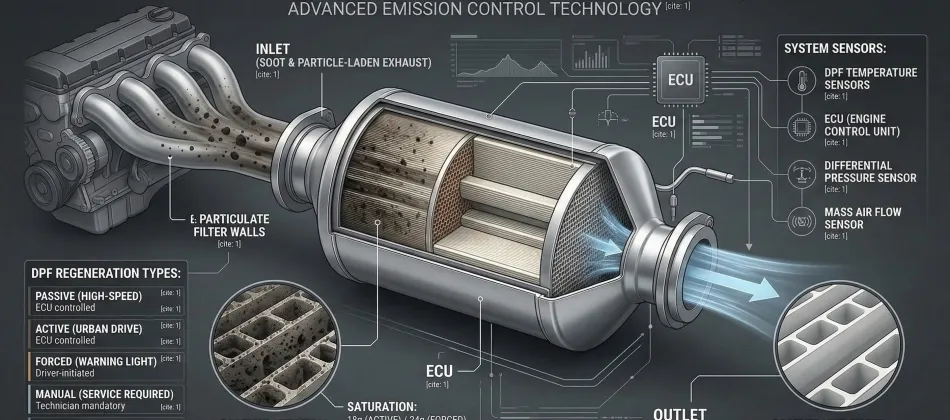
Soot and particulates within the combusted fuel-air mixture coming from the engine accumulate inside the DPF. These particulates are cleaned by burning them at high temperatures through the regeneration process. The ECU (Engine Control Unit) monitors the exhaust gas temperature via heat sensors on the DPF and manages the regeneration by optimizing fuel injection.
What Are the Types of DPF Regeneration?
To prevent DPF clogging, accumulated particulates are burned regularly. Here are the main DPF regeneration strategies:
Passive Regeneration: Occurs without ECU intervention. At highway speeds (approximately 3000 rpm), when the exhaust temperature reaches 350-500°C, the particulates burn spontaneously. It is ideal for extra-urban driving.
Active Regeneration: In urban use, the exhaust temperature remains insufficient, and soot accumulation reaches 18 grams. The ECU calculates the saturation level based on data from the differential pressure sensor, temperature/oxygen sensors, and the mass air flow sensor. To increase the exhaust temperature to 550-650°C, it:
Adjusts the airflow.
Deactivates the EGR valve.
This allows the filter to be cleaned.
Forced Regeneration: If saturation increases to 24 grams due to short-distance driving, the DPF warning light turns on. It signals the driver to go for a long drive at high speeds (regeneration route).
Manual Regeneration: If saturation reaches 40 grams, the glow plug and check engine lights illuminate. The ECU blocks active regeneration; intervention by a service technician is mandatory.
Mileage-Based Regeneration: If no regeneration has occurred in the last 750-1000 km, the ECU initiates an automatic active regeneration, regardless of the saturation level.
DPF Clogging Symptoms and Solutions
In the event of DPF clogging, differential pressure sensors alert the ECU by increasing the voltage. In cases of excessive clogging (over 45 grams), the filter becomes unusable and must be replaced.
If you are experiencing DPF problems, seek professional help. Contact us for a permanent, lifelong solution!