
The primary function of a standalone electronic ignition system is to ignite the air-fuel mixture in the combustion chamber at the most optimal moment, providing the necessary ignition advance for peak engine performance. At North Tuned, we prioritize millisecond precision in ignition timing to ensure a superior high-performance driving experience.

Operating Principle
In this system, an independent ignition coil is utilized for each cylinder. These coils integrate the igniter unit, primary, and secondary windings, connecting directly to the spark plug. Unlike traditional systems, there are no spark plug wires; the coils are powered by a 12V supply and controlled via signal currents directly from the ECU.
As we emphasize in North Tuned software optimization processes, the Engine Control Unit (ECU) processes real-time data from crankshaft and camshaft sensors. By controlling the primary circuit of each cylinder’s coil, it generates high voltage at the exact required moment to trigger flawless combustion.
Key Sensors and Their Roles
The ECU manages the ignition map based on data from several critical sensors:
Crankshaft & TDC Sensor: Determines engine RPM and piston position.
Camshaft (Phase) Sensor: Verifies the timing of the cylinders.
Knock Sensor: Monitors pre-ignition to ensure engine safety.
MAP/MAF Sensor: Measures intake manifold pressure and air mass flow.
Temperature Sensors: Optimizes advance based on coolant and intake air temperatures.
Advantages of the System with North Tuned
High Voltage Power: Produces up to 40,000 Volts for a stronger spark and complete combustion.
Precise Advance Management: Electronic control delivers maximum performance and optimized fuel efficiency.
Mechanical Reliability: No moving or friction-based parts, leading to lower failure rates and zero maintenance.
Wide Spark Plug Gap: A gap of 0.8 mm – 1.1 mm allows for a larger flame kernel and significant power gains.

If you want to feel the true power of your engine, the ignition must be flawless. This is where the spark plug comes into play. But what exactly does this small yet mighty component do?
How Does a Spark Plug Work?
The primary role of a spark plug is to ignite the air-fuel mixture in the combustion chamber within milliseconds. It takes a massive voltage of 20,000 – 30,000 volts from the ignition coil and forces it across a gap, creating an electric arc (spark). This spark triggers the explosion that powers your vehicle.
Which Vehicles Use Spark Plugs?
Spark plugs are essential for gasoline, LPG, and hybrid engines. However, keep in mind: Diesel engines do not have ignition spark plugs. Diesel engines operate by compressing air to extreme pressures to cause spontaneous combustion.
Hot vs. Cold Spark Plugs: What’s the Difference?
Choosing the right plug based on your engine’s character is vital:
Cold Spark Plug: Has a shorter insulator nose and dissipates heat quickly. It is preferred for high-performance and tuned engines.
Hot Spark Plug: Has a longer insulator nose and retains more heat. It’s ideal for daily drivers and lower RPM engines.
North Tuned Insight: Does Changing Spark Plugs Affect Fuel Efficiency?
Absolutely! A worn-out spark plug or an incorrect gap causes inefficient combustion. This leads to higher fuel consumption and robs your engine of its performance. The right spark plug ensures:
Lower fuel consumption,
Sharper throttle response,
Smoother idling.
Pro Tip: The spark plug gap widens over time due to wear. In modern electronic ignition systems, this gap is typically between 0.8mm – 1.1mm. Don’t skip your periodic checks to maintain peak performance!
Getting a professional tune (remapping) is the most exciting way to unlock your vehicle’s hidden potential. However, simply saying “it feels faster” isn’t enough. To truly understand the gains, you need empirical data. Here is how we at North Tuned recommend verifying your performance increase:
1. Dyno (Dynamometer) Testing
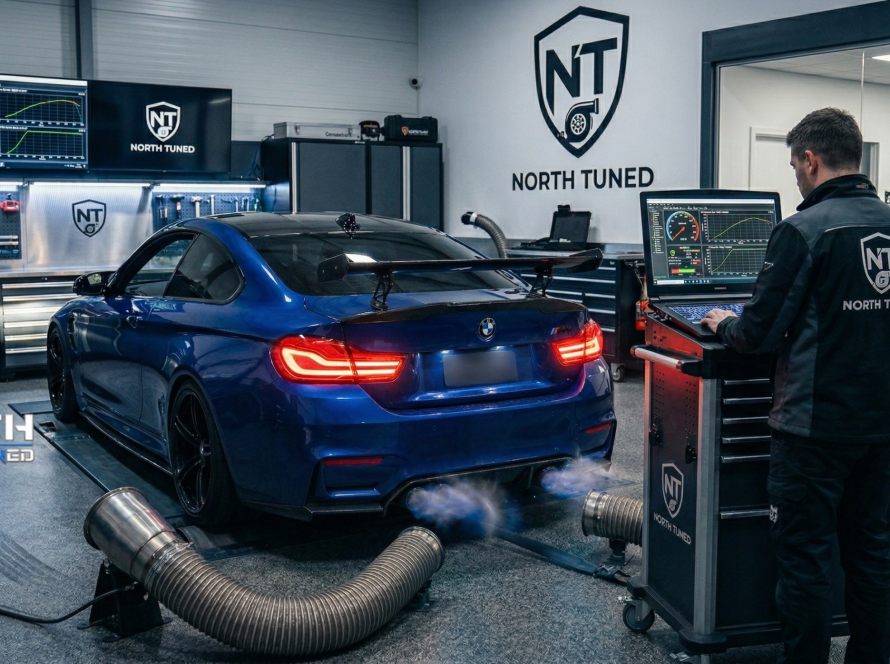
This is the gold standard. A dyno measures the horsepower (HP) and torque (Nm) delivered to the wheels.
Before/After: Performing a run right before and right after the tune provides a clear picture of the changes in the power band.
Health Check: It allows technicians to monitor Air-Fuel Ratios (AFR) to ensure the tune is running safely under load.
2. GPS-Based Performance Meters (Dragy or VBOX)
Devices like Dragy are the best way to turn feelings into facts. These use high-frequency GPS (10Hz or higher) to track acceleration with extreme precision.
0-100 km/h & 100-200 km/h: These are the industry standards for measuring real-world acceleration.
Slope Correction: These devices account for road incline, giving you a “valid” and honest result regardless of the terrain.
3. OBDII Data Logging
Speed is only one part of the story; how the engine achieves that speed matters for longevity. Use an OBDII scanner to log:
Boost Levels: Is the turbo hitting the requested targets?
Ignition Timing: Is the engine running efficiently without “pulling” timing due to knock?
Intake Air Temperatures (IAT): Is your cooling system handling the extra power effectively?
4. In-Gear Acceleration (Flexibility)
This is the most relevant metric for daily driving. For example, measure the time it takes to go from 80 km/h to 120 km/h in 4th gear. The reduction in this timeframe is the best indicator of your car’s increased “punch” and torque delivery.
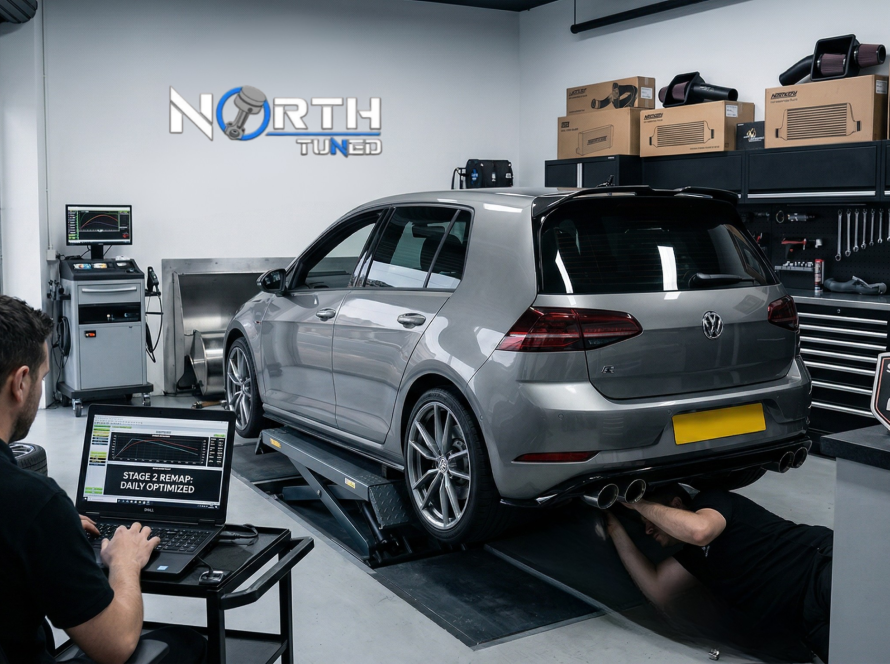
For many enthusiasts, a car is more than just a tool for commuting; it’s a passion project. When the factory power feels insufficient, Stage 2 tuning is often the next logical step. But is it practical for a vehicle you drive every single day?
What is Stage 2?
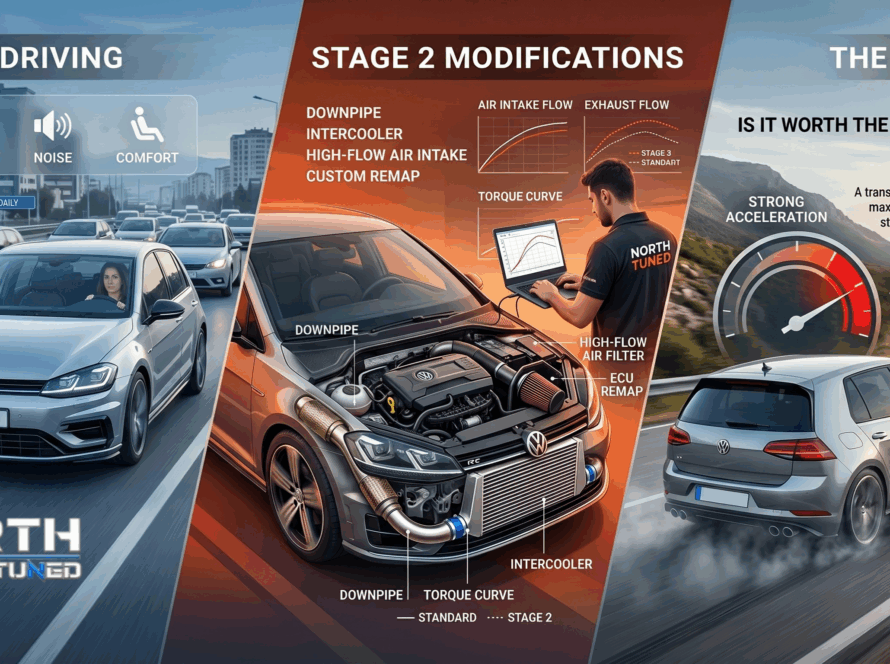
Unlike Stage 1, which is primarily a software-only upgrade, Stage 2 requires hardware modifications to help the engine “breathe” better. Typical upgrades include:
Downpipe: For faster exhaust gas evacuation.
Upgraded Intercooler: To ensure cooler, denser air intake.
High-Flow Air Intake: To reduce intake restriction.
Custom Remap: ECU calibration optimized for these specific hardware changes.
Pros and Cons for the Daily Drive
A Stage 2 vehicle offers a much broader torque curve and more aggressive acceleration compared to Stage 1. However, there are trade-offs to consider:
Performance: Significant gains in overtaking power and highway merging.
Fuel Economy: While efficiency can improve during cruising, spirited driving will see a noticeable jump in fuel consumption.
NVH (Noise, Vibration, Harshness): An aftermarket downpipe will increase exhaust volume. This might be thrilling for some but tiring for others in heavy traffic.
Reliability: Since you are pushing the engine further, high-quality maintenance becomes non-negotiable.
The Verdict: Is it worth it?
If you view driving as an experience rather than a chore and are willing to invest in the supporting hardware, Stage 2 is absolutely worth it. It transforms the character of the car without sacrificing total usability. At North Tuned, we believe the key is balance—achieving maximum performance while staying within the safe mechanical limits of your engine.
Engine oil is more than just a lubricant; it is a protective shield within your vehicle’s engine. By forming a microscopic film over moving components, it minimizes friction and wear. At North Tuned, we emphasize that selecting the premium oil reduces friction-induced power loss, allowing more effective power transfer to the wheels.
Oil Types and Performance Variations
Mineral Oils: Derived from refined crude oil. While cost-effective, they typically provide only basic protection for modern, high-performance engines.
Synthetic Oils: Engineered in laboratory environments using advanced chemical processes. Within North Tuned performance standards, synthetic oils are preferred for their superior thermal stability and resilience under extreme temperatures or high pressure. They offer longer service intervals and maximum engine longevity.
Viscosity: The Fluid Balance
Viscosity measures an oil’s resistance to flow.
Low Viscosity (e.g., 0W): Flows quickly in cold temperatures, ensuring protection during cold starts.
High Viscosity (e.g., 50): Maintains thickness at high heat but may fail to reach tight engine tolerances if too thick.
North Tuned Note: Modern multi-viscosity oils (like 5W-30) adapt seamlessly to changing climates. These oils provide 1.5% to 3% better fuel economy compared to single-grade oils.
Performance Classifications (SAE, API, ACEA)
The codes on the back of the bottle are vital for your engine’s health:
SAE: Defines the flow grade (e.g., 10W-40).
API: Indicates suitability for Gasoline (S) or Diesel (C) engines. Later letters in the alphabet (e.g., SP) signify higher performance levels.
ACEA: European standards categorizing oils for Gasoline (A), Passenger Diesel (B), and Commercial Diesel (C), followed by performance ratings (1-3).
Frequently Asked Questions
Why does my engine consume oil? Modern engines use tight metal-to-metal tolerances for efficiency, which can lead to slight consumption. Excessive loss is often due to high RPM driving, incorrect oil viscosity, or mechanical wear.
Can I mix different brands? In emergencies, you can top up with the same viscosity and API class. However, mixing mineral and synthetic oils compromises the chemical structure. North Tuned recommends a full oil change as soon as possible after mixing.
In the modern automotive world, technology is no longer just about mechanical parts. With the advancement of emission standards and the necessity for engine longevity, every vehicle is now managed by an Electronic Control Unit (ECU)—the digital brain of your car. However, most vehicles leave the factory with their true performance capabilities restricted by conservative software settings.
If you are unsatisfied with your vehicle’s current performance or feel that it lacks the “punch” it should have, North Tuned offers professional Chip Tuning services designed specifically for your needs.
What is Chip Tuning?
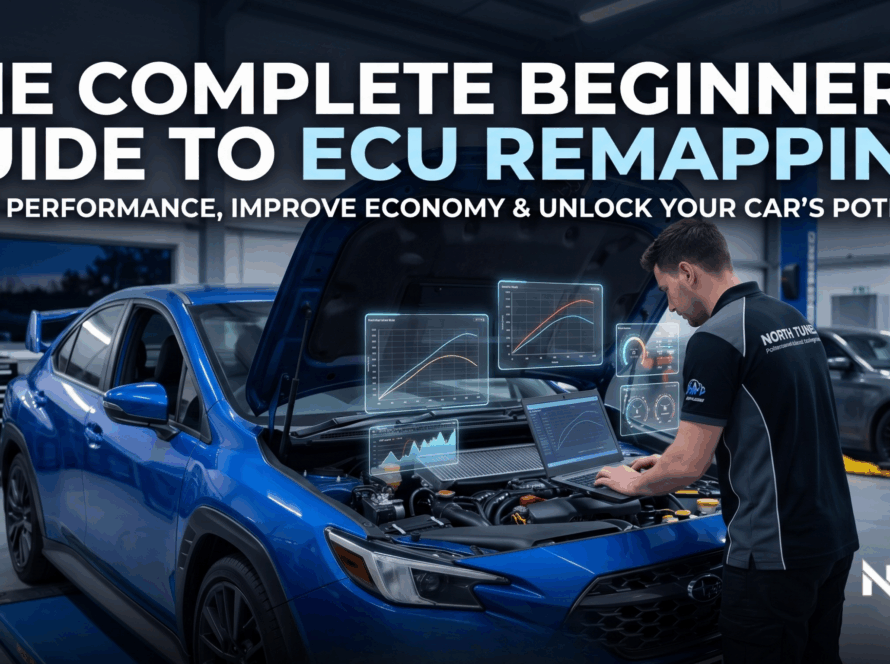
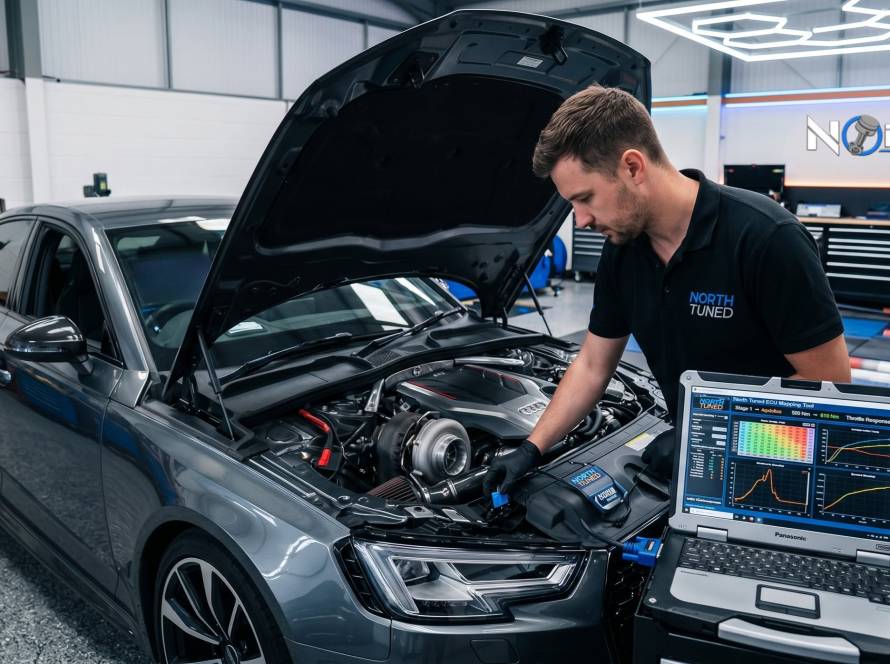
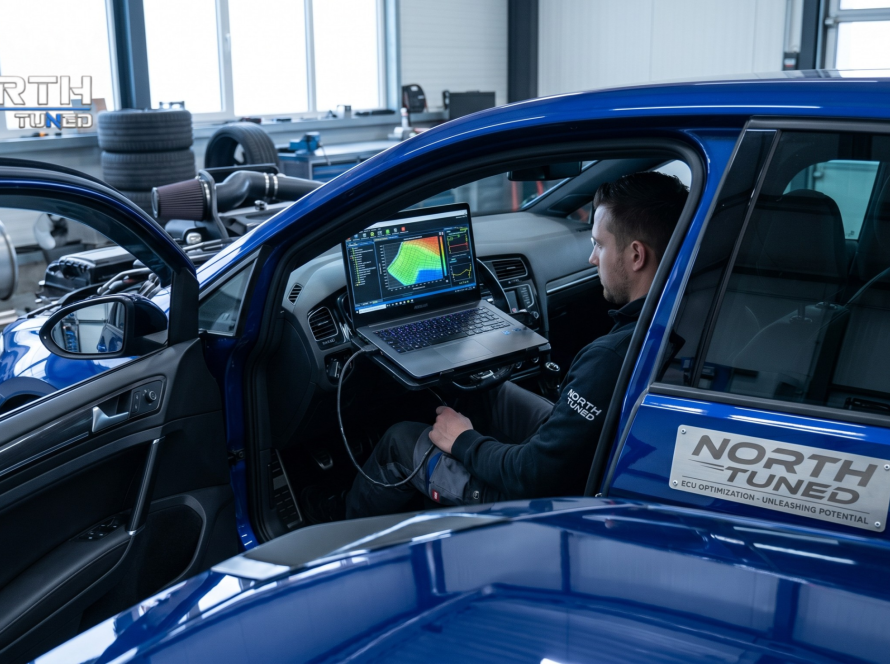
Chip Tuning is the process of reprogramming the software within the Engine Control Unit (ECU) while staying within the mechanical tolerances of the engine. Whether your vehicle is naturally aspirated or forced induction (turbocharger/supercharger), and whether it runs on petrol or diesel, North Tuned executes this transformation in three professional steps:
Read & Backup: Your vehicle’s original factory software is securely read and a backup is created for safety.
Optimization: Based on your performance expectations and driving habits, our expert engineers recalibrate the software maps.
Uploading: The perfected, custom-tailored program is flashed back into the ECU, completing the process.
Why Do Manufacturers Limit Engine Power?
When a car leaves the factory, it is designed to operate in extreme conditions—from polar freezes to desert heat—and with varying fuel qualities or different taxation policies across the globe. To maintain this wide safety margin, manufacturers intentionally “detune” the engine.
At North Tuned, we optimize your vehicle’s software for your specific climate and driving style, reaching the “sweet spot” of efficiency. When handled by experts and kept within recommended power limits, tuning provides significant benefits without harming your engine.
How the Process Works
During Chip Tuning, no physical parts are added or removed from the vehicle. The software is accessed in two primary ways:
OBD Port (On-Board Diagnostics): A digital connection is established through the vehicle’s diagnostic socket.
Bench Tuning: On certain models, the ECU is removed and programmed directly using specialized hardware.
By making precision adjustments to maps such as Air-Fuel Ratio (AFR) and Torque Limiters, we achieve a more responsive and refined driving experience.
Not Just Power, But Efficiency!
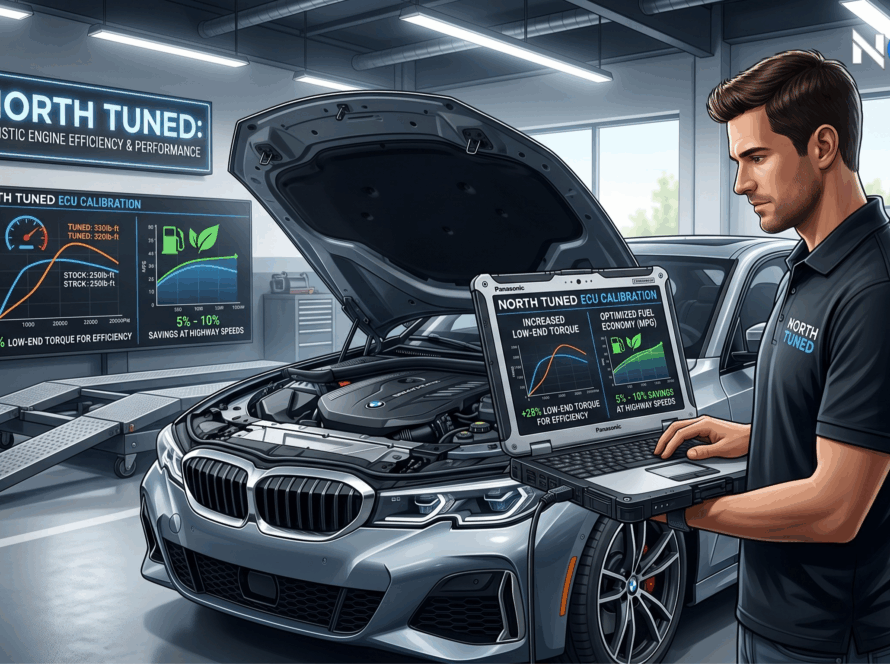
Chip tuning isn’t just about speed. A correctly calibrated software allows the engine to produce more torque at lower RPMs. This means your car becomes “meatier” in the lower rev range, requiring less throttle input to maintain speed. The result? Significant fuel savings depending on your driving style.
Are you ready to unleash the true power of your vehicle and take your driving pleasure to the next level? Contact the North Tuned expert team today.