
In the automotive world, the most effective way to increase performance is ECU (Engine Control Unit) Chip Tuning. As this technology evolves, it unfortunately brings along various misconceptions. At Nort Tuned, we are debunking these industry myths with engineering facts.
1. Myth: “Why Didn’t the Manufacturer Do It? It Must Be Harmful”
The Reality: Manufacturers (OEMs) design cars for global markets. They must account for extreme temperatures, poor fuel quality in developing countries, and neglected maintenance cycles. Consequently, engines are released with significantly restricted power (often 30-40% below capacity).
Nort Tuned Approach: We don’t remove safety margins; we recalibrate them based on your local fuel quality and driving conditions. A professional remap doesn’t strain the engine; it optimizes combustion efficiency, making the engine run smoother.
2. Myth: “More Power Always Equals Higher Fuel Consumption”
The Reality: While power requires energy, efficiency is the key. After a remap, the torque curve is shifted to lower RPMs.
The Logic: Your car delivers the power it used to give at 2000 RPM now at 1600 RPM.
The Saving: You can upshift earlier and use less throttle to maintain speed. On highway cruises, it is common to see a 10% to 18% improvement in fuel economy.
3. Myth: “Tuned Cars Will Fail Emission Tests or Inspections”
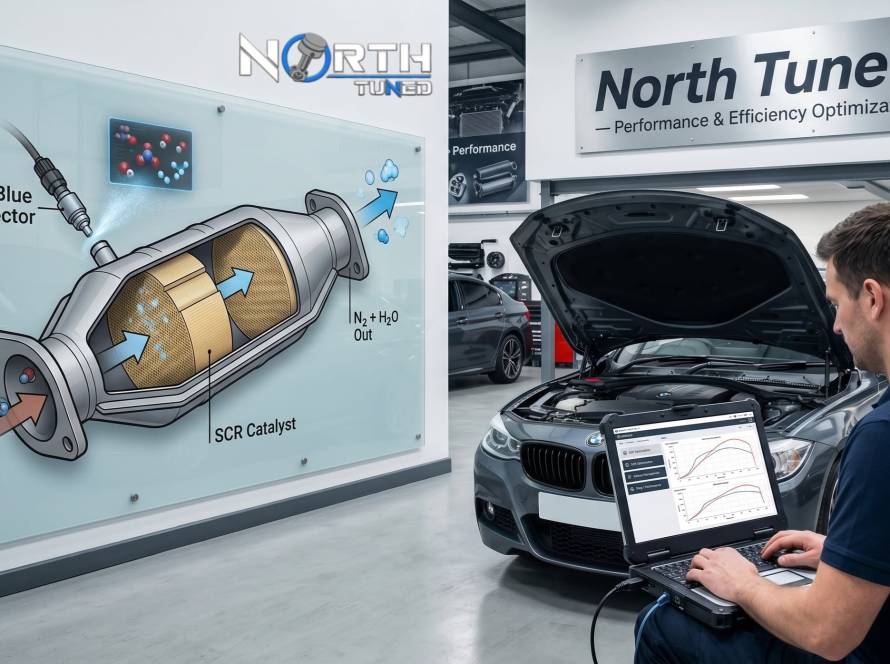
The Reality: This is a total misconception. ECU optimization doesn’t alter the physical hardware. When done correctly, emission levels stay within factory limits. Your vehicle will pass standard inspections and exhaust emission tests without any issues.
4. Myth: “Tuning Boxes are the Same as Remapping”
The Reality: “Plug-and-play” tuning boxes merely “trick” the sensors into sending false data to the ECU. This is a crude method that can lead to uncontrolled fuel delivery.
Nort Tuned Difference: We perform Custom Mapping. We analyze the vehicle’s mileage, turbo health, and injector status to create a tailored software solution. We never use “copy-paste” files that could endanger your engine.
5. Myth: “Chip Tuning is Only for Turbocharged Cars”
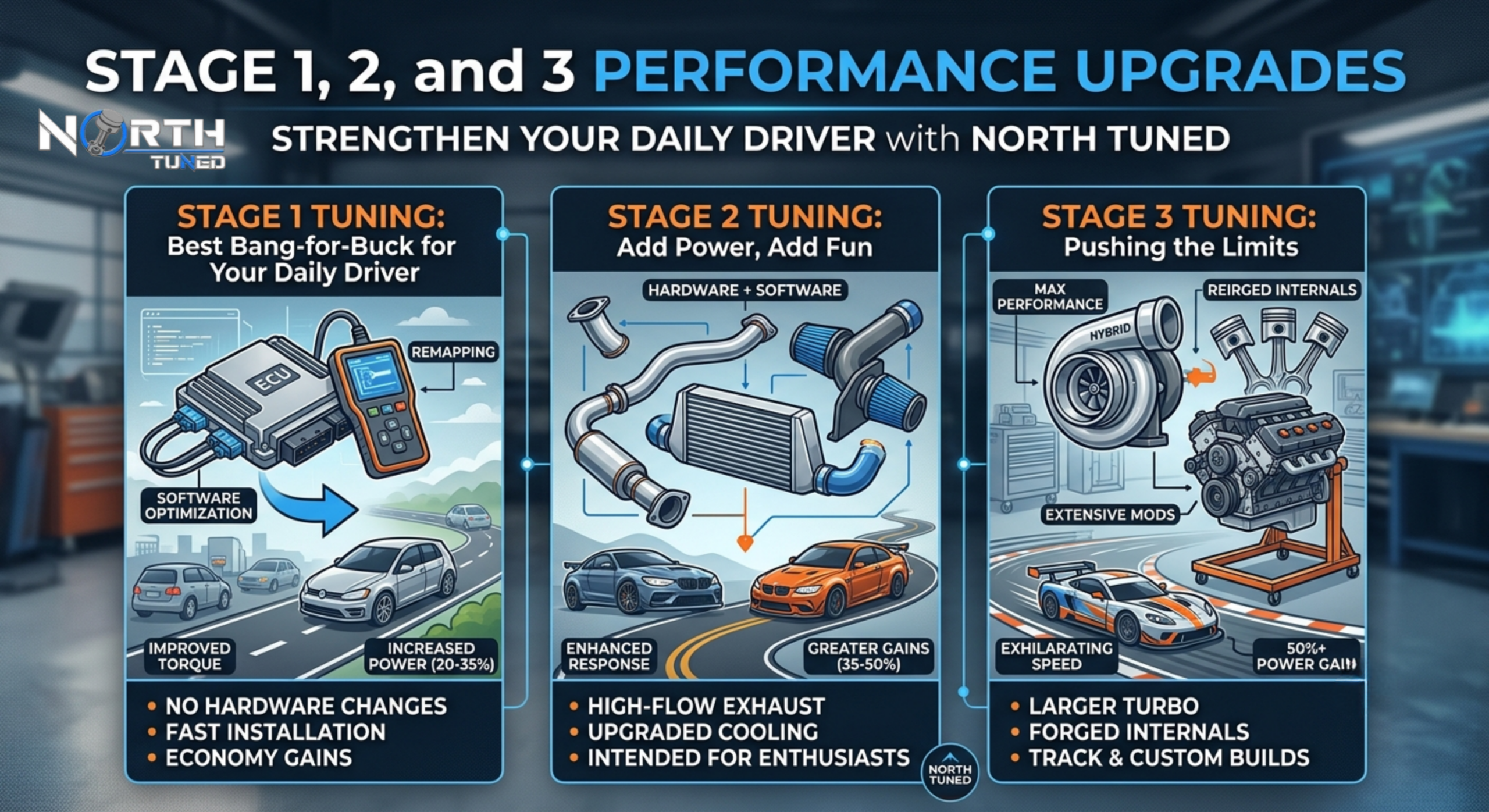
The Reality: While turbo engines see the most dramatic gains (20-35%), atmospheric (N/A) engines also benefit significantly. Remapping improves throttle response, removes “flat spots” in the power band, and provides a much more spirited driving experience.
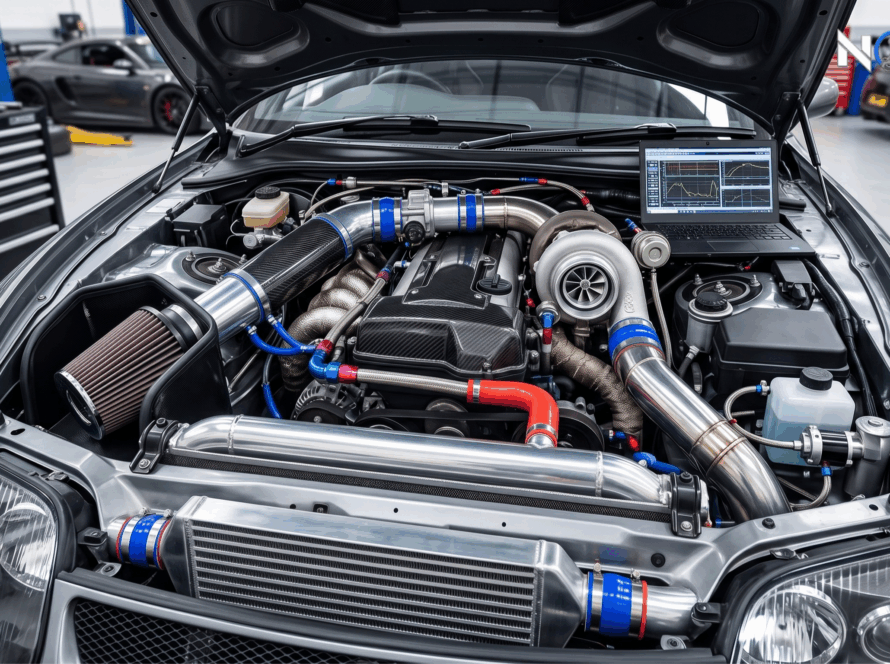
When it comes to unlocking a vehicle’s true potential, ECU Tuning is often the first step. However, at North Tuned, we believe that software is like a conductor; for it to produce the best symphony, the instruments beneath it must be up to the task.
Here are the top performance modifications that complement your tune and help your engine “breathe” better.
1. High-Flow Air Filters & Cold Air Intakes
A tuned engine demands more fuel, which in turn requires more oxygen. Stock paper filters often create a bottleneck.
Benefit: Increases airflow volume and sharpens throttle response.
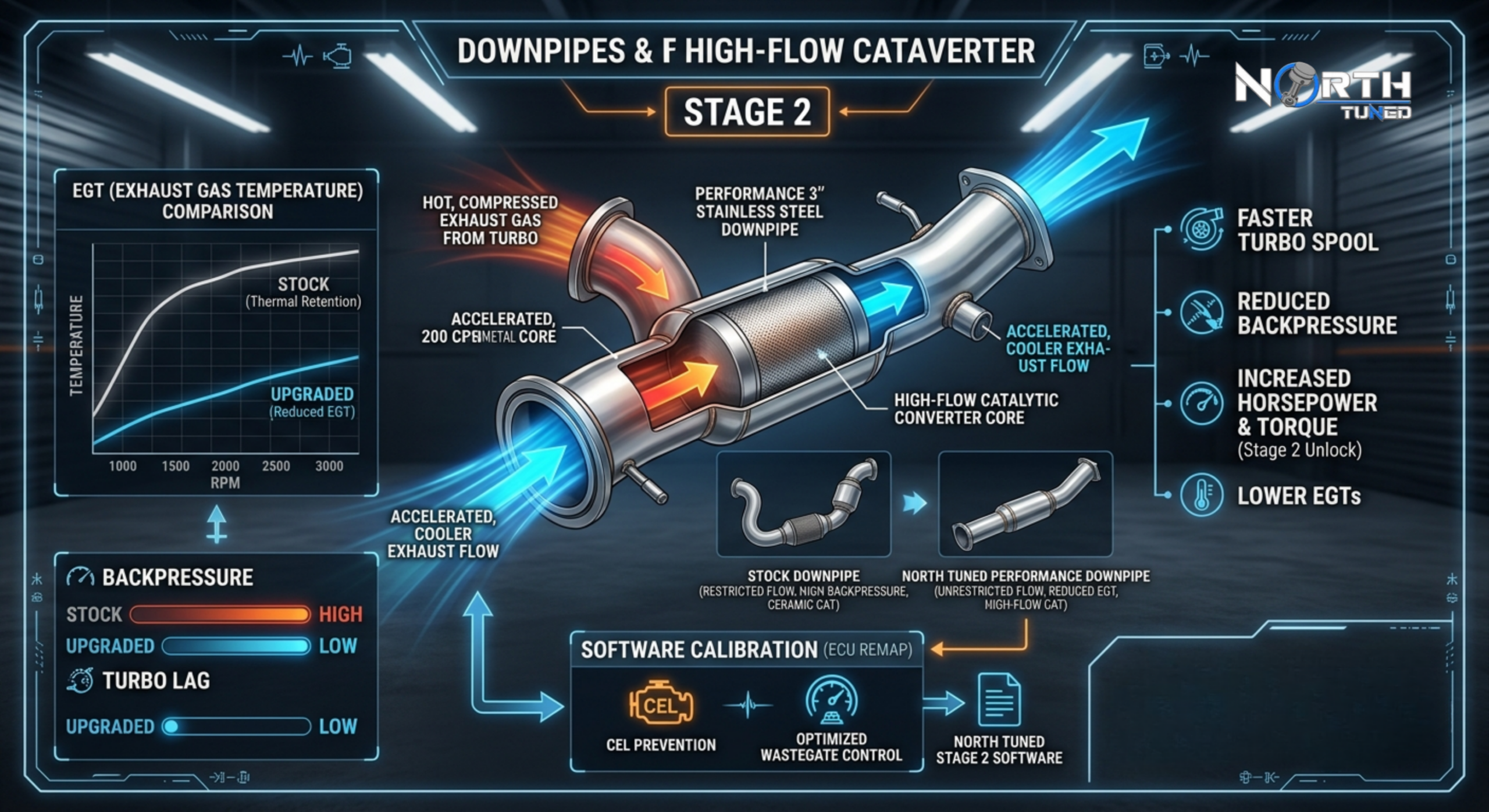
2. Downpipe and Exhaust Upgrades
In turbocharged engines, getting exhaust gases out quickly is crucial. Standard catalytic converters can create backpressure and trap heat during high-performance driving.
Benefit: Lowers Exhaust Gas Temperatures (EGT) and allows the turbo to spool up faster.
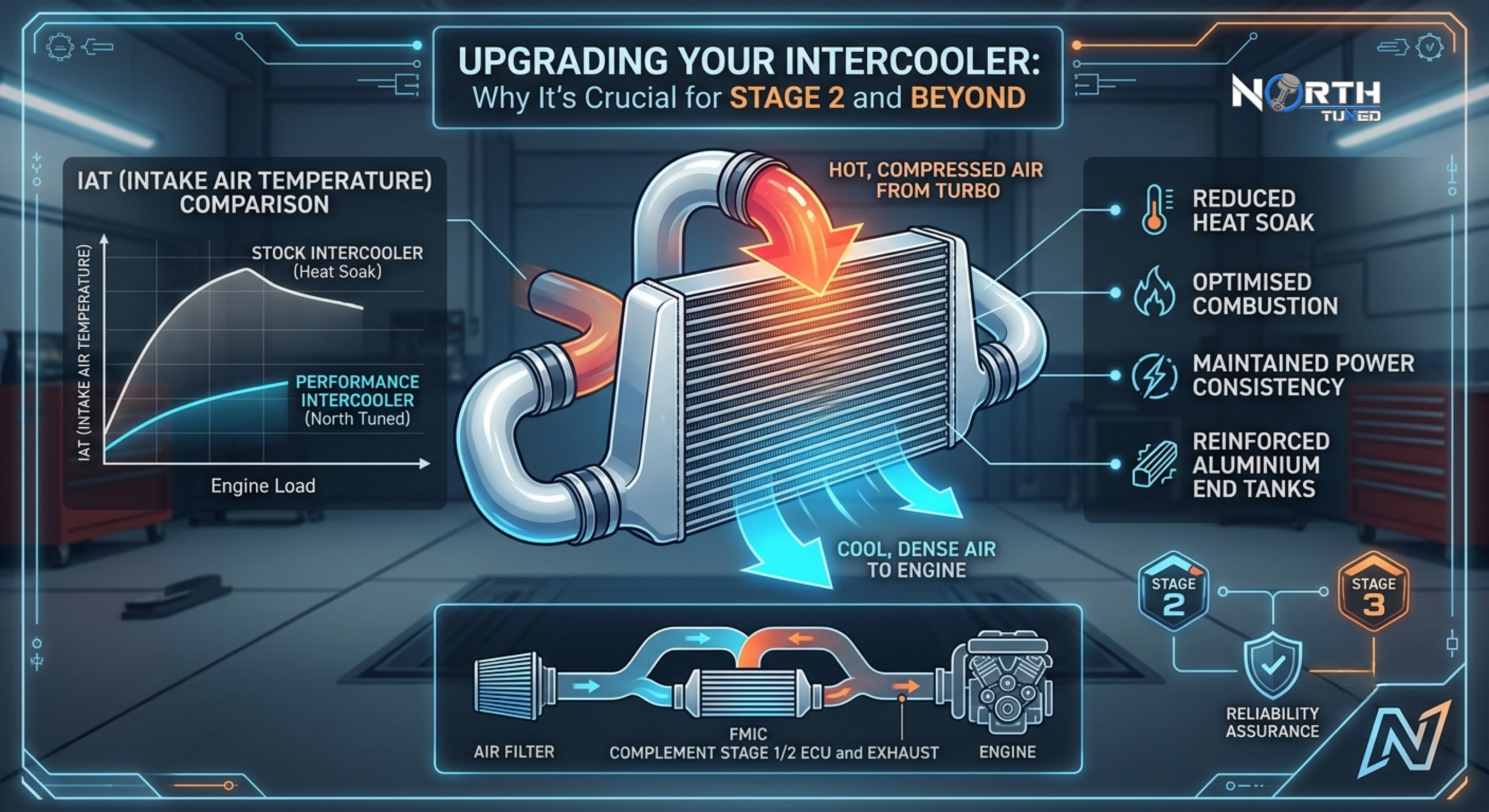
3. Upgraded Intercooler
More boost equals more heat. When intake air gets too hot, it loses density, leading to “heat soak” and power loss.
Benefit: Keeps intake temperatures low, ensuring consistent power delivery even under hard driving.
4. Ignition System (Spark Plugs & Coils)
Under increased boost and cylinder pressure, stock spark plugs might struggle to ignite the mixture, leading to misfires.
Benefit: A stronger spark ensures complete combustion and a smoother power band.
North Tuned Insight: To get the most out of these hardware changes, your ECU map should be calibrated to recognize the improved airflow and cooling. Efficiency and longevity go hand in hand.

If you want to feel the true power of your engine, the ignition must be flawless. This is where the spark plug comes into play. But what exactly does this small yet mighty component do?
How Does a Spark Plug Work?
The primary role of a spark plug is to ignite the air-fuel mixture in the combustion chamber within milliseconds. It takes a massive voltage of 20,000 – 30,000 volts from the ignition coil and forces it across a gap, creating an electric arc (spark). This spark triggers the explosion that powers your vehicle.
Which Vehicles Use Spark Plugs?
Spark plugs are essential for gasoline, LPG, and hybrid engines. However, keep in mind: Diesel engines do not have ignition spark plugs. Diesel engines operate by compressing air to extreme pressures to cause spontaneous combustion.
Hot vs. Cold Spark Plugs: What’s the Difference?
Choosing the right plug based on your engine’s character is vital:
Cold Spark Plug: Has a shorter insulator nose and dissipates heat quickly. It is preferred for high-performance and tuned engines.
Hot Spark Plug: Has a longer insulator nose and retains more heat. It’s ideal for daily drivers and lower RPM engines.
North Tuned Insight: Does Changing Spark Plugs Affect Fuel Efficiency?
Absolutely! A worn-out spark plug or an incorrect gap causes inefficient combustion. This leads to higher fuel consumption and robs your engine of its performance. The right spark plug ensures:
Lower fuel consumption,
Sharper throttle response,
Smoother idling.
Pro Tip: The spark plug gap widens over time due to wear. In modern electronic ignition systems, this gap is typically between 0.8mm – 1.1mm. Don’t skip your periodic checks to maintain peak performance!
The performance of the car you’ve driven fondly for years might start to feel inadequate over time; you may want to recapture that day-one excitement and push the limits a little further. We will provide you with practical information in this article about essential engine modifications that will boost your vehicle’s power and take your driving dynamics to a whole new level.
Sports Air Filter Upgrade

Car manufacturers often use restrictive air intake systems to keep mass-production costs down and comply with standard noise regulations. Aftermarket sports air filters, commonly known as Cold Air Intake Kits, eliminate this factory-induced shortness of breath. These performance-oriented kits maximize the air mass entering the engine per unit of time by channeling much cooler, denser oxygen directly into the combustion chambers. More oxygen means a more powerful combustion. As a result, your vehicle not only gains a noticeable performance boost with improved throttle response but also unleashes that deep, sporty intake growl we all love when you step on the gas.
Sports Exhaust Upgrades

Whether you own a naturally aspirated or a forced induction (turbocharged or supercharged) engine, this upgrade is a must-have for car enthusiasts looking to personalize their vehicle and push its performance limits. It stands out as one of the most popular modification steps taken to help the exhaust gases flow more freely, boost horsepower, and achieve that highly desired, deep, and aggressive sound.
Chip Tuning (ECU Remapping)
Thanks to giant leaps in automotive technology, modern vehicles roll out of the factory equipped with highly durable, efficient, and high-potential engines. This robust and tolerant foundation makes today’s cars perfect canvases for performance upgrades. Chip Tuning unlocks your vehicle’s hidden true capacity by professionally optimizing the original parameters and maps within the Engine Control Unit (ECU). Through this fine-tuning of the engine’s brain, it is possible to achieve significant increases in horsepower and torque without having to replace a single mechanical part. For a deeper dive into the technical details and specific gains for your car, feel free to check out our comprehensive Chip Tuning guide.
Turbocharger Upgrades

Strict modern emission standards and high taxation policies have driven automakers to extract maximum power from smaller displacement engines. The undisputed hero of this “downsizing” trend is the turbocharger. A turbo’s primary job is to force pressurized air into the combustion chambers, cramming a significantly higher volume of oxygen into the cylinders. The rule of thumb is simple: A larger turbo equates to massive power potential. However, blindly choosing an oversized turbo without considering the vehicle’s dynamics leads to “uncontrolled power” and frustrating turbo lag at lower RPMs.
To safely harness and regulate this increased boost pressure without stressing the engine, upgrades to the wastegate system are absolutely essential. Furthermore, when upgrading a turbo, the intercooler capacity must be re-evaluated and upsized if necessary to combat the extra heat generated by the higher boost levels. The intercooler’s job is to cool down the compressed air, thereby increasing its density; cooler, denser air results in a more violent, efficient combustion and yields extra horsepower. But there is a delicate balance to strike here: Installing an unnecessarily large intercooler will cause pressure drops in the charge piping, severely dulling your throttle response and ruining the sporty driving experience.
Methanol Injection (Water-Meth) Systems

Commonly utilized in high-performance builds, this system safely pushes an engine’s performance boundaries. Methyl alcohol, one of the most effective alcohols for internal combustion engines, is integrated into the system by being sprayed directly into the air intake tract.
Key Advantages:
Thermal Management: It rapidly lowers combustion chamber temperatures, preventing engine overheating.
High Octane Support: Due to its high octane rating, it allows tuners to aggressively adjust ignition timing during the remapping process.
Combustion Quality: It maximizes fuel burn quality, resulting in a cleaner and more efficient explosion.
Performance Gains: The synergy of these effects delivers significant increases in both horsepower and torque.
Potential Disadvantages:
High Consumption Rate: Since it evaporates much more easily than gasoline, the consumption rate is notably higher.
Corrosion Risk: By its chemical nature, prolonged use can lead to wear and corrosion within fuel system components.
Cold Start Issues: When used as a primary fuel source, it fails to atomize correctly in cold weather, making the engine difficult to start.