

When it comes to upgrading automotive performance in Australia, an Engine Control Unit (ECU) tune is one of the most cost-effective and impactful modifications you can make. Whether you are a JDM enthusiast looking for better throttle response on the highway or a 4×4 owner needing more low-end torque for off-roading, a proper ECU calibration unlocks your engine’s hidden potential.
At North Tuned, we closely monitor tuning trends and costs across different global regions. For the 2026 Australian market, we have compiled a comprehensive guide detailing the costs of flashing your vehicle’s brain, from basic Stage 1 maps to fully custom standalone ECU installations.
Factors Determining Dyno and Tuning Costs in Australia in 2026
ECU tuning prices in Australia are not fixed; they vary significantly based on your expectations, your vehicle’s hardware, and your preferred tuning method.
- Type of Tune (OTS vs. Custom): Custom maps written from scratch on a dyno specifically for your vehicle will always cost more than pre-packaged, off-the-shelf (OTS) flash tunes.
- Engine and Hardware Modifications: If your car is equipped with an aftermarket exhaust, downpipe, upgraded turbo, or methanol/nitrous systems, scaling the ECU for all these variables requires extra time and high-level expertise.
- Platforms and Licensing: Systems like Cobb, HP Tuners, ECUTek, or Hondata require specific licensing or “credit” fees. This cost is almost always passed on to the customer in the final invoice.
- Time Spent on the Dyno: The majority of performance workshops across Australia charge an average hourly dyno rental rate of 210 to 220 AUD.
Average ECU Tuning Prices by Vehicle Category
The vehicle segment and the complexity of the engine management system directly impact the tuning process. Based on average 2026 Australian market prices, here is a breakdown of what you can expect to pay:
Euro Performance (Audi, BMW, VW, Porsche)
German engineering is notoriously complex regarding ECU encryption and sensor sensitivity. These vehicles are usually tuned via the factory ECU.
- Standard Flash Tune (OTS Packages): 750 – 950 AUD
- Custom Dyno Tune (Built from scratch): 1,100 – 1,600 AUD
JDM and Asian Market (Subaru, Evo, GTR, 86/BRZ)
Japanese performance cars are the most heavily modified group in Australia due to their vast aftermarket support. Opensource tuning, Cobb, and ECUTek are incredibly popular here.
- Opensource Tuning: 1,000 – 1,100 AUD
- ECUTek / Licensed Platforms: 1,400 – 1,700 AUD (Prices can increase significantly for complex builds, such as R35 GTRs).
Traditional Aussie Muscle & V8s (Holden, Ford, Mustang)
The V8 muscle culture is deeply rooted in Australia. Platforms like HP Tuners are the go-to choice for both Naturally Aspirated (NA) and Forced Induction (Supercharged/Turbo) setups.
- Naturally Aspirated (Stock Cam) Tunes: 990 – 1,100 AUD
- Forced Induction HP Tuners Setup: 1,200 – 1,600 AUD
Diesel 4×4 and Commercial Vehicles (Hilux, Ranger, D-Max, Navara)
For Australians seeking massive torque for towing or off-roading, diesel optimization is vital. The focus here is rarely on peak horsepower; instead, tuners prioritize fuel efficiency, drivability, and low-end grunt.
- Custom Flash Tune (Module or Factory Flash): 1,400 – 1,600 AUD
Stage 1, Stage 2, and Stage 3 Price Comparison
Here is a breakdown of average costs in the Australian market based purely on the level of software modification and dyno time (excluding the cost of the physical hardware parts):
| Modification Level | Scope of Work | Average Cost (AUD) |
| Power Run Only | A baseline measurement to see current power output (no tuning adjustments made). | 99 – 150 AUD |
| Stage 1 (Basic Tune) | Optimizing ECU parameters (boost targets, fuel maps) for completely stock engine hardware. Usually utilizes OTS files. | 300 – 700 AUD |
| Stage 2 (Custom Dyno Tune) | Custom maps written using live dyno data, specifically tailored for vehicles with upgraded downpipes, intakes, and exhausts. | 800 – 1,500 AUD |
| Stage 3 & Standalone ECU | For major hardware changes like big turbo kits and forged internals. Involves standalone ECUs (Haltech, MoTeC, EMtron) and complex sensor integration. | 1,700 – 3,000+ AUD |
Important Note: If you have previously had your car tuned and only need minor updates (e.g., a “retune” after installing a single new part), it is usually much cheaper than a full tune from scratch. Workshops will typically just charge their hourly dyno rate (around 210-220 AUD).
Frequently Asked Questions (FAQ)
Is a dyno absolutely necessary for a tune?
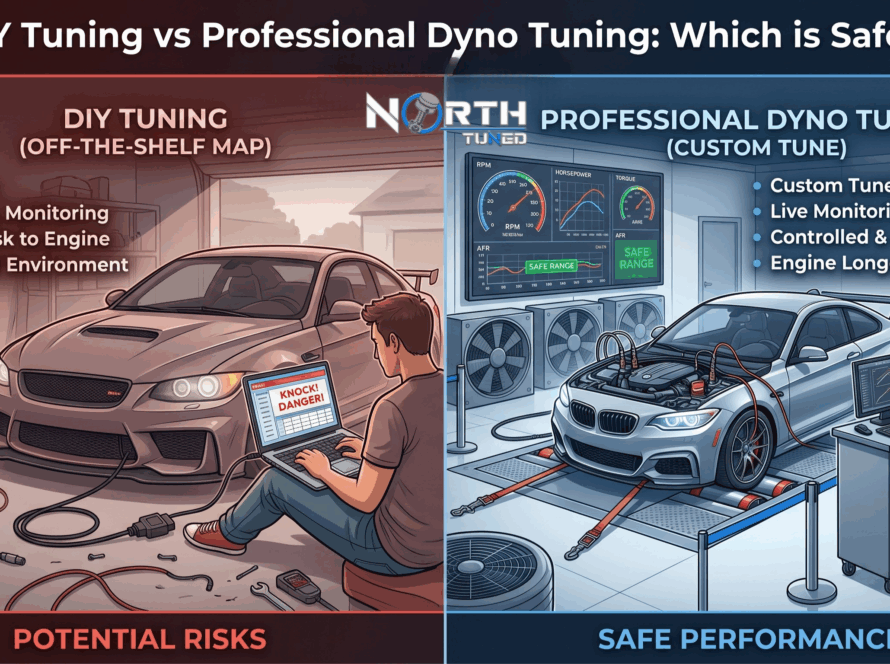
While a dyno isn’t strictly required for a basic Stage 1 flash, it is highly recommended for Stage 2 and beyond. The dyno allows the tuner to safely monitor live data, log Air/Fuel Ratios (AFR), and ensure engine health while extracting the most reliable performance gains.
Is DSG / Transmission Tuning (TCM Flashing) included in the price?
Usually, no. Vehicles like Audi, VW (DQ250, DQ381), or GTRs often require separate transmission tuning to improve shift speeds, remove torque limiters, and increase clamping force. In Australia, this process generally adds an extra 800 to 1,000 AUD on top of the engine tuning package.
Is it worth tuning a Naturally Aspirated (NA) engine?
Yes. It’s not just turbocharged cars that benefit from tuning. Factory NA engines are heavily restricted to meet strict global emission standards. By optimizing fuel maps and ignition timing, a tune can sharpen throttle response, eliminate flat spots in the rev range, and even improve fuel economy.
North Tuned Expert Opinion
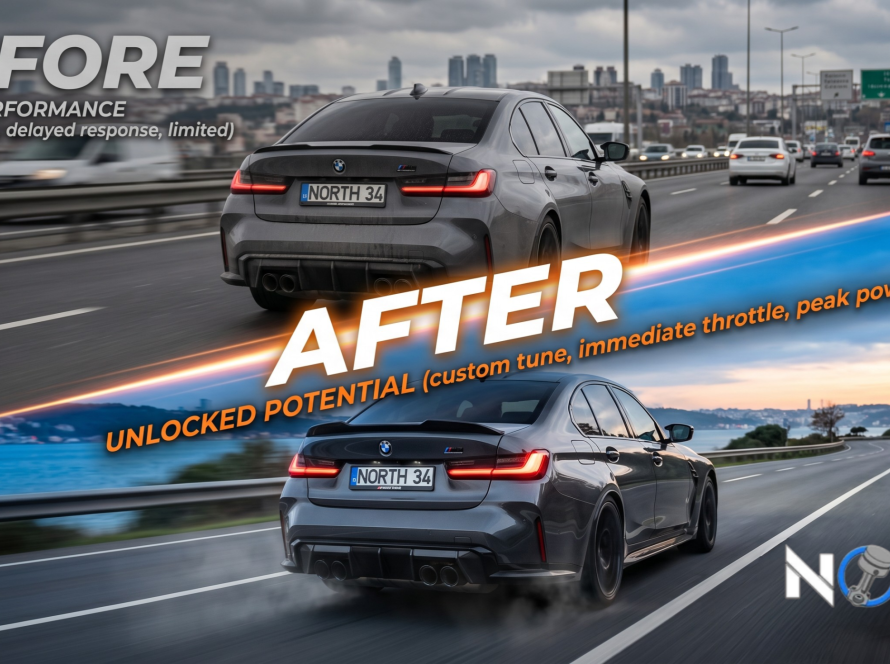
No matter how much money you invest in premium hardware, the ECU map is the glue that makes those parts work together harmoniously. Focusing solely on the cheapest price and slapping on a generic OTS file can pave the way for catastrophic engine failure down the line. From the North Tuned perspective, if your project involves turbo upgrades, modified intakes, or high-octane fuel setups, investing in a professional custom dyno session is the absolute best insurance policy for the longevity and reliability of your engine.

 English
  Turkish
  German
  Spanish
  Hindi
Hindi  Arabic
  Italian
  Greek
Greek  Vietnamese
  Chinese
  Malay
Malay